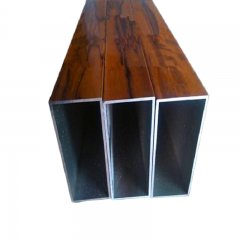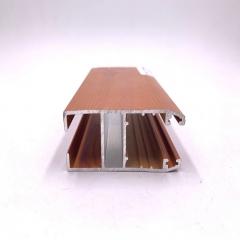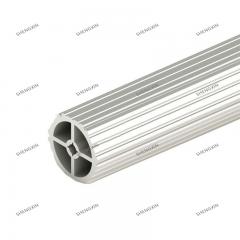
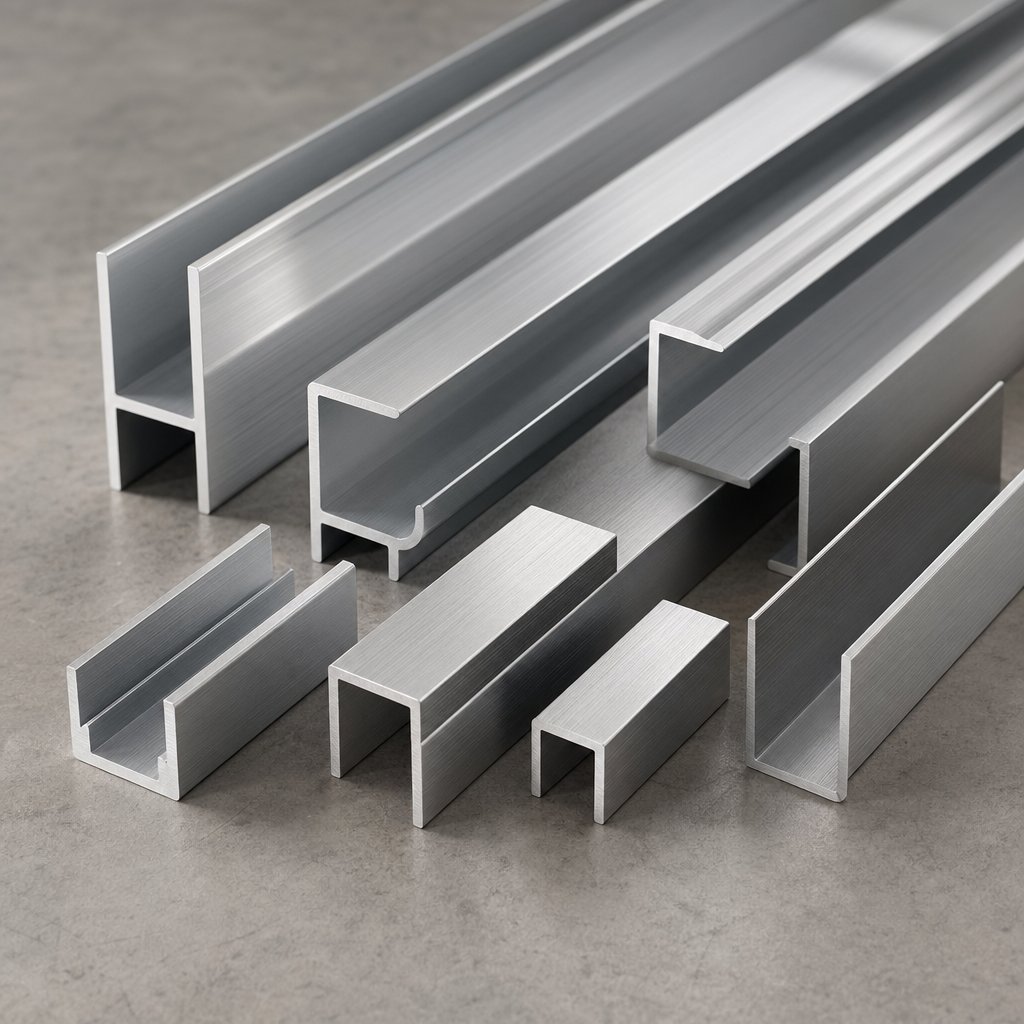
Search for channel stock and the results can get messy fast. One listing says trim channel, another says structural channel, and a third uses shorthand that looks almost identical. In simple terms, they all point to the same basic idea: an open-sided metal profile shaped to support, frame, edge, or guide something.
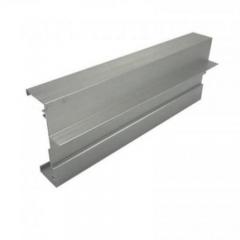
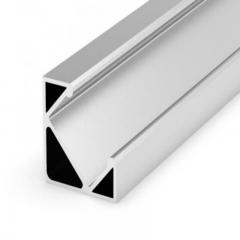
Aluminum channel is an extruded aluminum profile with a flat web and two side legs, creating an open-sided shape that can hold, protect, frame, or guide parts.
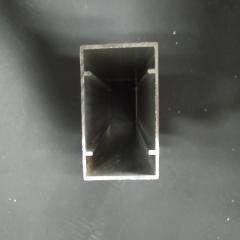
That open side is what makes it useful. Unlike tube or box sections, a channel leaves one face accessible, so panels can slide in, hardware can be mounted, or edges can be capped. Many profiles are made by extrusion, which gives them a consistent cross-section along the full length. Depending on the geometry, the same family may be sold as an aluminum u channel, a c channel aluminum profile, or a more informal alum channel.
Supplier naming overlaps because sellers may label the shape by appearance, by use, or by house style. A profile can look like a U from one angle and be listed as an aluminum c channel somewhere else, especially when lips, radii, or application-specific details vary.
Fabricators like aluminum because it is light, corrosion-resistant, and easy to cut, drill, machine, and weld in many common alloys. It is also about one-third the weight of steel, which helps with handling and installation. Guides from Aluminium Warehouse and industry references also note its strong finish options and broad use in framing, trim, machinery, signage, and construction.
The catch is that names alone do not tell you enough. Two pieces sold as channel can differ quite a bit in shape, stiffness, fit behavior, and intended use, which is where geometry starts to matter more than the label.
The label gets you in the ballpark. The cross-section tells you what the part can actually do. That is why buyers comparing c channel listings with u channels often feel lost at first glance. Shape, not nickname, is the better starting point.
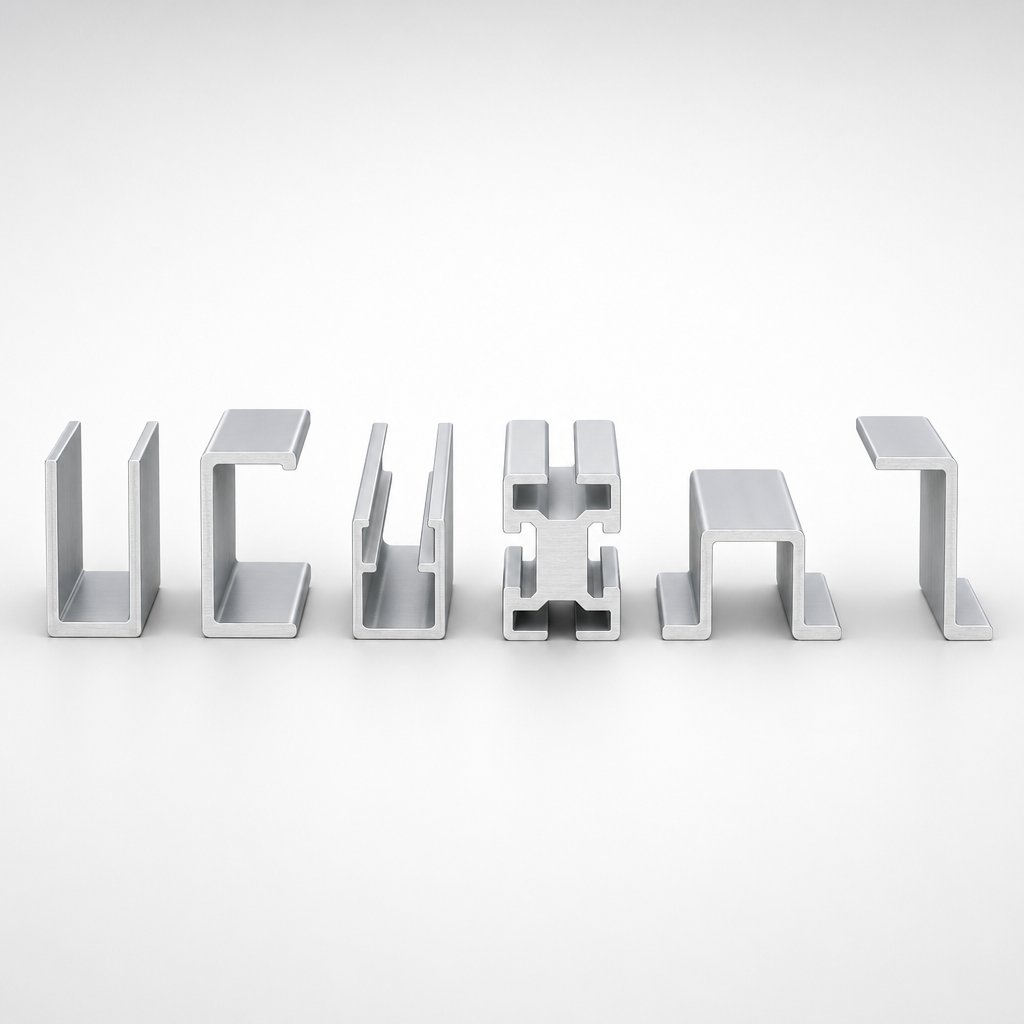
The IQS guide and Eagle Aluminum both sort these profiles by geometry and use. In plain English, think of each family as a different way to hold, guide, space, or support another part.
A U profile is the easiest to picture: one flat web with two straight, parallel sides. IQS describes U-shaped sections as having a straight web and perpendicular flanges. That simple form works well for edge protection, panel capture, and basic framing because the opening is direct and easy to access.
A C profile can look similar, but the family is broader. Some versions have rounded inside corners, tapered flanges, thicker walls, or inward-turned lips. Those small differences change how the part fits, how it fastens, and whether it behaves more like trim or framing.
When movement matters, an aluminum channel track is usually chosen for controlled fit rather than just support. A U or C form can act as a channel track for sliding panels, inserts, or covers. The key question is what needs to move inside it and how much clearance it needs.
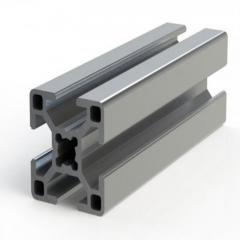
There is also the T-slot family. Buyers sometimes search for an aluminum t channel, but what they often need is a profile with a T-shaped slot that lets nuts and fasteners slide into place. That makes it especially useful for modular assemblies and adjustable fixtures.
Some sections solve a very specific installation problem. An aluminum hat channel resembles a top hat, with a raised center and outward flanges. Eagle notes that hat profiles are widely used for furring, leveling walls and ceilings, and supporting rainscreen or cladding systems. An aluminum z channel has flanges that extend in opposite directions, making it useful for transitions, flashing, and panel receivers where offset matters.
| Profile family | Shape in plain English | Common function | Fit behavior | Selection considerations |
|---|---|---|---|---|
| U channel | Flat base with two upright, parallel sides | Edge trim, panel capture, simple framing | Accepts parts directly between the legs | Check inside width, wall thickness, and corner radius |
| C channel | Open section with more variation in corners and flanges | Framing, reveals, general support, tracks | May fit differently because lips, tapers, or radii reduce usable space | Confirm whether the profile is trim-oriented or more structural |
| Track profile | Usually a U or C adapted as an aluminum channel track | Sliding panels, inserts, covers | Needs enough clearance to move without rattling or binding | Match it to the mating part, not just the outside size |
| T-slot or aluminum t channel | Channel with a T-shaped slot for sliding hardware | Modular framing and adjustable assemblies | Fasteners slide in the slot and lock in position | Choose based on hardware compatibility and reconfiguration needs |
| Hat channel | Raised center with outward flanges, like a top hat | Furring, leveling, standoff support | Creates space behind the finished surface | Useful when spacing is part of the design |
| Z channel | Two flanges facing opposite directions | Transitions, flashing, panel support | Offsets one surface from another instead of gripping symmetrically | Direction matters, especially in water-shedding details |
Geometry gets you closer to the right family, but not all lookalikes behave the same. Similar outside sizes can still differ in corner shape, finish expectations, and fabrication fit, which is exactly where architectural and structural channel start to part ways.
This is where many ordering mistakes start. Two pieces of channel stock can share a similar outside size and still behave differently in fit, finish, and fabrication. Among aluminum channels, the architectural versus structural split matters more than many buyers expect. In aluminum channel extrusions, architectural usually means the profile is chosen for visible use and appearance control, while structural points to strength-led fabrication.
Eagle Aluminum describes extruded aluminum channel for architectural work as a profile used where aesthetics, weight, and precision matter. Extrude-A-Trim also ties architectural extrusions to strong finishing characteristics and uses such as trim, moulding, and architectural channels. Supplier catalogs often separate these from rounded outside or other appearance-led profiles, which tells you the visible surface is part of the requirement, not an afterthought.
Structural profiles are typically selected for strength, weldability, formability, and corrosion resistance. Extrude-A-Trim lists a rounded inside channel as its structural version, and that inside radius matters in real fabrication. Flat inserts, plates, or mating parts may not seat fully into a radiused corner. That can affect supports, frames, and some c channel framing work. Many aluminum c channels in this group look close to decorative pieces, but they are not automatically interchangeable.
Corner shape changes both usable space and visual character. A cleaner outside edge helps exposed work look crisp. A rounded inside corner can reduce the flat seating area inside the opening. So even when two aluminum c channels share a nominal size, one may suit trim while the other works better for utility framing.
| Type | Form | Finish expectations | Common uses | Fabrication implications |
|---|---|---|---|---|
| Architectural | Clean visible lines, often sold as appearance-focused profiles | High priority on surface quality and visual consistency | Trim, moulding, store fixtures, glass and panel surrounds | Cut quality, scratches, and edge alignment stay visible |
| Structural | Often identified by rounded inside corners or strength-oriented geometry | Function usually leads, even if finish still matters | Frames, supports, building products, vehicle and furniture parts | Inside radii affect fit with flat mating parts, weldments, and hardware |
Before ordering any extruded aluminium channel, confirm the drawing, intended use, and actual design demands. Final structural suitability comes from the application, connection method, and load, not from naming alone. That is why alloy choice becomes the next filter.
Shape tells you what a profile can hold. Alloy tells you how that same channel will behave at the saw, mill, weld table, and finishing line. In practical buying terms, the split is familiar across the extrusion industry. Guidance from Hydro reflects the usual pattern: 6061 is favored when fabrication performance matters more, while 6063 is often chosen for cleaner architectural appearance.
A 6061 channel is usually the better fit when the part will be drilled, tapped, machined, or welded into a frame, bracket, or support. Buyers searching for 6061 aluminum channel are often prioritizing utility over cosmetic perfection. A 6061 extrusion also makes sense when the profile has to contribute more to stiffness and shop durability than to display-grade finish.
That is why listings for a 6061 t6 aluminum channel or a 6061 t6 channel often appear in structural-style catalogs. T6 means the material was heat-treated and artificially aged into a harder, higher-strength condition.
6063 is often the stronger choice for visible work. It is widely used in architectural profiles because it generally extrudes with a smoother surface and responds very well to decorative finishing. If the piece will stay exposed, be anodized, or frame a panel where appearance matters, 6063 often beats a 6061 aluminum extrusion on finish quality alone.
That does not mean 6063 is only decorative, or that 6061 aluminum channel cannot be finished well. It means the default strengths differ. 6061 leans toward fabrication performance. 6063 leans toward surface quality and crisp detail.
| Factor | 6061 | 6063 | What it means in practice |
|---|---|---|---|
| Strength tendency | Generally preferred when higher strength is needed | Usually selected for lighter-duty architectural use | Pick 6061 more often for supports, frames, and machined parts |
| Machinability | Common choice for drilling, tapping, and milling | Machinable, but less often chosen for heavy machining work | If the channel will see a lot of shop work, 6061 is often easier to justify |
| Weldability | Weldable and common in fabricated assemblies | Also weldable for lighter fabricated profiles | Both can be welded, but welded joints still need design review where loads matter |
| Finish quality | Functional finish can be good, but appearance is not its main selling point | Known for smoother extruded surfaces | 6063 is often preferred for exposed trim and architectural details |
| Anodizing response | Can be anodized, though cosmetic uniformity may be less ideal | Often favored for a cleaner decorative anodized look | When visual consistency matters, 6063 usually starts with an advantage |
Temper codes are process clues, not quality slogans. T5 generally means the extrusion was cooled from the shaping process and then artificially aged. T6 means it was solution heat-treated and artificially aged for a harder condition. In plain English, temper helps explain why one profile machines crisply while another is chosen more for appearance or easier forming.
If a listing mentions ASTM B308, read that as a signal you may be looking at a standard structural profile rather than a purely architectural one. ASTM B308 tells you something important about how the shape is categorized and supplied, but it does not automatically make it the right choice for every design.
Choose 6063 when finish and anodized appearance lead the decision. Choose 6061 when machining, welding, or structural duty leads. Then confirm the temper and profile standard before ordering.
Even the right alloy can miss the mark if the opening, wall thickness, or inside radius is read incorrectly, which makes dimensions the next detail worth slowing down for.
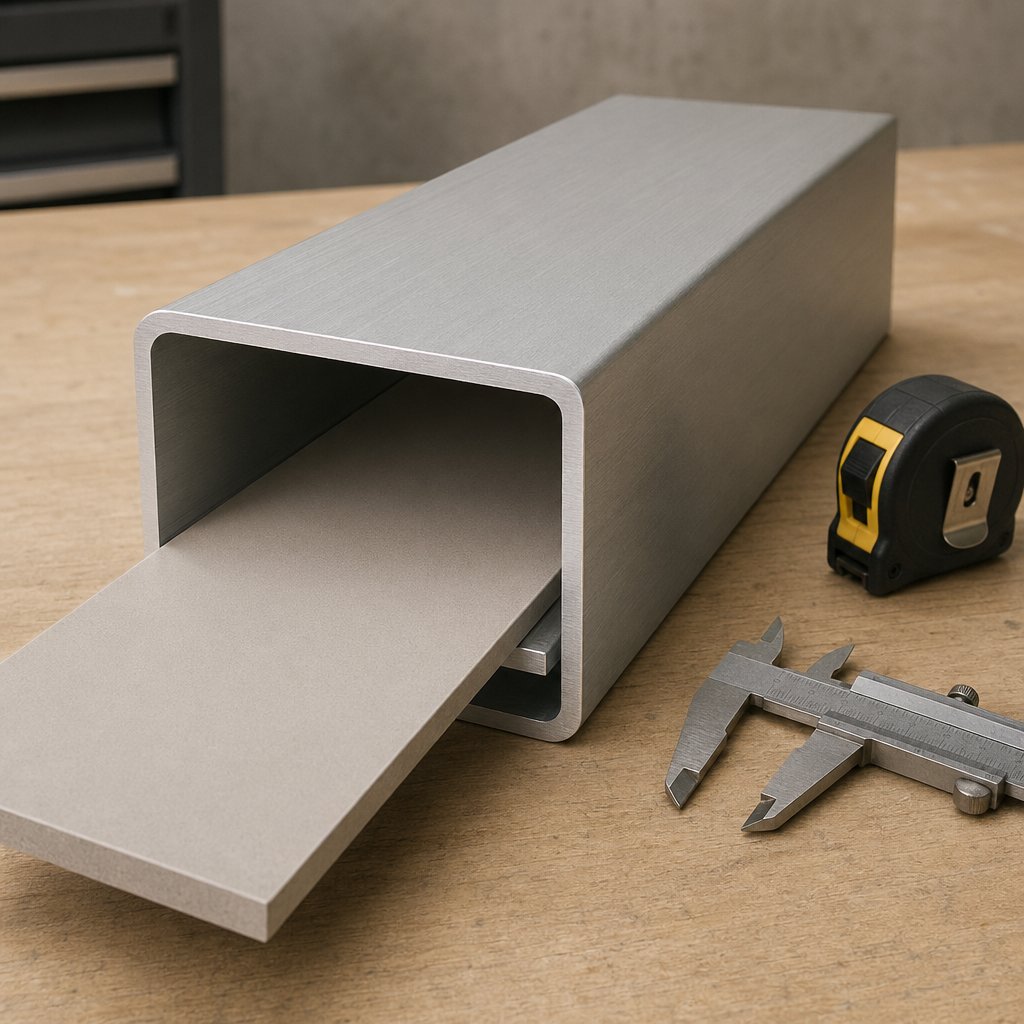
A channel that looks right on a product page can still fail the moment a panel, fastener, or insert meets the opening. That usually comes down to measurement language. An aluminum channel sizes chart is helpful, but only if you know which numbers describe the outside shape and which ones control usable interior space. That is why similar alum channel sizes can lead to very different fit results in the shop.
Most listings start with the cross-section, then the length. In a general measurement guide, aluminum sections are commonly measured in mm or inches, and structural listings may also include weight per meter. For channels, suppliers may call one dimension width and the other depth or height. In the Aluminum Association table, standard structural channels are shown with depth d, width b, flange thickness tf, web thickness tw, and fillet radius R, with inch-based data. That table spans designations from 2 x 0.577 up to 14 x 13.9, which shows how broad published aluminum channel sizes can be.
The catch is simple: outside numbers do not automatically tell you the inside opening. If you are comparing aluminum c channel dimensions or aluminum u channel dimensions for a mating part, always separate outside size from clearance size.
| Dimension term | What it means | Why it matters |
|---|---|---|
| Outside width | The full external width across the open side | Controls overall envelope, mounting space, and whether the profile fits the installation area |
| Inside width | The usable opening between the legs after wall thickness and corner geometry are considered | Determines whether panels, glass, inserts, or rollers actually fit |
| Leg or flange height | The side wall height from the web to the top of the leg | Affects capture depth, lateral support, and how securely a part is held |
| Wall thickness | The thickness of the web and or flanges | Influences stiffness, weight, machining behavior, and fastener engagement |
| Length | The cut piece length | Matters for span, waste, shipping, and cut-to-fit fabrication |
| Radius | The inside fillet or corner curve | Changes stress flow and reduces flat seating area in the corners |
| Tolerance | The allowed variation from nominal size | Decides whether mating parts slide, rattle, bind, or miss alignment |
Wall thickness does more than add material. The CHAL guide ties section dimensions directly to strength, stiffness, and carrying capacity, while radius or fillet affects stress distribution at the corners. In plain terms, thicker walls usually help rigidity, but they also reduce inside space. A generous inside radius can improve stress flow, yet it may stop a flat insert from seating fully into the corner. That matters whether you are comparing aluminum u channel sizes for edge trim or aluminum c channel sizes for framing and hardware.
Even correct nominal dimensions are only part of the story. A tolerance guide notes that typical extrusion dimensional variation often falls around +/- 0.1 mm to +/- 0.5 mm, depending on section size and wall thickness. Thin walls, larger profiles, longer lengths, straightness, and twist can all shift real-world fit. The same source also notes that finishing or machining can tighten results, while surface treatments can change final fit slightly.
Those checks remove a lot of guesswork. They also make it much easier to connect the profile on paper to the job it has to do in practice, whether that job is framing, trim, guarding, or guided movement.
A profile can look perfect in a catalog and still be wrong for the job. The reason is simple: use changes everything. Material from Eagle Aluminum and Tread-Ware points to a clear pattern. U forms are common in frames, railings, and glass tracks. C forms are common in building frames and tracks. J, hat, and Z profiles solve more specialized trim, spacing, and transition work.
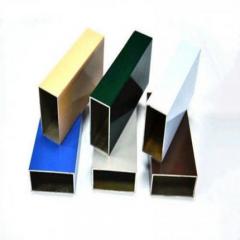
For frames, panel surrounds, and enclosure-style assemblies, U and C profiles do most of the heavy lifting. Tread-Ware notes that U channels are often used for frames, railings, and glass tracks, while C channels are common in building frames. In practical terms, U shapes are useful when you need to capture an edge cleanly. C shapes are often a better fit when the profile also needs to act like part of the frame itself. If the assembly stays visible, finish matters too. Mill finish may be fine for hidden utility work, while anodized or powder-coated surfaces usually make more sense for exposed installations.
This is where the aluminum trim channel category becomes especially useful. Eagle describes U-channels as a go-to option for glass partitions, railings, and signage, and it lists J-channels or J-caps as decorative edge starts for wall panels or protective rims for exposed materials. When the goal is a clean border, edge protection, or a sign surround, lighter architectural profiles usually beat heavier framing shapes. Brushed or polished finishes can also be a strong choice for interior accents, while anodized finishes add a harder, more scratch-resistant surface for higher-traffic areas.
Searches for aluminum track, aluminum track rail, or aluminum track channel usually lead back to a U or C profile adapted for guided movement. Eagle specifically includes C-channels in track applications, and Tread-Ware includes U channels in glass tracks. That means an aluminum c channel track and a u channel track can both be correct. The deciding factor is the moving part. A panel, insert, or cover needs enough running clearance to move without excessive play. In many cases, an extruded aluminum track is preferred because extrusion gives a consistent cross-section along the full length. The same logic applies to an aluminum slide track channel: good geometry helps, but the mating part still controls the final choice.
| Common use | Suitable profile family | Why it fits | Finish considerations | Important cautions |
|---|---|---|---|---|
| Building frames and panel surrounds | C channel, U channel | C profiles are common in building frames. U profiles capture panel edges more directly. | Mill finish for hidden utility work. Anodized or powder-coated for exposed framing. | Do not judge by outside size alone. Fit and structural suitability depend on the full assembly. |
| Railings and glass edge capture | U channel | Tread-Ware lists U channels for railings and glass tracks. | Anodized works well where appearance and wear resistance both matter. | Check the actual glass or panel system, not just the nominal opening. |
| Decorative trim and edge protection | U channel, J channel, light architectural channel | Eagle ties U and J forms to wall panels, exposed edges, and clean borders. | Brushed, polished, anodized, or powder-coated finishes are common depending on visibility. | Cosmetic damage is more noticeable on exposed trim. |
| Signage and display borders | U channel, sign-oriented extrusions | U profiles provide a simple border or holder for signage. | Powder coat adds color and UV protection. Anodized offers a cleaner metallic look. | A sign surround should not be assumed to act as a structural support member. |
| Tracks and guided sliding parts | Aluminum c channel track, u channel track, other extruded aluminum track forms | C profiles are frequently used for tracks, while U profiles are also used for glass track applications. | Choose finish based on exposure and wear. Exposed tracks may benefit from anodized surfaces. | An aluminum track rail or aluminum slide track channel must be matched to the mating part, not just the profile label. |
| Wall and ceiling leveling, standoff space | Hat channel | Eagle describes hat channels as useful for furring, leveling, and creating space for wiring or insulation. | Mill finish is common when concealed. Coated finishes may be used when visible. | Spacing and support functions do not automatically make a profile suitable for every load case. |
| Transitions in siding or roofing | Z channel | Z profiles help create clean transitions and can act as water-shedding flashing details. | Exterior work may benefit from corrosion-resistant finished surfaces. | Orientation matters. A reversed Z profile may not manage the detail as intended. |
Application narrows the shortlist fast, but it does not erase tradeoffs. Impact, wear, heat, and safety demands can still turn a good-looking choice into the wrong material or the wrong profile.
Some projects seem well suited to channel stock until deflection, wear, or weather enters the picture. Material guidance from the PTSMAKE guide highlights the tradeoff clearly: aluminum has an excellent strength-to-weight ratio, but steel is much stiffer, so the same geometry can flex more than expected. That matters in long spans, machine supports, and any aluminum structural channel used where movement, not just failure, controls the design. It also matters in a metal channel track if rollers, panels, or debris will keep rubbing the surface.
Names can mislead. Across the many types of aluminum channel, labels do not guarantee the same load path, slot geometry, or approval status.
Structural uncertainty, span questions, or safety-critical loading should never be decided from a product listing alone.
That is usually the point where browsing stops helping. If standard sections are close but not exact, the smarter move is to define the geometry, alloy, finish, tolerances, and sourcing path with much more precision.

By this stage, the challenge is less about identifying the shape and more about writing a specification that purchasing, fabrication, and finishing teams can all use without guesswork. Paramount Extrusions reduces the sourcing choice to two practical decisions: stock versus custom, and domestic versus import. That framing works well for channel buyers too.
A stock aluminum extrusion channel is often the right answer when a standard profile already fits the assembly. If a common aluminum extruded channel, an extruded aluminum c channel, or standard aluminum u channel extrusions match the job, you avoid tooling cost and gain faster availability. The order gets riskier when the part has tight fit, finish, or machining demands.
Custom makes sense when a standard c channel aluminum extrusion or a u channel aluminum extrusion would need repeated machining, adapters, or extra assembly steps. The SHENGXIN guide notes that custom profiles can integrate multiple features and pair extrusion with anodizing, powder coating, CNC work, drilling, tapping, and welding. In many cases, that is more efficient than forcing a stock aluminum c channel extrusion to act like a purpose-built part.
Budget still matters, of course. But a cheap aluminum extrusion is not always the lowest-cost option once freight, duties, rework, or loose tolerance control start adding up.
For architectural and industrial work that needs both performance and appearance flexibility, Shengxin Aluminium is a useful place to review custom options. Its offerings include custom profiles with anodizing-enhanced durability and multiple finishes for applications ranging from building facades to custom machinery parts. That is especially relevant when a standard extruded aluminum c channel or off-the-shelf aluminum u channel extrusions do not fully match the design intent.
A clear specification turns a vague listing into an order-ready part. It also prevents the most expensive mistake in this category: buying a profile that looks right on paper but fails in the actual assembly.
The difference usually starts with geometry, not just naming. A U channel is typically a simple open profile with a flat base and two straight sides, which makes it useful for edge capture, trim, and basic framing. A C channel may look similar, but many versions include lips, tapered flanges, or different corner shapes that change usable space and how the profile fits mating parts. When comparing the two, check the inside opening, corner radius, and intended function instead of relying on the label alone.
Choose architectural channel when visible appearance, cleaner lines, and finish quality matter most. Choose structural channel when fabrication demands, support duties, or utility use matter more. The key detail is that two channels with similar outside dimensions may not behave the same because inside radii, wall geometry, and tolerance expectations can differ. Before ordering, confirm whether the channel will stay exposed, whether flat inserts need to sit tightly inside it, and whether the application has any load-related requirements that need engineering review.
Neither alloy is universally better. 6061 is often the practical choice for channels that will be machined, drilled, tapped, or welded into frames and supports. 6063 is often preferred for exposed architectural work because it usually offers a smoother surface and a better visual result after finishing. A simple way to decide is this: if shop performance leads, start with 6061; if appearance and anodized finish lead, start with 6063. Then verify temper, profile type, and final use before buying.
The most important dimensions are the ones that affect actual fit, not just overall size. Buyers should verify inside width, leg height, wall thickness, inside radius, length, and the supplier's tolerance range. These details determine whether a panel, insert, roller, or fastener will slide in smoothly, bind at the corners, or sit loosely in service. If you are using a size chart, separate outside dimensions from usable interior clearance so the part works in the real assembly, not just on paper.
A custom channel is worth considering when standard stock shapes require repeated machining, extra brackets, or compromises in fit and finish. That is especially true for projects that need a specific opening, a special track feature, a unique visible profile, or a coordinated finish across architectural or industrial parts. For those cases, a custom extrusion supplier such as Shengxin Aluminium can be a practical resource because custom profiles can be paired with anodizing and other finish options for uses ranging from building facades to machinery components. In many projects, that can reduce assembly complexity even if the starting price looks higher than a basic stock section.



 Servicio en línea
 0086 136 3563 2360
 sales@sxalu.com
 +86 136 3563 2360
 español
 English
 français
 Deutsch
 русский
 português
 العربية
 ไทย
ไทย Việt
Việt Українська