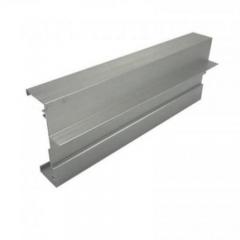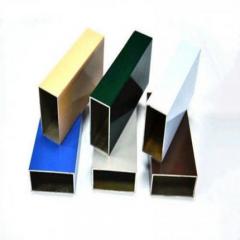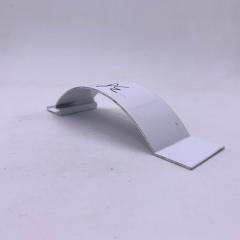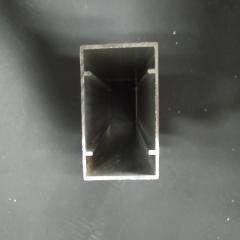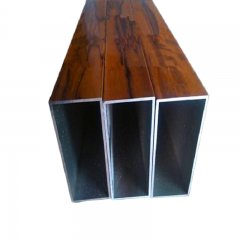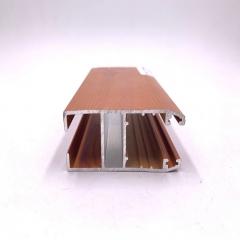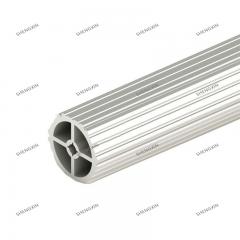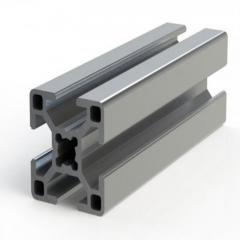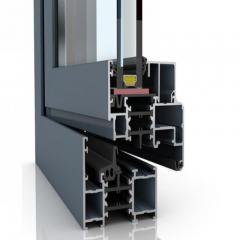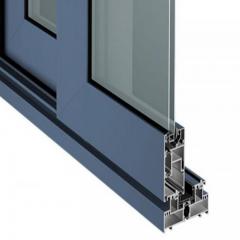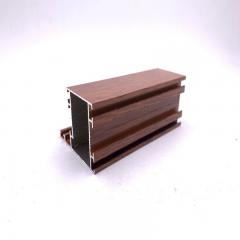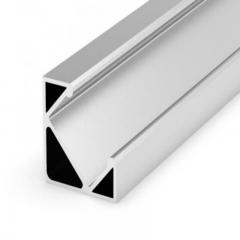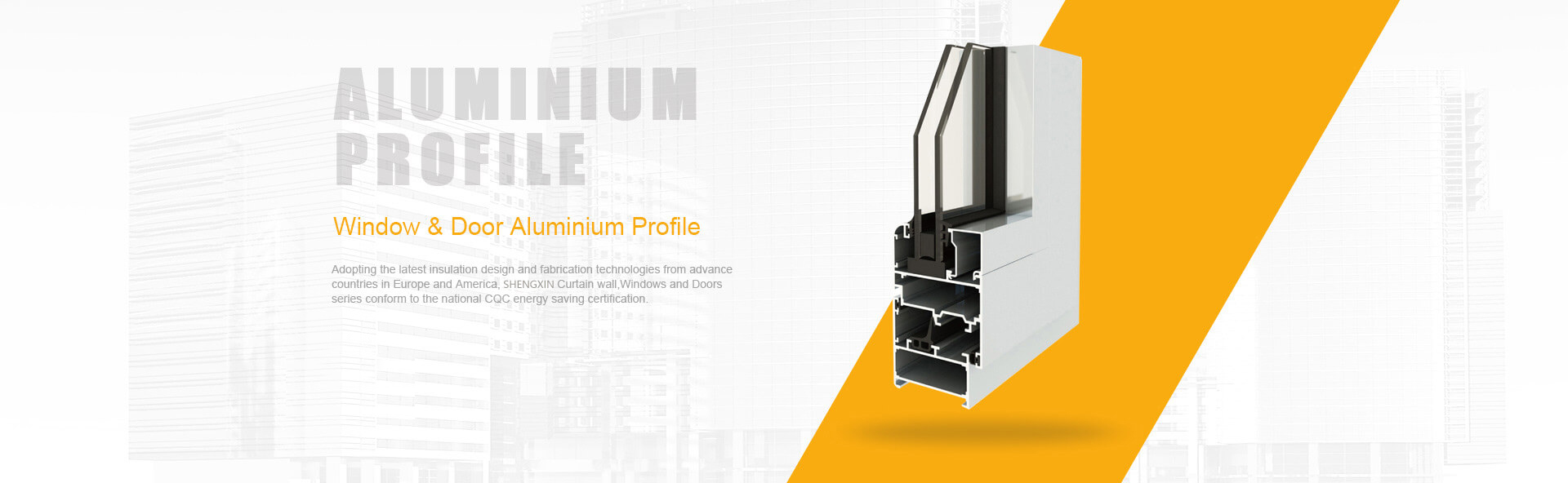
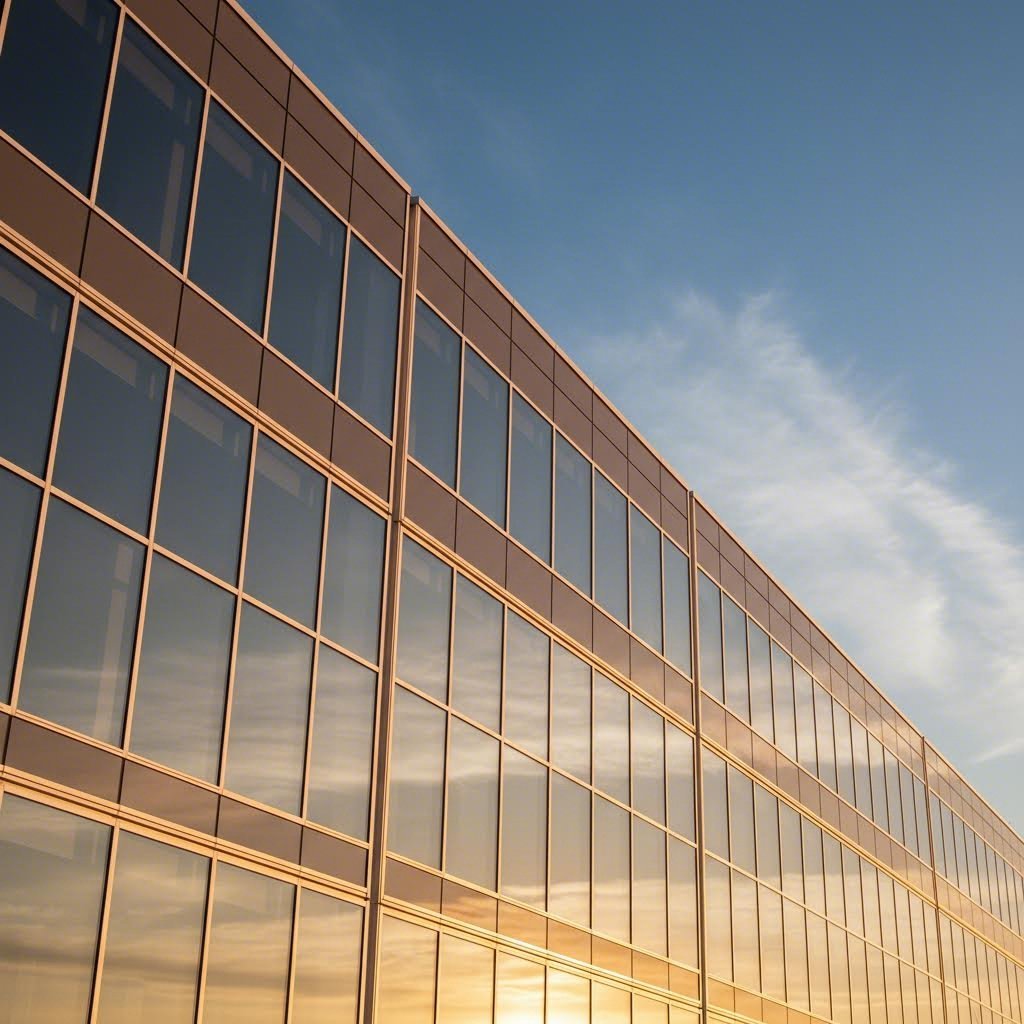
When you think about the sleek curtain walls of modern skyscrapers or the precision-engineered window frames in commercial buildings, you're likely looking at aluminum extrusion profiles in action. But what exactly are these versatile building components?
An aluminum extrusion is a fabrication process that forces a heated aluminum billet through a custom-shaped steel die to produce a continuous profile with a consistent cross-section. Imagine squeezing toothpaste through a tube—the paste takes the shape of the opening. The extrusion process works similarly, except it creates everything from simple angles and tubes to complex architectural systems with remarkable dimensional accuracy.
The journey from raw aluminum to construction-ready profile aluminum involves a carefully controlled sequence of steps. First, a cylindrical aluminum billet is preheated to approximately 800-925°F. This temperature makes the metal malleable enough for shaping without becoming molten.
Next comes the dramatic part. A powerful hydraulic ram applies up to 15,000 tons of pressure, pushing the softened billet through a precision-engineered steel die. The aluminum emerges on the other side in the exact cross-sectional shape of the die opening—whether that's a simple rectangular tube or an intricate window frame profile.
After exiting the press, the aluminum extruded profile undergoes rapid cooling through water baths or forced air. This quenching process controls the material's mechanical properties. The profiles are then stretched to eliminate any twists or distortions before being cut to specified lengths and aged in ovens to achieve the desired temper grade.
Why are construction professionals increasingly choosing extruded aluminum over traditional materials like steel or wood? The answer lies in a unique combination of properties that few other materials can match.
These characteristics explain why aluminum extrusions have become the material of choice for modern construction projects, from commercial high-rises to residential renovations. Understanding how these profiles are made helps you appreciate their capabilities and make informed decisions for your next building project.
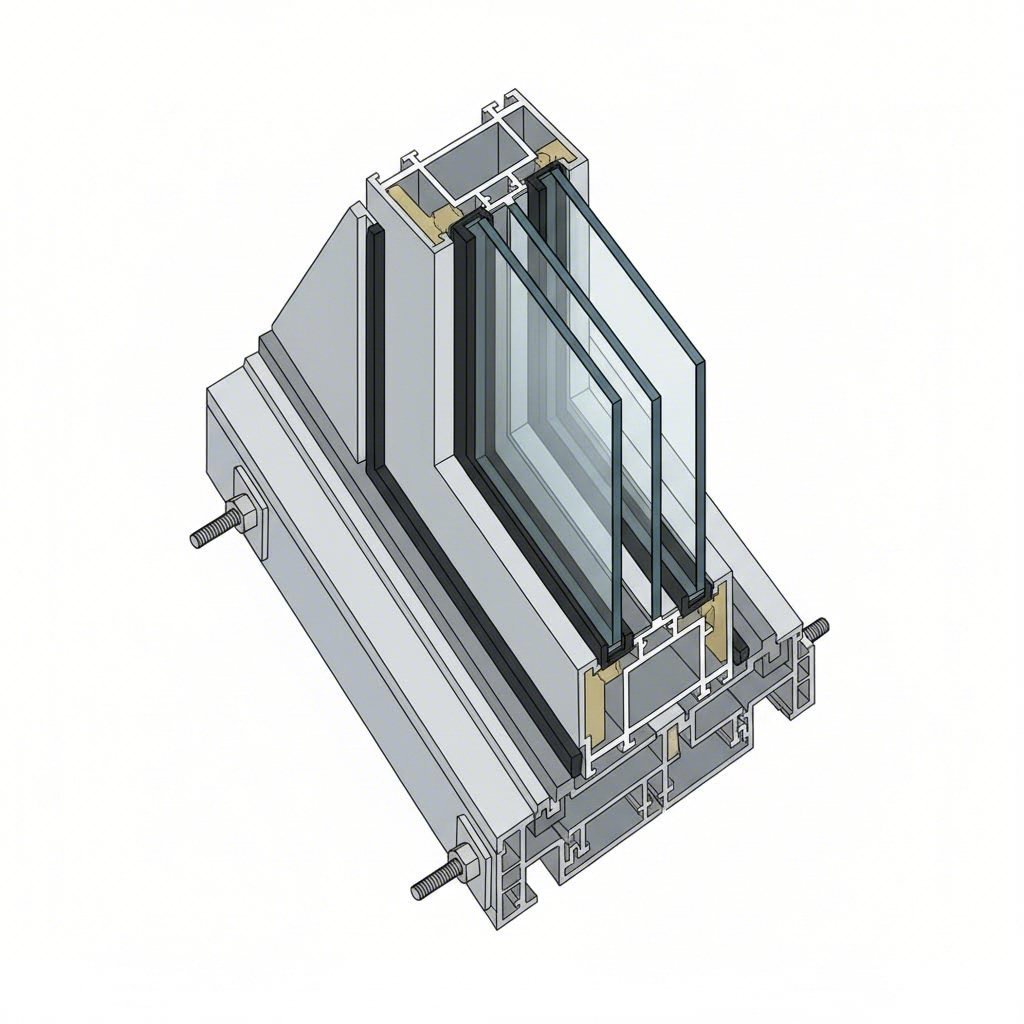
Now that you understand how aluminum extrusions are manufactured, where exactly do these versatile profiles show up in construction projects? The applications span far beyond what most people realize—from the structural skeleton of buildings to the decorative trim on interior walls.
Aluminum structural framing has transformed how engineers approach building design. With a strength-to-weight ratio that rivals steel at half the weight, aluminum framing systems reduce foundation loads and supporting structure requirements significantly.
Think about high-rise construction for a moment. Every pound saved in the framing translates to cost savings in foundations, supporting columns, and transportation logistics. Aluminum framing delivers that advantage without compromising structural integrity.
Common structural applications include:
Walk through any major city and you'll notice buildings that appear to be entirely clad in glass. Those stunning facades rely on aluminum frame extrusion systems working behind the scenes.
Curtain walls are non-load-bearing facades attached to a building's exterior floor slabs—functioning like a decorative curtain, as the name suggests. According to Taber Extrusions, these systems typically span six to ten inches deep from one slab to the next and come in two main types: stick-built systems assembled on-site, and panelized systems that arrive prefabricated and ready for installation.
Why does aluminum dominate this application? Consider these factors:
Window framing represents one of the most visible applications of aluminum extrusions in both commercial and residential construction. Unlike curtain walls that span multiple floors, aluminum window wall systems install between floor slabs—anchored at the sill and head, extending from interior to exterior.
These prefabricated systems offer distinct advantages. They don't require fire-stopping between floors since they sit within slab boundaries. Noise transmission is less problematic compared to curtain walls. And they deliver that ground-to-roof window appearance at a more accessible price point.
For door frames, aluminum provides the durability needed for high-traffic commercial entrances while maintaining clean sightlines that architects appreciate.
| Application Category | Typical Profiles Used | Key Benefits | Common Alloy Choices |
|---|---|---|---|
| Structural | I-beams, channels, T-slots, square tubes | High strength-to-weight ratio, modular assembly, corrosion resistance | 6061-T6 for maximum strength |
| Architectural - Curtain Walls | Mullion profiles, pressure plates, thermal break sections | Lightweight facade systems, design flexibility, energy efficiency | 6063-T5 for excellent finish |
| Architectural - Windows/Doors | Frame profiles, sash sections, threshold extrusions | Prefabricated installation, weather sealing, thermal performance | 6063-T5 or T6 |
| Exterior - Railings | Round tubes, rectangular rails, post profiles | Corrosion resistance, low maintenance, deck rails and balustrades | 6063-T5 anodized or powder coated |
| Interior Finishing - Drywall Trim | Corner beads, reveal strips, shadow gap profiles | Clean transitions, dimensional stability, paint-ready surfaces | 6063-T5 |
| Interior Finishing - Millwork | Edge banding, cabinet pulls, decorative moldings | Consistent finish quality, scratch resistance, modern aesthetics | 6063-T5 |
| Interior Finishing - Casework | Drawer slides, shelf supports, frame components | Lightweight construction, smooth operation, durability | 6063-T5 |
Whether you're specifying deck rails for a waterfront property or selecting aluminum framing for an industrial facility, the application category determines which profiles, alloys, and finishes will deliver optimal performance. Understanding these distinctions helps you communicate more effectively with suppliers and ensures your project specifications match real-world requirements.
You've identified the perfect application for aluminum extrusions in your construction project. But here's a question that trips up even experienced specifiers: which alloy should you choose? The difference between 6061 and 6063 aluminum might seem subtle on paper, yet selecting the wrong one can compromise either structural performance or aesthetic quality.
Both alloys belong to the 6000 series, meaning they're primarily alloyed with magnesium and silicon. However, the proportions of these elements create meaningful differences in how each alloy performs. Understanding these distinctions helps you specify aluminum profiles that truly match your project requirements.
Often called "architectural aluminum," alloy 6063 is the most popular aluminum alloy for extrusions. Why does it dominate architectural applications? The answer lies in its optimized extrudability and exceptional surface finish.
Alloy 6063 contains magnesium at 0.45-0.9% and silicon at 0.2-0.6%—lower concentrations than its 6061 counterpart. These reduced alloying elements make the material flow more smoothly through extrusion dies, producing extruded aluminum profiles with superior surface quality that anodizes beautifully.
When should you specify 6063? Consider this alloy for:
The alloy's very good corrosion resistance—particularly when combined with appropriate surface finishes—makes it ideal for applications where exposure to weather or water is expected.
Sounds like 6063 handles everything? Not quite. When structural integrity takes priority over surface aesthetics, 6061 aluminum steps into the spotlight.
Known as "structural aluminum," alloy 6061 contains higher concentrations of magnesium (0.8-1.2%) and silicon (0.4-0.8%). This composition delivers a slightly better strength-to-weight ratio compared to 6063, along with improved machinability for secondary processing operations.
Consider 6061 for these construction scenarios:
The trade-off? Alloy 6061 doesn't anodize quite as attractively as 6063, and its corrosion resistance is slightly lower. For applications where the aluminium extruded profile will be hidden or painted rather than anodized, this trade-off often makes perfect sense.
Selecting the right alloy is only half the equation. Temper designation—that T5 or T6 suffix—determines the final mechanical properties of your aluminum extrusion profile.
T5 temper indicates the extrusion was cooled from the hot working temperature and artificially aged. This process delivers good strength while maintaining excellent formability for subsequent bending or shaping operations.
T6 temper involves solution heat treatment by artificial aging, producing higher tensile strength than T5. Choose T6 when maximum strength is essential and no post-extrusion forming is required.
The following table compares key properties to guide your alloy and temper selection for profile precision extrusions:
| Property | 6063-T5 | 6063-T6 | 6061-T6 |
|---|---|---|---|
| Ultimate Tensile Strength | 27,000 psi | 35,000 psi | 45,000 psi |
| Yield Strength | 21,000 psi | 31,000 psi | 40,000 psi |
| Corrosion Resistance | Excellent | Excellent | Good |
| Weldability | Very Good | Very Good | Good |
| Surface Finish Quality | Excellent | Excellent | Good |
| Machinability | Fair | Fair | Good |
| Typical Construction Uses | Architectural trim, window frames, decorative profiles | Window/door systems requiring higher strength | Structural framing, load-bearing members, industrial applications |
Here's a practical rule of thumb: start with 6063-T5 for architectural applications where visual quality matters. Move to 6063-T6 when you need more strength but still require excellent anodizing response. Reserve 6061-T6 for structural applications where strength trumps surface finish concerns.
Understanding these alloy and temper combinations transforms how you approach aluminum specifications. Rather than simply requesting "aluminum profiles," you can now specify exactly what your project demands—ensuring the extruded aluminum profiles you receive perform exactly as intended.
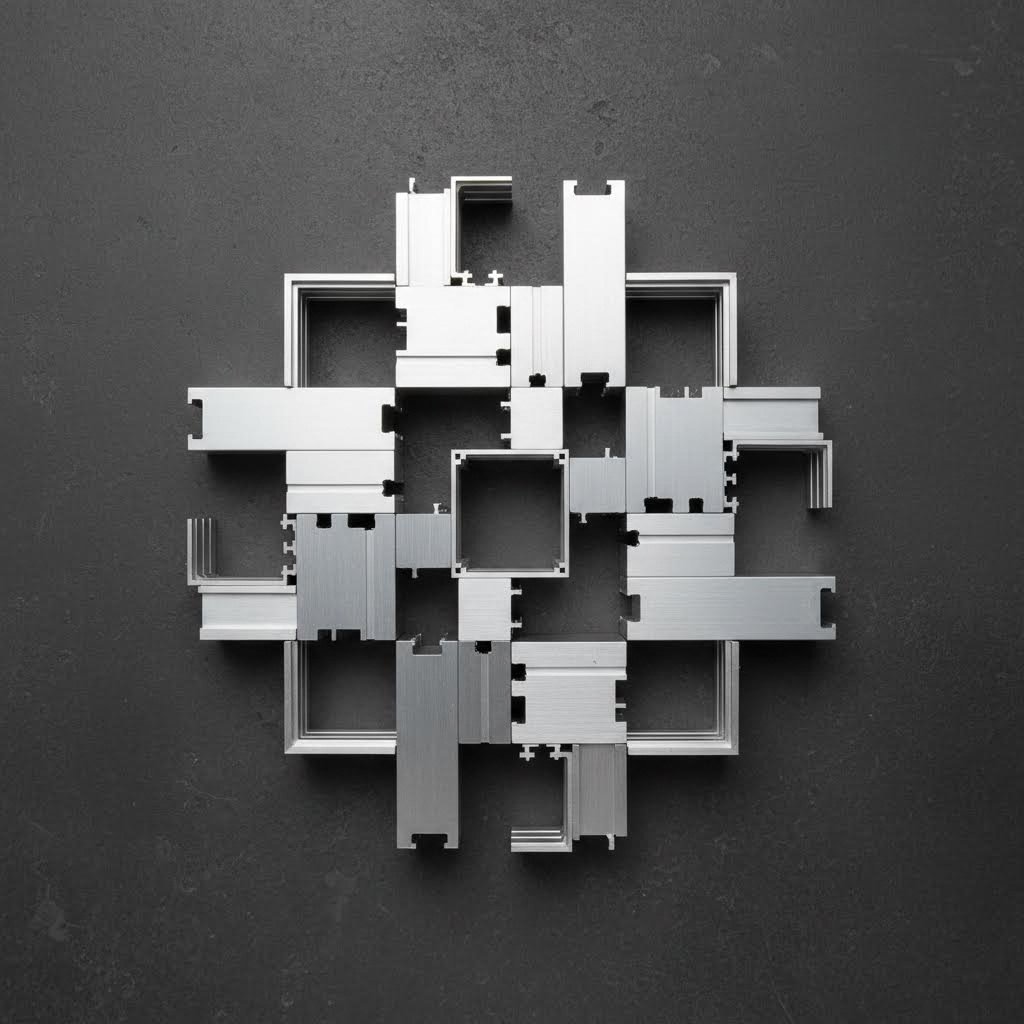
You've selected the right alloy and temper for your construction project. Now comes another critical decision: should you specify stock aluminum extrusions from a catalog, or invest in custom profiles designed specifically for your application? This choice impacts your project timeline, budget, and ultimately the functionality of the finished installation.
The good news? You don't always need custom solutions. Standard profiles handle the majority of construction applications efficiently and economically. Understanding when each option makes sense helps you allocate resources where they deliver the most value.
Standard aluminum extrusions are pre-designed profiles manufactured in high volumes and kept in stock by suppliers. They're ready to ship, cost-effective, and require zero tooling investment. For many construction projects, these off-the-shelf options deliver exactly what's needed.
Common standard shapes include:
When do standard profiles make the most sense? Consider them when your project uses generic shapes, when you need materials fast, or when order quantities are too small to justify tooling costs. According to industry experts, standard extrusions can often ship within a week since they're frequently in stock and require only cutting to length.
Sometimes "close enough" simply isn't good enough. When your design requires integrated features, unusual geometries, or optimized performance characteristics, custom aluminum extrusions become a smart investment.
Imagine you're designing a specialized aluminum extrusion rail system for mounting solar panels. A standard channel might work, but a custom profile could incorporate built-in drainage channels, integrated mounting slots, and optimized thermal characteristics—all in a single piece. That's the power of custom extrusion.
The custom die development process follows a predictable path:
What about costs? Tool costs for extrusion dies in normal architectural and industrial applications typically range from $400 to $1,000. For larger parts requiring 2,000-4,000 ton presses, tooling costs can reach $2,000. Many manufacturers refund these costs if you purchase a stipulated amount within two years.
Normal tool turnaround time runs 3-4 weeks, with production following within a week of sample approval. Once your custom die exists, reorders are just as fast as ordering standard shapes.
How do you decide between standard and custom? Consider these factors:
| Decision Factor | Choose Standard When... | Choose Custom When... |
|---|---|---|
| Timeline | You need materials within 1-2 weeks | You can accommodate 4-6 weeks for initial tooling |
| Order Volume | Quantities are small or one-time | Ongoing production justifies die investment |
| Design Complexity | Simple shapes meet functional requirements | Integrated features reduce assembly steps |
| Budget Priority | Minimizing upfront costs is critical | Total project cost matters more than initial investment |
| Performance Needs | Standard specifications suffice | Optimized weight, strength, or thermal properties are essential |
Here's a real-world example worth considering: a lighting company initially used standard U-channels for their LED fixtures. Later, they invested in a custom extrusion with integrated heat sinks and mounting clips. The result? Parts reduced from five to one, cutting assembly time by 40%.
Whether you're sourcing flextrude aluminum shapes for a modular building system or specifying architectural trim for a commercial facade, the standard versus custom decision ultimately comes down to matching your specific requirements with the most practical solution. Sometimes that's a catalog item ready to ship tomorrow. Other times, investing in a custom profile delivers benefits that far outweigh the initial tooling cost.
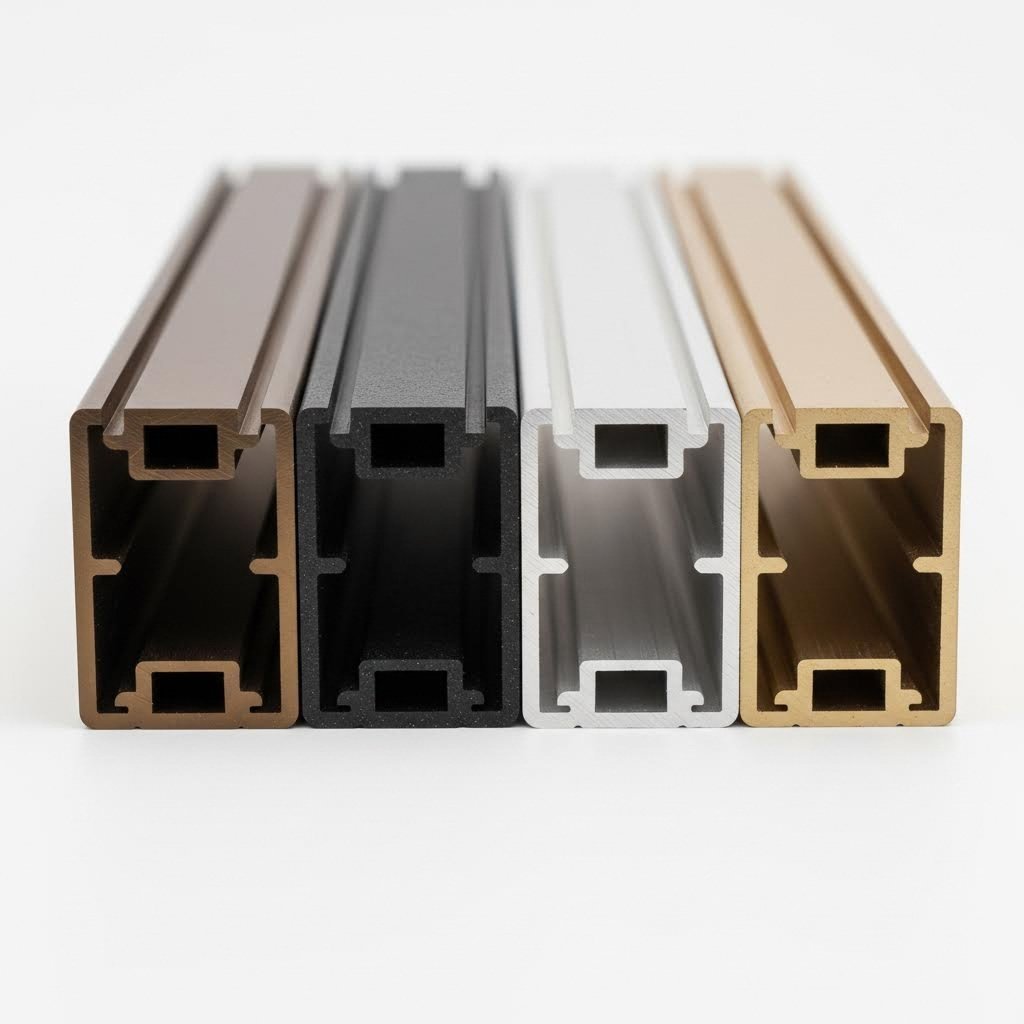
You've selected the perfect alloy and decided between standard or custom profiles. But here's something that often gets overlooked until it's too late: the surface finish you specify can make or break your project's long-term success. A beautiful aluminum fence panel installation can look terrible within five years if the finish wasn't matched to its environment.
Surface finishing isn't just about aesthetics—it's about protection, performance, and lifecycle costs. Let's explore how different finishes perform and when each makes the most sense for your construction applications.
Think of anodizing as aluminum's natural defense mechanism, supercharged. This electrochemical process transforms the surface into a layer of aluminum oxide—an incredibly hard, weather-resistant coating that's integral to the metal itself. Unlike paint or powder coatings that sit on top, anodized finishes cannot peel or flake because they grow from the base metal.
Why does coating thickness matter so much? The lifetime of an anodized finish is directly proportional to its thickness. Architectural Class I anodizing (0.7 mils) will last roughly twice as long as Class II (0.4 mils). Unfortunately, cheap anodized sheets sometimes arrive with coatings as thin as 0.10 mils—suitable for interior use but inadequate for exterior applications.
Where does anodizing truly shine?
Here's something many contractors don't realize: anodized surfaces can be renewed. When an anodized coating appears to have failed, cleaning with mild detergent and gentle abrasion often removes accumulated chalk and stains, revealing a refreshed surface that can last another twenty years.
Need a specific color for your black aluminum fence or matching aluminum extrusion trim to your building's color scheme? Powder coating opens up virtually unlimited color possibilities while delivering impressive durability.
Powder coating is essentially paint without the solvent—pigment encapsulated in powdered resin that's electrostatically applied and heat-cured. Advances in powder formulation have led to AAMA 2605-certified finishes offering 20 to 30-year warranties, putting them on par with premium liquid coatings for durability.
The environmental advantages are significant. Powder coatings emit low to no volatile organic compounds (VOCs) during curing, making them more sustainable and internationally viable than solvent-based alternatives. For projects pursuing LEED certification, this matters.
However, powder coating comes with trade-offs:
For curtain walls, metal roofing, and aluminum fencing in demanding environments, PVDF (polyvinylidene fluoride) coatings—commonly known by trade names like Kynar 500 or Hylar 5000—represent the gold standard. These fluoropolymer coatings have dominated the architectural market since 1965 for good reason.
PVDF coatings excel at maintaining color and finish under prolonged UV exposure. They resist chalking, fading, and chemical attack better than most alternatives. Major manufacturers offer 20-year warranties backed by decades of proven performance data.
The downsides? PVDF paints require primer and chrome-based pretreatment for optimal adhesion—adding complexity and cost. They also require higher curing temperatures (around 450°F), which can be unsuitable for components with thermal breaks or thin substrates. And they must be applied by licensed applicators, limiting availability.
Which finish should you specify for your extruded aluminum trim or aluminum fence panels? This comparison helps clarify the decision:
| Finish Type | Durability Rating | Color Options | Cost Considerations | Ideal Applications |
|---|---|---|---|---|
| Anodizing (Class I) | 20+ years exterior; renewable through cleaning | Limited: clear, bronze, black, champagne tones | Moderate initial cost; lowest lifecycle cost for metallic finishes | Storefronts, handrails, high-traffic areas, coastal environments, aluminium extrusion trim |
| Powder Coating (AAMA 2605) | 20-30 years with proper application | Virtually unlimited; stock colors readily available | Lower than PVDF; larger minimums for custom colors | Aluminum sheet cladding, fencing, interior finishing, sustainable building projects |
| PVDF/Kynar | 20+ years; proven 50+ year track record | Extensive; custom matching in small batches | Highest initial cost; requires licensed applicators | Curtain walls, metal roofing, facades requiring color consistency |
| Mill Finish | 5-10 years depending on environment | Natural aluminum only | Lowest cost; no finishing required | Concealed structural members, temporary installations, interior unexposed applications |
Your project's location significantly influences which finish performs best. Consider these environmental factors:
Coastal applications: Anodizing holds a distinct advantage here. Paint manufacturers charge extra for coastal warranties without changing their product formulation, while quality anodizers offer the same warranty at no additional charge. The sapphire-hard aluminum oxide layer resists salt spray effectively.
Industrial environments: PVDF coatings resist chemical attack better than anodizing, which can be susceptible to acidic pollutants over time. For factories, refineries, or urban areas with high pollution, PVDF typically delivers superior longevity.
High-traffic areas: Anodizing's abrasion resistance makes it the clear winner for surfaces that will experience physical contact—entrances, railings, and push plates.
The finish you specify today determines maintenance costs for decades. Choosing based solely on initial price often leads to premature replacement expenses that far exceed the savings.
Understanding these surface finishing options transforms how you approach specifications for aluminum extrusions. Rather than defaulting to whatever your supplier suggests, you can now match finish performance to environmental demands—ensuring your aluminum fence, curtain wall, or architectural trim delivers lasting value.
You've selected the right alloy, profile type, and surface finish. But here's a question that keeps engineers up at night: how much load can that aluminum extrusion actually carry? And in an era of stringent energy codes, how do you prevent those beautiful aluminum frames from becoming thermal bridges that undermine building performance?
These structural and thermal considerations often go unanswered in typical product literature. Yet understanding them is essential for specifying structural aluminum extrusions that meet both safety requirements and energy efficiency goals.
When engineers specify an aluminum frame structure for construction, they need hard numbers—not marketing claims. Load capacity depends on several factors: profile geometry, alloy and temper, span length, and support conditions.
Consider a practical example. According to MISUMI's load capacity guidelines, a 40x40mm aluminum extrusion profile with both ends supported can handle dramatically different loads depending on span length:
| Profile Size (mm) | Section Modulus (x10³ mm³) | Moment of Inertia (x10⁴ mm⁴) | Allowable Load at 500mm Span | Allowable Load at 1000mm Span |
|---|---|---|---|---|
| 20x20 | 0.74 | 0.74 | 99 N (10 kgf) | 24 N (2 kgf) |
| 40x40 | 4.45 | 8.9 | 1,196 N (122 kgf) | 299 N (30 kgf) |
| 80x80 | 32.45 | 129.8 | 17,438 N (1,778 kgf) | 4,359 N (444 kgf) |
| 100x100 | 53.08 | 265.4 | 35,655 N (3,635 kgf) | 8,913 N (908 kgf) |
Notice something important? Doubling the span length reduces allowable load to approximately one-quarter. This inverse relationship between span and capacity is critical when designing structural aluminum framing systems for industrial building systems, post frame buildings, or any load-bearing application.
Allowable loads are typically defined as the force that generates deflection equal to 1/1000 of the extrusion length. These represent maximum safe loads—always design with appropriate safety factors.
For metal stud applications and aluminum structural members, engineers must also consider:
Here's a challenge that architects face constantly: aluminum conducts heat exceptionally well. That's great for heat sinks but problematic for window frames and curtain walls. Without intervention, aluminium structural framing creates thermal bridges that compromise building envelope performance.
Enter thermal break technology. These systems interrupt the aluminum profile with a low-conductivity material—typically polyamide (nylon) reinforced with glass fibers—creating separate interior and exterior aluminum sections that dramatically reduce heat transfer.
Why does this matter? Buildings pursuing Passive House certification require windows achieving Uw values of ≤0.8 W/(m²K). According to WICONA's certification documentation, modern thermal break systems can achieve these demanding performance levels, limiting annual heating demand to just 15 kWh per square meter of living area.
Thermal breaks deliver multiple benefits beyond energy savings:
Specifying structural aluminum extrusions isn't just about performance—it's about demonstrating compliance. Modern construction projects increasingly require documented proof that materials meet environmental and safety standards.
Environmental Product Declarations (EPDs) have become essential tools for this purpose. As WICONA explains, an EPD is a third-party verified report providing comprehensive, transparent information on a product's environmental impact throughout its lifecycle. These declarations are recognized by major green building rating systems including LEED, BREEAM, and DGNB.
Key certifications to look for when specifying aluminum extrusions include:
The EU Taxonomy framework is also reshaping construction material specifications. This classification system identifies which economic activities are environmentally sustainable, emphasizing energy efficiency, sustainable materials, and circular economy principles. For construction professionals, this means documenting material sourcing, recycled content, and end-of-life recyclability.
Sustainability credentials aren't just marketing—they're becoming prerequisites for project approvals. EPDs and third-party certifications provide the documented proof that procurement teams and building officials require.
Whether you're designing an industrial building system with exposed structural aluminum framing or specifying high-performance window frames for a certified green building, understanding these structural and thermal considerations ensures your aluminum extrusions deliver both safety and sustainability.
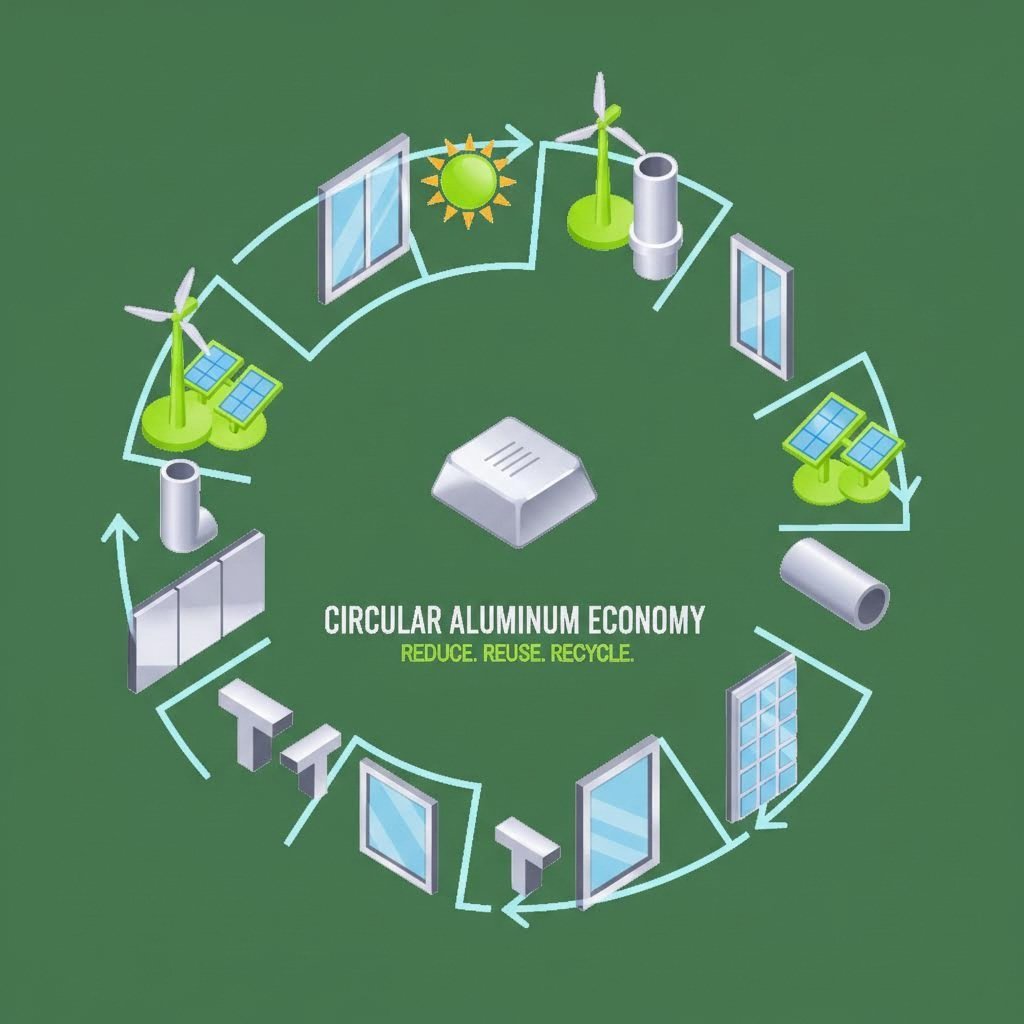
You've seen how aluminum extrusions deliver structural performance and energy efficiency. But here's something that sets this material apart from nearly every alternative: aluminum doesn't just perform well during a building's lifetime—it keeps performing after demolition. In a world where sustainability drives material specifications, understanding aluminum's circular economy credentials can transform how you approach construction projects.
Consider this striking reality: according to the Circle Economy Foundation, the global economy is only 7.2% circular. More than 90% of materials are wasted, lost, or unavailable for reuse. Aluminum stands as a remarkable exception to this linear model.
What makes aluminum truly unique among construction materials? Unlike plastics that degrade with each recycling cycle, aluminum can be recycled repeatedly without any loss of quality. The Aluminum Association explains why: aluminum atoms are bonded together in a crystal structure that remains fundamentally unchanged through melting and reforming. This means aluminum extrusions from a building demolished today can become window frames in tomorrow's high-rise—with identical performance characteristics.
The numbers tell a compelling story. Approximately 75% of all aluminum ever produced is still in use today. That aluminum pipe in a 1950s industrial building? It likely contains atoms that have cycled through multiple applications over decades. This permanent material value creates genuine circular economy potential that few construction materials can match.
How does recycling work in practice? Leading manufacturers implement closed-loop systems where process scrap returns directly to billet cast-houses for remelting into new extrusions. At end-of-life, decommissioned buildings yield aluminum with known economic value—ensuring it gets recycled rather than landfilled.
Key sustainability credentials include:
Here's where sustainability becomes quantifiable. Recycling aluminum requires up to 95% less primary energy than producing new aluminum from bauxite ore. Within Europe, primary aluminum production demands approximately 157 megajoules per kilogram, while recycled aluminum ingots require just 7.85 MJ/kg based on typical process and post-consumer scrap mixes.
What does this mean for your project's carbon footprint? Specifying aluminum with high recycled content dramatically reduces embodied carbon. Premium manufacturers now offer billets with minimum 50% recycled content, combined with primary aluminum from hydroelectric sources. This creates low-carbon offerings under 3 tonnes CO2e per tonne of aluminum—more than 60% lower than the North American average of approximately 8.5 tCO2e per tonne.
Whether you're specifying aluminum plate for structural applications or architectural profiles for facade systems, three variables particularly influence lifecycle assessment:
As low-carbon buildings become the norm, embodied energy in materials grows increasingly significant. Building materials currently represent 9 to 46 percent of a building's lifetime energy consumption for high-performance structures.
For green building certifications, aluminum extrusions offer documented advantages. LEED, BREEAM, and similar rating systems recognize lifecycle modeling that accounts for aluminum's recycled content, durability, and end-of-life recyclability. Environmental Product Declarations provide the third-party verified documentation these programs require.
The sustainability story extends beyond carbon. Regarding the aluminum or aluminium spelling question you might encounter—both refer to the same element, with "aluminum" standard in American English and "aluminium" used elsewhere. Either way, the material's environmental credentials remain identical: infinite recyclability, dramatic energy savings through recycling, and proven contributions to sustainable building design.
Understanding these lifecycle advantages helps you communicate aluminum's value to clients, sustainability consultants, and certification reviewers. The material doesn't just meet today's green building requirements—its circular economy potential positions it well for increasingly stringent future standards.
You've mastered alloy selection, profile specifications, and surface finishing options. But here's where theory meets reality: finding an aluminum extrusion supplier who can actually deliver what your project demands. Whether you're sourcing custom extruded aluminum for a commercial high-rise or standard profiles for residential renovations, your supplier choice directly impacts quality, lead times, and ultimately project success.
Think of your extrusion partner as an extension of your project team—not just a vendor filling orders. The right aluminum extrusion companies offer engineering collaboration, quality assurance, and integrated production capabilities that align with your construction goals. Let's explore how to evaluate and work with suppliers effectively.
What separates reliable aluminum extrusion suppliers from those who'll leave you scrambling to meet deadlines? Start with a systematic evaluation of their core capabilities. According to industry specialists, top-tier suppliers deliver much more than extruded profiles—they provide technical partnership from initial consultation to final shipment.
Here's what to assess when vetting potential partners:
Consider the difference capability makes. A supplier like Shengxin Aluminium exemplifies comprehensive manufacturing capacity—their 35 extrusion presses ranging from 600T to 5500T, combined with state-of-the-art CNC machining centers, enable them to produce everything from custom 6063 aluminum tubes to complex industrial profiles. Their surface treatment options span anodizing in custom colors, powder coating, PVDF, and micro-arc oxidation for superior durability.
Once you've identified capable custom aluminum extrusion manufacturers, how do you actually work together effectively? The supplier relationship involves distinct phases, each requiring clear communication and defined expectations.
Design consultation and die development: For profile custom extrusions, this phase determines everything that follows. Experienced suppliers review your requirements and optimize profiles for manufacturability—sometimes suggesting modifications that improve performance while reducing production costs. Well-designed tooling reduces lead times, minimizes waste, and improves overall quality of extruded profiles.
Sample approval and quality verification: Before committing to full production, request physical samples to validate extrusion precision, surface finish, and material consistency. This practical test reveals capabilities that specifications alone cannot confirm. Ask about in-house testing—tensile strength verification, dimensional inspection, salt spray resistance checks, and hardness measurements demonstrate quality control rigor.
Production and logistics planning: For ongoing projects, confirm how suppliers handle demand fluctuations. Can they scale output or introduce new dies without excessive lead times? Facilities with multiple extrusion lines and automated systems typically outperform smaller operations in meeting delivery windows. Industry benchmarks suggest on-time delivery rates between 85% and 95% depending on operational efficiency.
Here's a practical framework for evaluating potential suppliers:
| Evaluation Criteria | Questions to Ask | Red Flags to Watch |
|---|---|---|
| Production Capacity | What press tonnages do you operate? Can you show production volume history? | Single press operation; inability to provide capacity data |
| Quality Systems | What certifications do you hold? What testing equipment is available? | No ISO certification; vague quality claims without documentation |
| Custom Extrusion Aluminum Experience | Can you share examples of similar projects? What's your die development process? | No portfolio of comparable work; unclear tooling timelines |
| Surface Treatment | Which finishes are performed in-house versus outsourced? | All finishing outsourced; limited color or treatment options |
| Technical Support | Will engineers review our designs? What optimization do you typically suggest? | No engineering staff available; order-taking only mentality |
| Delivery Performance | What's your on-time delivery rate? How do you handle rush orders? | Cannot provide metrics; overpromising lead times |
What about residential versus commercial projects? The evaluation criteria remain similar, but emphasis shifts. Commercial construction typically demands higher volumes, tighter tolerances, and comprehensive documentation. Residential projects may prioritize flexibility, smaller minimum orders, and broader finish selections. Either way, verify the supplier can accommodate your specific requirements before committing.
A supplier that cannot provide samples, audit access, or detailed answers about materials and tolerances may not be a reliable long-term partner. Invest time upfront to avoid costly surprises during production.
For construction professionals seeking custom extrusions with end-to-end support—from die development through mass production—partnering with manufacturers who offer comprehensive capabilities simplifies procurement while ensuring consistent quality. With over 30 years of industry experience and factory-direct pricing, established suppliers like Shengxin Aluminium demonstrate how integrated manufacturing delivers value across the entire project lifecycle.
Now that you understand how to evaluate and work with suppliers, the final step involves putting all these considerations together into actionable decisions for your next construction project.
You've journeyed through alloy selection, profile specifications, surface finishes, and supplier evaluation. Now comes the moment where knowledge transforms into action. Building with aluminum extrusion isn't just about understanding the technical details—it's about making confident decisions that deliver lasting value for your construction projects.
The global construction aluminum market tells a compelling story. According to DataM Intelligence, this sector reached US$75.3 billion in 2024 and is projected to grow at 6.17% annually through 2032. That trajectory reflects what you've seen throughout this guide: aluminum extrusions offer an unmatched combination of performance, sustainability, and design flexibility that modern construction demands.
Before you specify your next aluminium extrusion order, consider these decision points that separate successful projects from costly mistakes:
The most critical factor in specifying aluminum extrusions isn't any single technical detail—it's partnering with a manufacturer who offers comprehensive capabilities and genuine technical support from design through delivery.
Where to buy aluminum extrusion that meets your exact requirements? Start by identifying suppliers with proven construction industry experience. Look for manufacturers offering end-to-end capabilities: die development, precision extrusion, CNC machining, and diverse surface treatments under one roof.
Consider what comprehensive capability looks like in practice. Shengxin Aluminium exemplifies this approach with over 30 years of industry experience, 35 extrusion presses spanning 600T to 5500T capacity, and integrated finishing options from anodizing to PVDF. Their factory-direct pricing model eliminates intermediary markups while maintaining quality control throughout production.
Whether you need aluminum extrusion frame kits for modular construction, custom 6063 tubes for architectural window frames, or complex industrial profiles for specialized applications, partnering with experienced manufacturers streamlines your procurement while ensuring consistent results.
The construction industry's shift toward sustainable, high-performance materials continues accelerating. Aluminum extrusions—with their infinite recyclability, proven durability, and design versatility—stand ready to meet these evolving demands. Your next project benefits from decades of material science and manufacturing innovation. The question isn't whether aluminum extrusions fit your construction needs. It's which combination of alloy, profile, and finish delivers optimal value for your specific application.
Aluminum extrusions offer a unique combination of lightweight strength (one-third the weight of steel), superior corrosion resistance without rusting, unmatched design flexibility for complex one-piece profiles, and excellent sustainability credentials with infinite recyclability. These properties make them ideal for curtain walls, window frames, structural framing, and architectural trim applications in both commercial and residential projects.
Alloy 6063 is called 'architectural aluminum' with excellent surface finish quality and superior corrosion resistance—ideal for window frames, curtain walls, and decorative profiles. Alloy 6061, known as 'structural aluminum,' offers higher tensile strength (45,000 psi vs 35,000 psi in T6 temper) and better machinability—best for load-bearing structural members and industrial applications where strength outweighs aesthetic concerns.
Choose standard profiles when you need materials within 1-2 weeks, have small quantities, or simple shapes meet your requirements. Opt for custom extrusions when integrated features can reduce assembly steps, ongoing production justifies die investment ($400-$2,000), or optimized weight and thermal properties are essential. Custom dies typically take 3-4 weeks for development with production following shortly after sample approval.
Anodizing is the optimal choice for coastal applications. Unlike painted finishes that require special coastal warranties, anodized surfaces resist salt spray effectively because salt is pH neutral with minimal impact on the aluminum oxide layer. Class I anodizing (0.7 mils) provides approximately twice the lifespan of Class II (0.4 mils) and can be renewed through cleaning, potentially lasting 20+ years.
Assess suppliers on five key criteria: press capacity range (diverse tonnages from 600T to 5500T handle various profile sizes), in-house surface treatment options (anodizing, powder coating, PVDF), CNC machining capabilities for ready-to-install products, quality certifications (minimum ISO 9001), and technical support availability for design optimization. Request samples, verify on-time delivery rates (85-95% is industry standard), and confirm they can provide documentation like EPDs for green building certifications.



 Servicio en línea
 0086 136 3563 2360
 sales@sxalu.com
 +86 136 3563 2360
 español
 English
 français
 Deutsch
 русский
 português
 العربية
 ไทย
ไทย Việt
Việt Українська