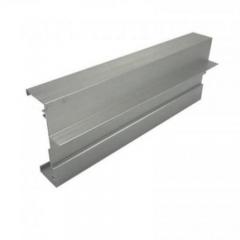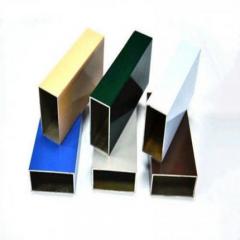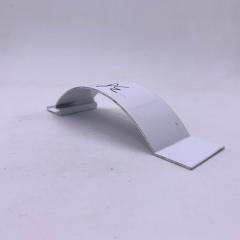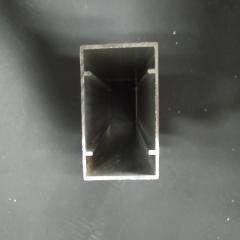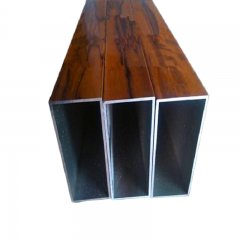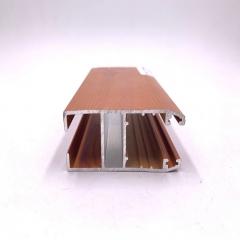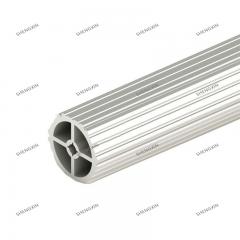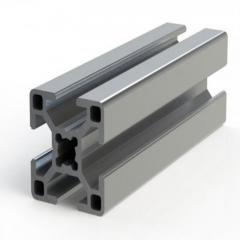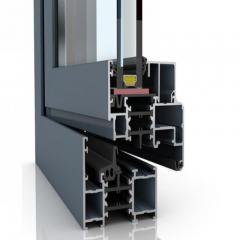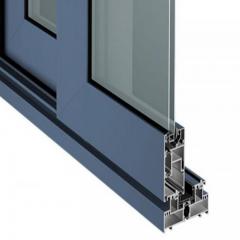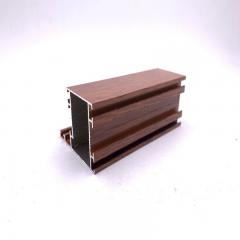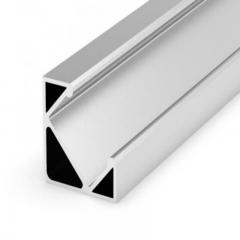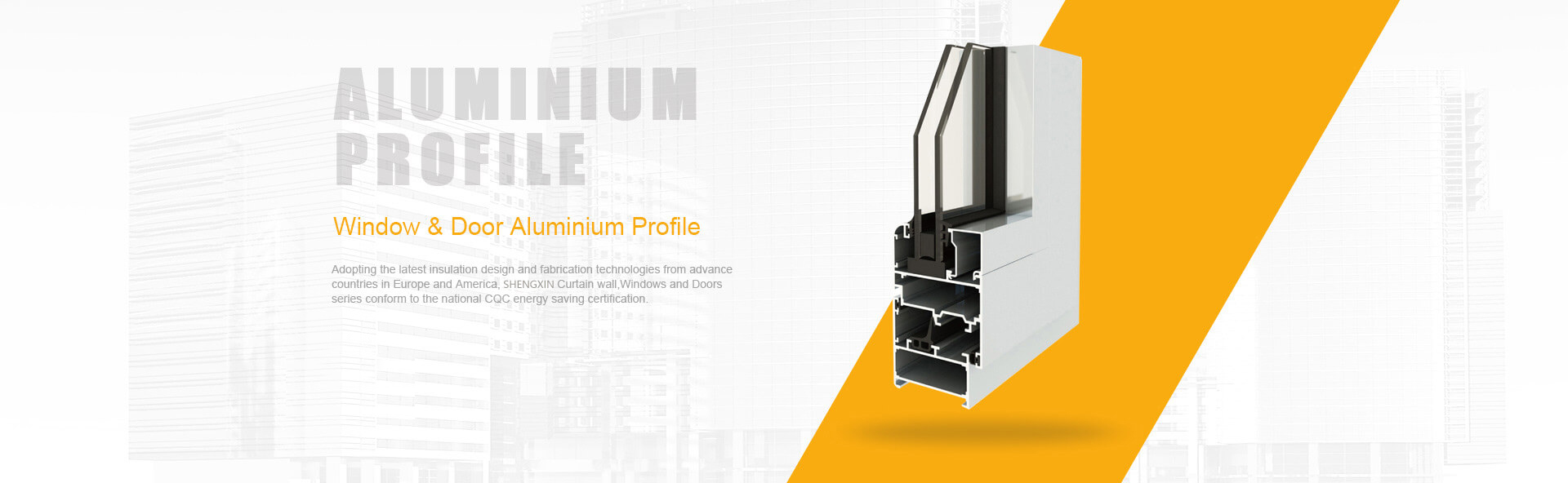
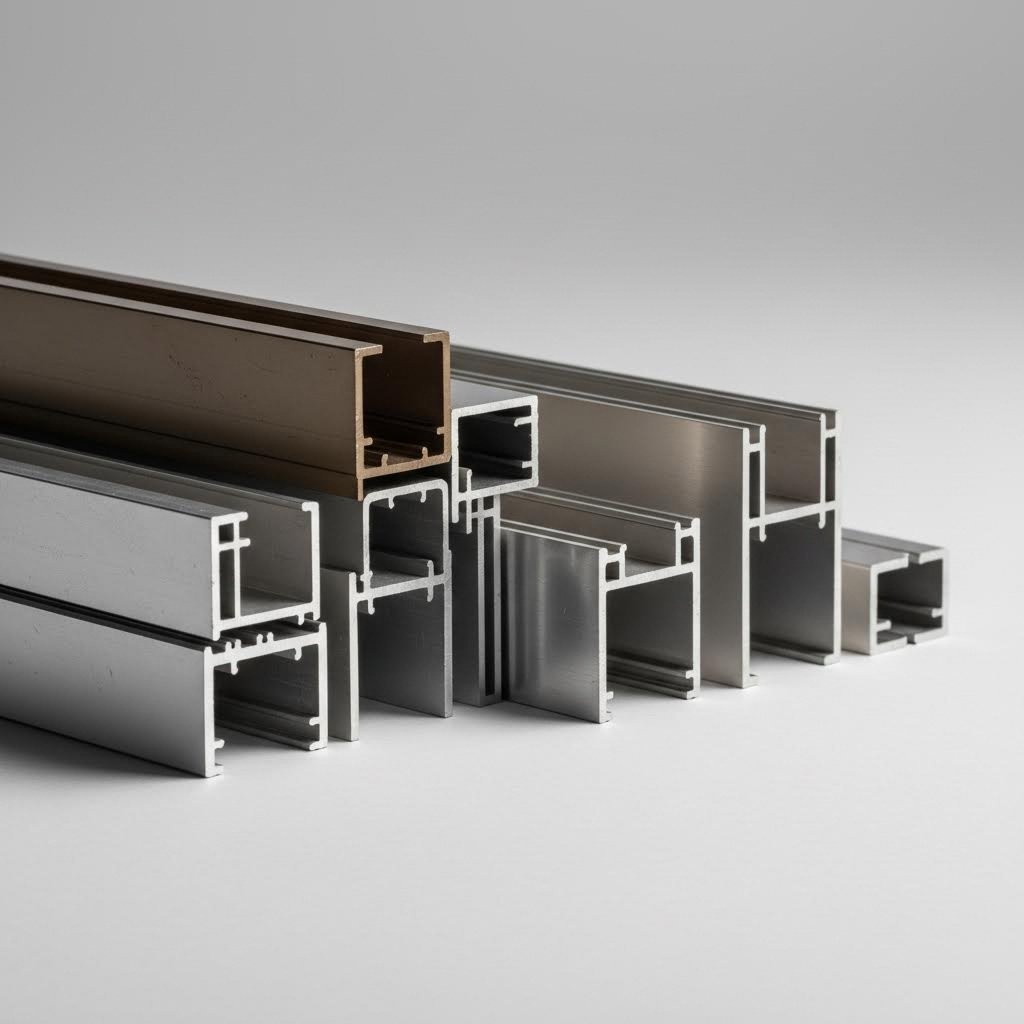
Aluminum glazing extrusions are precision-manufactured aluminum profiles specifically engineered to hold, frame, and secure glass or polycarbonate panels in architectural and structural applications. These specialized components create weathertight, structurally sound connections between glazing materials and building structures—serving as the critical interface that keeps glass panels firmly in place while protecting interiors from the elements.
Whether you're designing a sleek commercial storefront or building a backyard greenhouse, these profiles form the backbone of modern glazing systems. But what makes aluminum extrusion the go-to choice for architects and builders worldwide? Let's break it down.
Imagine trying to install a large glass panel without proper framing. Sounds risky, right? Glazing extrusions solve this challenge by providing channels, frames, and structural supports that distribute weight evenly while accommodating thermal movement. They serve three essential purposes:
The aluminium glazing industry relies heavily on these profiles because aluminum offers an unmatched combination of strength, corrosion resistance, and design flexibility. Unlike steel, it won't rust in humid environments. Unlike wood, it won't warp or rot over decades of exposure.
The manufacturing process explains why these profiles can achieve remarkably complex cross-sections. During aluminum extrusion, heated aluminum billets are forced through precision-machined steel dies under tremendous pressure. Think of it like squeezing toothpaste through a shaped nozzle—except the "toothpaste" is superheated metal and the "nozzle" creates intricate architectural profiles.
This process allows manufacturers to produce profiles with internal channels, snap-fit grooves, and integrated gasket pockets that would be impossible to achieve through other fabrication methods. A single extrusion can incorporate multiple functional features: a glazing channel on one side, a structural mounting flange on another, and decorative details on the visible face.
The result? Components perfectly suited for diverse applications:
For projects requiring sliding functionality, specialized aluminum extrusion slider profiles provide smooth-operating tracks for movable glass panels. These track systems demand precise dimensional tolerances to ensure years of trouble-free operation.
With over 125 standard glazing shapes available from established suppliers—and the option to create custom dies for unique requirements—architects and builders have unprecedented flexibility in bringing their vision to life. Understanding these foundational concepts prepares you to make informed decisions about alloys, finishes, and specifications covered in the sections ahead.
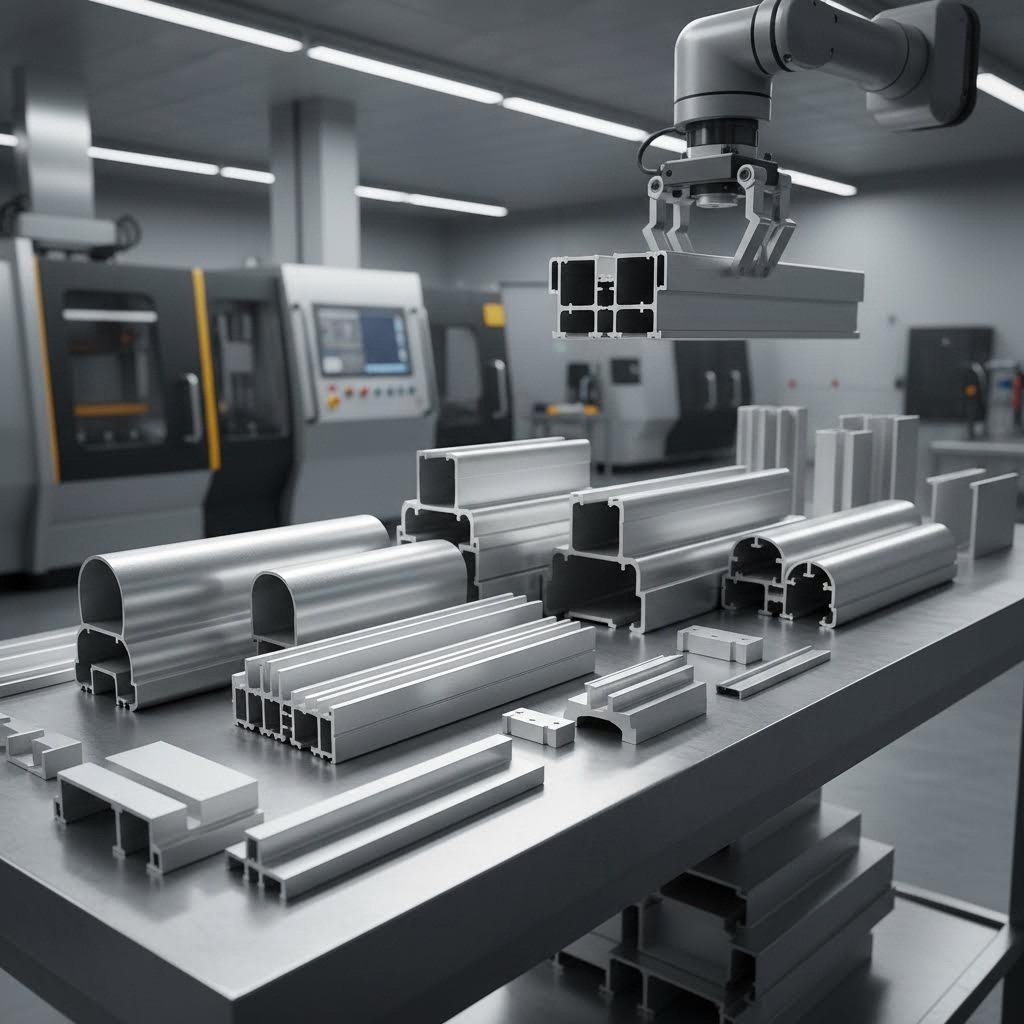
When specifying aluminum extrusions for glazing projects, the alloy you choose directly impacts performance, durability, and cost. Yet most product listings skip this critical detail entirely. Understanding the difference between common alloys helps you match materials to application demands—whether you're framing a simple interior partition or engineering a structural curtain wall system.
Two alloys dominate the architectural aluminum extrusions market: 6063 and 6005A. Both belong to the 6000 series (aluminum-magnesium-silicon alloys), but their subtle compositional differences create meaningful performance variations. Let's examine why these distinctions matter for your glazing project.
Walk past any commercial storefront or residential window, and you're likely looking at 6063 aluminum. This alloy has earned its reputation as the architectural standard for good reason—it offers exceptional extrudability combined with a naturally smooth surface finish that takes anodizing beautifully.
What makes 6063 so workable? Its composition includes 0.45-0.90% magnesium and 0.20-0.60% silicon, creating an alloy that flows easily through complex die shapes during extrusion. This matters because aluminum window frame extrusions often feature intricate cross-sections with internal channels, snap-fit grooves, and integrated gasket pockets. Alloys that don't extrude smoothly create surface defects and die wear problems.
Key characteristics of 6063 aluminium extrusions include:
For standard aluminum frame extrusions in residential windows, storefronts, and interior partitions, 6063 delivers the ideal balance of formability, appearance, and mechanical properties at competitive pricing.
Sometimes 6063 isn't enough. Large-span skylights, structural glazing systems, and applications with significant wind or impact loads demand higher mechanical performance. That's where 6005A enters the picture.
6005A contains slightly higher silicon content (0.5-0.9%) and allows up to 0.5% manganese—modifications that boost strength without dramatically sacrificing extrudability. According to comparative material data, 6005A can achieve ultimate tensile strengths ranging from 190-300 MPa, compared to 6063-T6's typical 240 MPa.
Why does this matter for extruded aluminum systems? Consider a large overhead glazing installation. The extrusion must support not just the glass weight, but also snow loads, wind uplift forces, and maintenance access loads. Higher-strength alloys allow engineers to specify thinner wall sections while maintaining structural integrity—reducing material cost and weight.
You'll notice alloys specified with temper designations like "6063-T5" or "6005A-T6." These codes reveal how the material was heat-treated after extrusion—and this treatment dramatically affects mechanical properties.
Here's what those designations mean:
The aging process involves holding the material at 325-400°F for one to eight hours, allowing alloying elements to form strengthening precipitates within the aluminum matrix. The result? Significant strength improvements without changing the alloy composition.
For most aluminum window frame extrusions, 6063-T5 provides adequate strength with simpler processing. Structural applications requiring maximum load capacity typically specify T6 temper.
| Property | 6063-T5 | 6063-T6 | 6005A-T6 |
|---|---|---|---|
| Ultimate Tensile Strength | 140-150 MPa | 190-240 MPa | 190-300 MPa |
| Yield Strength | 97-110 MPa | 160-210 MPa | 100-270 MPa |
| Elongation at Break | 8% | 10-11% | 8.6-17% |
| Extrudability Rating | Excellent | Excellent | Good |
| Surface Finish Quality | Excellent | Excellent | Good |
| Corrosion Resistance | Excellent | Excellent | Good to Excellent |
| Typical Applications | Window frames, door frames, interior partitions | Storefronts, curtain walls, decorative trim | Structural glazing, large skylights, high-load applications |
| Relative Cost | Baseline | Slightly higher | Moderate premium |
When selecting between these options, consider your project's structural requirements first, then factor in surface finish needs and budget constraints. For most residential and light commercial glazing, 6063-T5 hits the sweet spot. Large-scale architectural projects with demanding load requirements often justify the step up to 6005A-T6.
With alloy selection clarified, the next consideration becomes equally important: understanding profile dimensions and specifications that ensure your extrusions fit both the glass panels and the building structure.
You've selected your alloy. Now comes the question that trips up many project planners: which profile shape and size actually fits your glazing application? Most product catalogs list dozens of extruded aluminum sections without explaining how dimensions translate to real-world performance. Let's change that.
Understanding profile specifications separates successful installations from costly rework. The right profile accommodates your glass thickness, handles expected loads, and integrates with your gasket and sealant systems. Get these details wrong, and you're facing leaks, structural failures, or panels that simply won't fit.
Aluminum profile extrusions for glazing applications fall into distinct categories, each engineered for specific installation scenarios. Knowing which shape suits your project eliminates guesswork during specification.
U-Channels: The simplest glazing profile—an open channel that receives glass panels from one direction. You'll find U-channels in shower enclosures, interior partitions, and edge-finishing applications. They're economical and straightforward to install but offer limited structural support for larger panels.
H-Sections: Think of these as back-to-back U-channels sharing a center web. H-sections join two adjacent glass panels, providing clean transitions without visible mullions. Common in glass partition walls where panels meet edge-to-edge.
Snap-Fit Systems: These two-piece profiles feature a base channel that mounts to the structure and a decorative cap that snaps over the glazing edge. Installation is faster since glass sets into the base before the cap locks everything in place. Ideal for aluminum track extrusion applications where aesthetics matter.
Pressure-Plate Glazing Bars: Heavy-duty profiles designed for curtain walls and structural glazing. A base extrusion holds the glass while a separate pressure plate bolts down to apply uniform clamping force. This system accommodates gaskets and thermal breaks while enabling glass replacement without disturbing the frame.
Thermally Broken Profiles: Critical for exterior applications, these profiles incorporate a non-conductive polyamide barrier separating inner and outer aluminum sections. This break prevents heat transfer through the frame—essential for meeting modern energy codes and preventing interior condensation.
An extruded aluminium track system for sliding doors or operable windows requires additional complexity: precision-machined channels that guide rollers or glides while maintaining weathertight seals. These aluminium track extrusions demand tighter tolerances than fixed glazing profiles.
Wall thickness directly impacts structural capacity, weight, and cost. For glazing applications, you'll typically encounter profiles ranging from 1.2mm to 3.0mm wall thickness—but this range serves dramatically different purposes.
Here's how thickness relates to application:
According to industry design guidance, uniform wall thickness throughout a profile produces the best extrusion results. Unequal sections cause aluminum to flow at different rates through the die, potentially creating twisting or bending during production. When reviewing an extruded aluminum shapes catalog, note whether complex profiles maintain reasonable thickness uniformity.
Tolerances define acceptable dimensional variation. Larger dimensions require wider tolerance ranges—a reality of the extrusion process. For example, you might achieve +/-0.003" tolerance on a 0.500" dimension, but a 1.000" dimension may only hold +/-0.005". The Aluminum Association's Aluminum Standards and Data publication establishes industry-standard tolerances for both standard and precision extruded aluminum sections.
When sourcing aluminum extrusion trim or structural glazing profiles, don't settle for basic catalog dimensions. Request these specifications to ensure your extrusions perform as expected:
Why do moment of inertia and section modulus matter? These engineering properties tell you how a profile resists bending. A profile might look substantial but have poor structural geometry—thin walls concentrated near the neutral axis contribute little to stiffness. Requesting these values upfront prevents surprises during structural review.
The glazing channel—the groove that receives your glass panel—requires careful sizing. Too shallow, and panels lack adequate engagement for structural security. Too deep, and you're wasting material while complicating installation.
Channel depth must accommodate:
Industry practice calls for glazing channels at least 6mm (1/4") deep for standard applications, with 100-150mm (4-6") setting blocks positioned at quarter points for insulating glass units. Deeper channels—12mm or more—accommodate thicker insulated glazing units while providing enhanced structural engagement against wind loads.
The relationship is straightforward: thicker glazing panels demand deeper channels and more robust profiles. Single-pane glass at 4-6mm thickness fits comfortably in standard channels, while 28mm insulated glass units require specifically engineered deep-channel systems.
With profile geometry and specifications understood, the next logical step is matching these extrusions to specific glazing thicknesses—ensuring your selected profiles accommodate everything from simple single-pane installations to complex insulated glass assemblies.
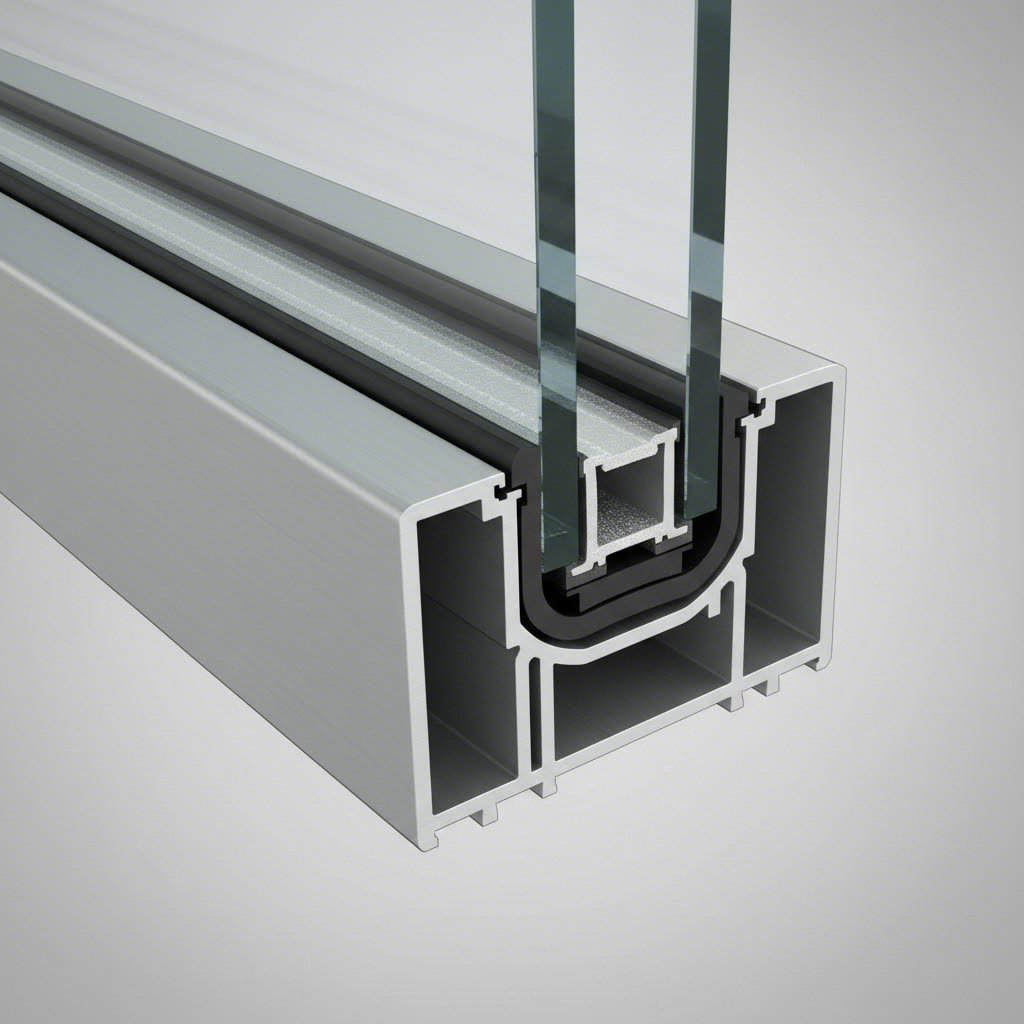
Here's a scenario that frustrates installers more than almost anything else: ordering extrusion profiles, receiving glass panels, and discovering they don't fit together properly. The glazing sits too loose in the channel, or worse—it won't slide in at all. This mismatch happens when specifiers overlook a fundamental principle: extrusion channel dimensions must accommodate not just the glass thickness, but also gaskets, sealants, and expansion clearances.
Getting this right requires understanding how different glazing types interact with aluminum window extrusions. Let's walk through the compatibility requirements that ensure your panels seat securely and perform reliably for decades.
Glass thickness varies dramatically based on application demands. A simple interior partition might use 4mm single-pane glass, while a high-rise curtain wall could require 28mm insulated glass units. Your window extrusion profiles must accommodate this range—plus the accessories that complete the system.
When calculating required channel depth, factor in these components:
According to industry design guidelines, insulated glass units require minimum 6mm airspace between glass surfaces in both double and triple-glazed configurations. This airspace, combined with glass lite thickness and spacer bars, determines overall IGU dimensions that your extruded aluminum window frame must accommodate.
Single-pane applications remain straightforward. Standard 4mm to 6mm glass fits comfortably in channels designed with 12-15mm depth, leaving adequate room for gaskets and movement. But step up to insulated glass, and complexity increases significantly.
Glass isn't your only option. Polycarbonate sheets offer impact resistance that tempered glass can't match, making them ideal for high-security applications, sports facilities, and areas prone to vandalism. However, polycarbonate behaves differently than glass—and your aluminum window extrusion profiles must account for these differences.
Polycarbonate expands approximately seven times more than glass under temperature changes. A 1200mm polycarbonate panel can grow or shrink by 5-6mm seasonally in climates with extreme temperature swings. Channels designed for glass won't provide adequate expansion room, leading to panel buckling in summer or excessive gaps in winter.
Additionally, polycarbonate scratches more easily than glass, requiring careful gasket selection. Rubber gaskets with rough textures can abrade polycarbonate surfaces over time as thermal movement causes the panel to shift within its channel.
| Glazing Type | Typical Thickness Range | Recommended Channel Depth | Common Applications |
|---|---|---|---|
| Single-Pane Float Glass | 4mm - 6mm | 12mm - 15mm | Interior partitions, picture frames, display cases |
| Tempered Safety Glass | 4mm - 12mm | 15mm - 20mm | Shower enclosures, storefronts, doors |
| Laminated Safety Glass | 6.4mm - 12.8mm | 18mm - 22mm | Security glazing, overhead panels, sound control |
| Double-Glazed IGU | 20mm - 28mm | 25mm - 35mm | Windows, curtain walls, skylights |
| Triple-Glazed IGU | 35mm - 46mm | 40mm - 52mm | High-performance facades, cold climate windows |
| Polycarbonate Sheet | 4mm - 16mm | 20mm - 30mm (extra expansion allowance) | Greenhouses, security screens, machine guards |
When you're installing insulated glass units, using standard aluminum profiles without thermal breaks defeats the purpose of high-performance glazing. Why? Aluminum conducts heat approximately 1,000 times more efficiently than the insulating airspace in your IGU. Without intervention, heat flows directly through the aluminum frame, bypassing your expensive double or triple glazing entirely.
As thermal performance research confirms, 85 percent of thermal bridging in fenestration occurs at the frame perimeter. Conduction through the frame and edge of glass accounts for 50 percent of energy flow—more than the center of the glass itself.
Thermally broken aluminium window extrusions address this by incorporating polyamide barriers—typically 10mm to 100mm wide—that separate interior and exterior aluminum sections. This interruption in the metal path reduces heat transfer and keeps interior frame surfaces warmer, preventing the condensation that damages finishes and promotes mold growth.
For aluminum window extrusion profiles in cold climates, thermal barriers of at least 25mm (1 inch) are recommended. This width improves both condensation resistance and overall U-factor, delivering meaningful energy savings over the system's lifespan.
Extrusions don't work alone. They're part of an integrated system where each component must match the others. Selecting incompatible accessories undermines even the best aluminum profiles.
Gaskets create the primary seal between glass and aluminum. EPDM rubber remains the standard for exterior applications due to its UV resistance and longevity. Silicone gaskets offer superior temperature range but cost more. The gasket cross-section must match the extrusion's gasket pocket dimensions precisely—loose gaskets leak, while oversized gaskets distort during installation.
Setting blocks support the glass weight at the bottom of the frame, preventing glass-to-metal contact that causes stress fractures. Industry practice positions setting blocks at quarter points from each corner, with blocks sized to transfer load without crushing under the panel weight.
Sealants fill gaps that gaskets can't address, providing backup weatherproofing and accommodating movement. Silicone sealants dominate exterior glazing because they remain flexible through temperature extremes and bond reliably to both glass and anodized aluminum.
Imagine a glazing system installed on a mild spring day. Come July, temperatures soar. Come January, they plummet. Your glass panels, aluminum frames, and the building structure itself all expand and contract—but not at the same rate.
Aluminum's thermal expansion coefficient is approximately 23.6 x 10⁻⁶ per degree Celsius. Glass expands at roughly 8.5 x 10⁻⁶ per degree Celsius. This mismatch means aluminum frames grow and shrink nearly three times faster than the glass they contain.
In extreme climates—desert locations with 50°C daily temperature swings or northern regions seeing -30°C winters and 35°C summers—this differential movement accumulates. A 2-meter aluminum frame could see 2-3mm of total dimensional change seasonally. Your glazing channels need built-in clearance to accommodate this movement without binding the glass or allowing excessive rattling.
Proper system design includes edge clearances of 3-6mm around the glass perimeter, with gaskets that maintain seal integrity through the compression range caused by thermal cycling. Rigid sealant joints crack under this movement; flexible silicone survives.
With glazing compatibility established, the next critical decision involves protecting your investment: selecting surface finishes that balance aesthetics, durability, and environmental resistance for your specific application.
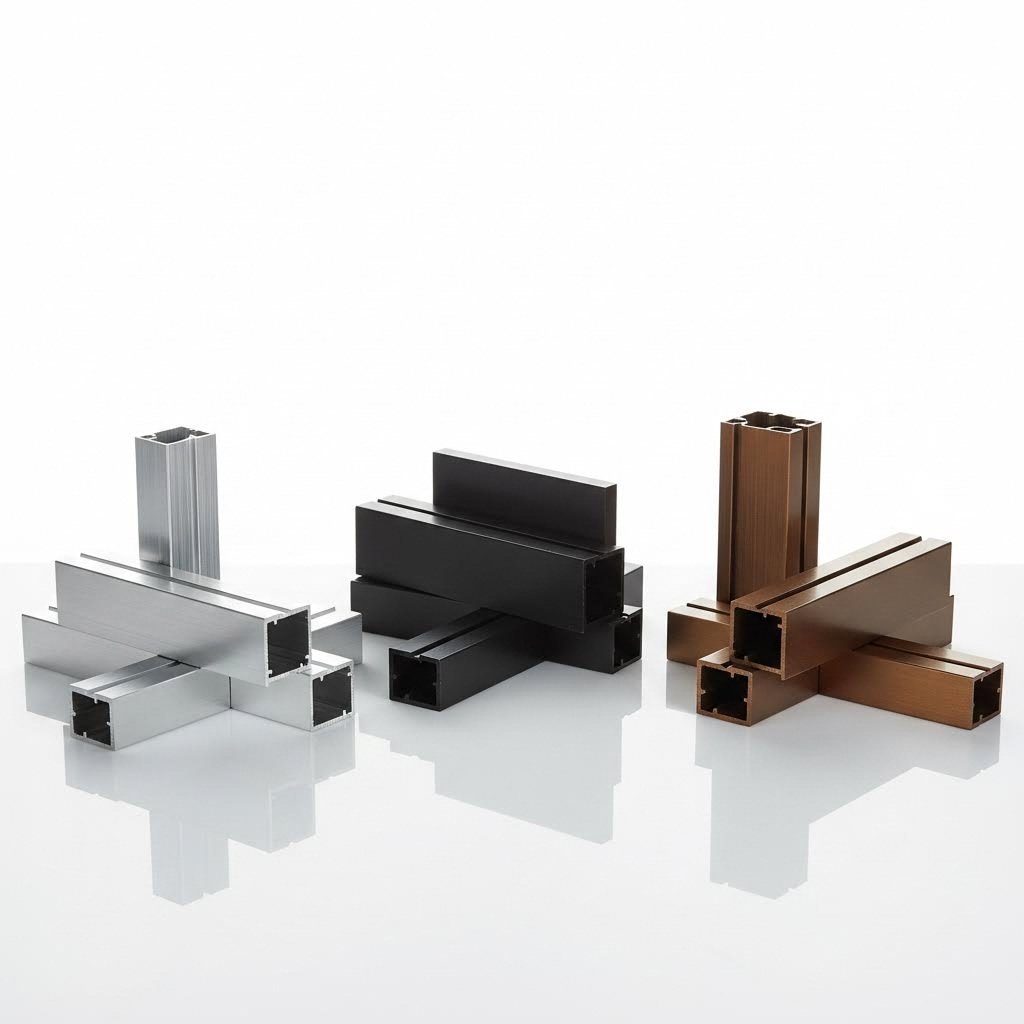
You've specified the right alloy, selected appropriate profile dimensions, and matched channel depths to your glazing thickness. But here's a question that often gets overlooked until it's too late: how will your aluminum glazing extrusions look and perform ten years from now? The answer depends almost entirely on your surface finish selection.
Surface treatments serve dual purposes—protecting aluminum from environmental degradation while delivering the aesthetic appearance architects and building owners demand. A raw aluminum extrusion left exposed to the elements quickly develops a chalky, inconsistent oxide layer. Proper finishing transforms that same profile into a component that maintains its appearance and structural integrity for decades.
Let's explore your options, from basic mill finish through advanced ceramic coatings, so you can match finish performance to application demands.
When architects specify aluminum extrusion panels for visible architectural applications, anodizing remains the finish of choice for good reason. Unlike coatings that sit on top of the metal, anodizing transforms the aluminum surface itself into a protective oxide layer.
Here's how it works: technicians submerge your extruded aluminum profile in an electrolytic bath and run electrical current through it. Using aluminum as the anode in this circuit accelerates the natural oxidation process, creating an oxide layer far thicker than what forms naturally. According to industry analysis, this artificial oxide layer enhances wear resistance, corrosion protection, and heat dissipation while creating an ideal surface for dyes.
What makes anodizing particularly valuable for aluminium extrusion trim and glazing applications?
For aluminum extrusions for panels requiring a refined metallic appearance—think high-end storefronts or corporate lobbies—anodizing delivers aesthetics that powder coating simply cannot replicate.
Need your aluminum panel extrusions to match a specific corporate color? Want a textured finish that hides fingerprints and minor scratches? Powder coating opens design possibilities that anodizing cannot offer.
Unlike liquid paint, powder coating is a dry application process. Technicians apply electrostatically charged powder particles to grounded aluminum profiles, then cure the coating in an oven. The powder melts and flows into a uniform, durable film. As coating experts note, no solvents are used, making powder coating an environmentally friendly alternative to traditional paint.
Powder coating excels in several areas:
However, powder coating requires meticulous surface preparation. Oil, oxides, or contaminants prevent proper adhesion, leading to peeling or blistering over time. Quality applicators include chromate or non-chromate conversion coating as a pre-treatment step, creating a stable foundation for the powder layer.
When your aluminum extrusion panels face the harshest conditions—coastal salt spray, intense desert UV, or industrial atmospheric pollutants—standard powder coating may fall short. That's where PVDF (polyvinylidene difluoride) coatings prove their worth.
Originally introduced in 1965, 70 percent PVDF resin-based coatings have become the gold standard for architectural metal protection. The carbon-fluorine bonds in PVDF formulations rank among the strongest chemical bonds available, delivering stubborn resistance to chalking, fading, and erosion.
PVDF coatings offer distinct advantages for demanding glazing applications:
Major coating manufacturers like Sherwin-Williams produce branded PVDF formulations (such as Fluropon) specifically engineered for architectural aluminum. These coatings see extensive use on curtain wall systems, entrance framing, and aluminum panel extrusions where appearance must remain pristine for building lifecycle durations.
| Characteristic | Mill Finish | Anodized | Powder Coated | PVDF Coated |
|---|---|---|---|---|
| Coating Thickness | N/A (raw) | 5-25 microns | 60-120 microns | 25-35 microns |
| UV Stability | Poor | Excellent | Good to Very Good | Outstanding |
| Scratch Resistance | Poor | Very Good | Good | Good |
| Color Options | None | Limited (metallic tones) | Unlimited | Wide range |
| Maintenance Needs | High | Low | Low to Moderate | Very Low |
| Relative Cost | Baseline | Moderate | Low to Moderate | Higher |
| Best Applications | Hidden components, temporary use | Architectural visibility, metallic aesthetics | Color matching, cost-sensitive projects | Extreme exposure, long-term performance |
For high-traffic glazing installations—think heavily used entrance systems, public transit stations, or retail environments with constant customer contact—even quality anodizing may show wear over time. Micro-arc oxidation (MAO) offers a next-level solution.
MAO, also known as plasma electrolytic oxidation, uses high-voltage micro-discharges to create ceramic oxide coatings directly on aluminum surfaces. According to recent research, this process forms dense, pore-free ceramic layers within minutes, significantly enhancing both corrosion and wear resistance at relatively low processing costs.
The resulting ceramic coating delivers properties that conventional anodizing cannot match:
While MAO costs more than standard finishing options, the technology makes sense for aluminum extrusion panels in applications where surface abuse is expected. Door thresholds, handrail brackets, and high-contact glazing trim benefit from this advanced protection.
With surface finish options clarified, you're equipped to specify complete glazing extrusion systems. The next consideration becomes equally practical: understanding how these profiles serve different project scales—from weekend DIY greenhouse builds to complex commercial curtain wall installations.
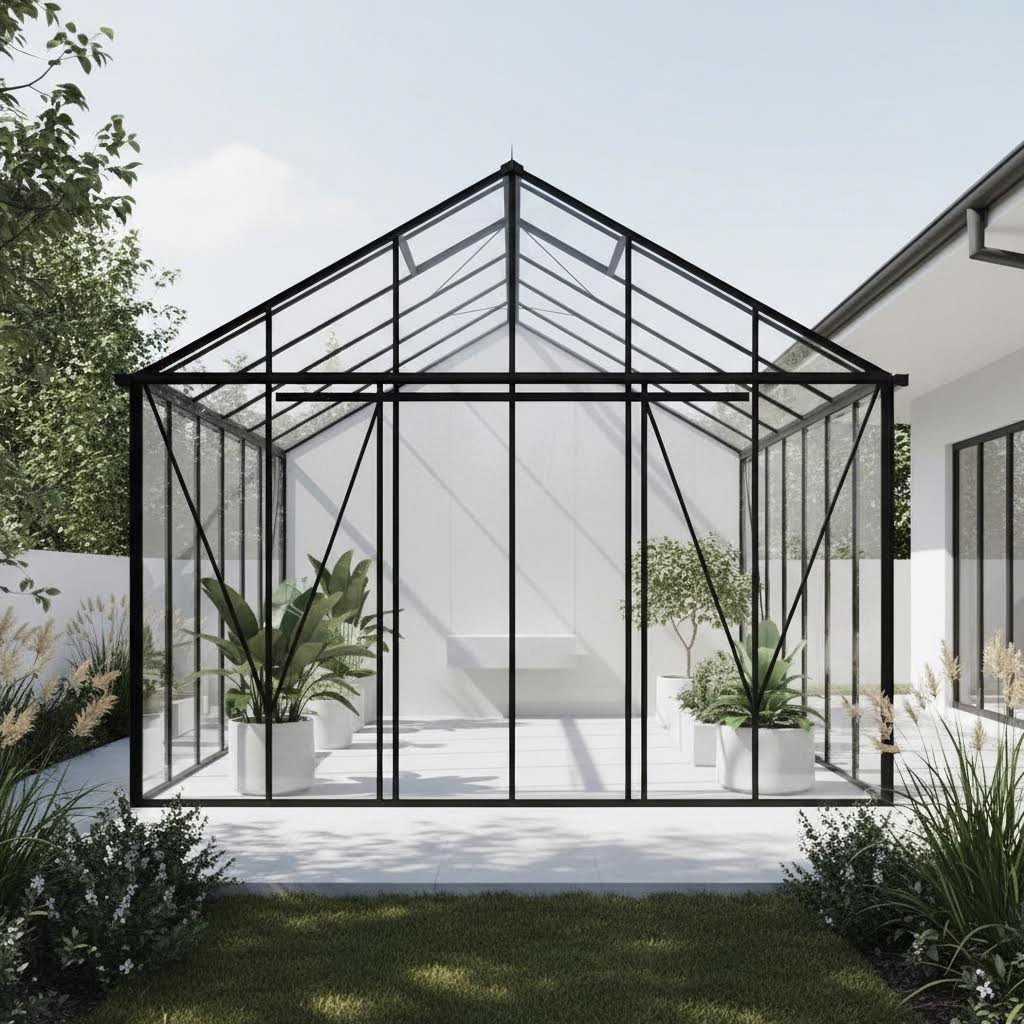
Whether you're a weekend warrior building your first backyard greenhouse or a commercial contractor bidding on a multi-story curtain wall project, aluminum glazing extrusions serve as the foundation of your glazing system. The same fundamental technology scales from simple DIY assemblies to complex architectural facades—but the approach, specifications, and supplier relationships differ dramatically based on project scope.
Understanding how these profiles fit different application categories helps you specify the right products, avoid costly mistakes, and match your sourcing strategy to project demands. Let's explore the full spectrum of applications, from residential weekend projects through demanding industrial environments.
Imagine stepping into a sun-drenched greenhouse filled with thriving plants, even in the dead of winter. That vision starts with proper glazing systems—and aluminum extrusions make it achievable for both hobbyists and professional growers.
For residential greenhouse construction, the Pro-Seal aluminum glazing system represents the kind of versatile, low-cost, high-performance solution that transforms wooden structural frames into professional-grade growing environments. These systems accommodate both glass and polycarbonate panels, giving builders flexibility based on budget and climate requirements.
DIY enthusiasts tackling greenhouse projects should consider these factors:
Sunroom and patio enclosure projects share similar characteristics but often demand higher aesthetic standards. Homeowners expect clean sight lines, consistent finishes, and profiles that complement existing architecture. Anodized or powder-coated extrusions in bronze, white, or custom colors meet these expectations while delivering the weather resistance outdoor applications require.
Step up to commercial scale, and the stakes—along with the specifications—increase significantly. Storefronts and curtain walls face demanding structural requirements, strict building codes, and performance expectations that residential projects rarely encounter.
The fundamental difference between these systems comes down to building height and load paths. Storefronts typically serve ground-level retail applications on buildings one or two stories high, with frames supporting their own weight plus glass panels. Curtain walls, by contrast, hang from building structures on multi-story facades—they carry no floor or roof loads, functioning purely as weather barriers.
This distinction drives specification differences:
| Characteristic | Storefront Systems | Curtain Wall Systems |
|---|---|---|
| Typical Frame Height | Up to 10 feet | 13+ feet per section |
| Frame Depth | Up to 2 inches | 2.5 to 8 inches |
| Water Management | Directs to sill flashing via mullions | Individual weeping per glass lite |
| Installation Approach | Frame assembled on-site, set into opening | Unitized panels or stick-built systems |
| Relative Cost | Lower material and labor costs | Higher investment in materials and engineering |
For glass show case and retail display applications, storefront-style aluminum enclosure extrusion systems provide the visibility retailers need while securing valuable merchandise. These systems often incorporate locking mechanisms, adjustable shelving supports, and lighting channels—all achievable through custom extrusion design.
Professional contractors working on commercial glazing projects should expect different supplier relationships than DIY buyers experience. Key considerations include:
Beyond traditional architectural uses, aluminum glazing extrusions solve challenges in industrial environments where visibility, cleanliness, or safety matter. These applications demand profiles engineered for specific performance criteria rather than aesthetic appeal.
Machine guarding: Manufacturing facilities use polycarbonate-glazed aluminum frames to protect workers from moving machinery while maintaining visibility for operation and maintenance. These extruded aluminum enclosures must withstand impact loads and comply with OSHA requirements for point-of-operation guarding. Robust profiles with 2.5mm+ wall thickness and secure fastening systems address these demands.
Cleanroom enclosures: Pharmaceutical, electronics, and food processing facilities require controlled environments with smooth, non-porous surfaces that resist particle accumulation. Anodized aluminum extrusions meet these requirements while enabling modular construction—walls can be reconfigured as production needs change. Gasket systems must provide airtight seals to maintain pressure differentials between zones.
Aluminum extrusion display case applications: Museums, galleries, and high-end retail use precision glazing systems to protect valuable items while maximizing visibility. These applications prioritize optical clarity, minimal sight lines, and often integrate climate control, security sensors, and specialized lighting. Custom aluminum extrusion furniture profiles support shelving, pedestals, and mounting systems within display environments.
Your project location significantly influences profile selection, finish specification, and accessory requirements. Ignoring climate factors leads to premature failures and costly remediation.
Coastal environments: Salt-laden air accelerates corrosion, even on naturally corrosion-resistant aluminum. Projects within 5 miles of saltwater should specify enhanced protection—marine-grade anodizing with minimum 25-micron thickness, or PVDF coatings proven in coastal exposure. Stainless steel fasteners prevent galvanic corrosion at connection points. Regular washing schedules remove salt deposits before they penetrate protective finishes.
Extreme temperature zones: Desert locations with 50°C daily temperature swings and northern regions seeing -30°C winters create severe thermal cycling challenges. Thermally broken profiles become essential rather than optional—they prevent condensation on interior frame surfaces while reducing energy costs. Gasket materials must maintain flexibility across the full temperature range; EPDM typically outperforms silicone in extreme cold.
High-humidity regions: Tropical and subtropical climates create persistent moisture exposure that tests finish durability. Powder coatings with proper pre-treatment resist blistering and adhesion failure. Thermal breaks also prevent condensation problems that lead to mold growth and finish degradation at the frame perimeter.
With application requirements understood, the final critical step involves ensuring you receive quality products that meet specifications. The next section covers evaluation criteria that protect your investment—whether you're sourcing a single aluminum extrusion kit for a DIY project or containerloads for a commercial development.
You've specified the perfect alloy, selected ideal profile dimensions, and matched your extrusions to glazing thickness requirements. But here's a reality check: none of those specifications matter if the profiles arriving at your job site don't actually meet them. Quality inconsistencies plague the aluminum extrusion industry, and buyers who skip proper evaluation often pay the price through installation headaches, system failures, or costly rework.
How do you distinguish quality extrusions from substandard products before they become your problem? Let's walk through the inspection criteria and certification requirements that protect your investment—whether you're ordering an aluminum extrusion bar for a simple DIY project or specifying item extruded aluminium components for a major commercial installation.
Visual inspection catches many quality issues before they reach the installation phase. When evaluating aluminum glazing extrusions, train your eye to spot these critical indicators:
Dimensional consistency: Quality extrusions maintain uniform dimensions throughout their length. Variations in wall thickness, channel depth, or overall profile geometry indicate die wear, improper extrusion temperature, or inadequate quality control. For glazing applications, dimensional inconsistency means gaskets won't seat properly, glass panels fit unpredictably, and assembly becomes frustrating.
Surface finish uniformity: Run your hand along the profile surface. Quality extrusions feel smooth and consistent. Look for color variations, streaks, or texture changes that suggest contaminated billets or inconsistent processing. According to extrusion inspection guidance, surface defects often indicate deeper problems—scratches from poor handling, die lines from worn tooling, or blisters from trapped gases in the aluminum billet.
Die line evaluation: Fine parallel lines running along the extrusion length are common but should remain minimal on quality profiles. Heavy die lines indicate worn or damaged tooling and can cause coating adhesion problems. For visible architectural applications, pronounced die lines compromise aesthetics.
Corner definition: Sharp internal corners and crisp external edges indicate proper die design and extrusion parameters. Rounded or poorly defined corners suggest the aluminum didn't flow correctly through the die—a sign of process control issues that may affect structural properties.
Beyond visual assessment, certain issues should immediately raise concerns about a supplier's quality systems:
Quality certifications provide objective evidence that suppliers maintain consistent processes and meet industry standards. When evaluating potential sources for aluminum glazing extrusions, verify these credentials:
ISO 9001 certification: This foundational quality management standard confirms the manufacturer has documented processes for everything from quoting through delivery. According to manufacturer evaluation guidance, ISO 9001 signifies a structured approach to quality that includes regular internal audits, corrective action procedures, and continuous improvement requirements.
IATF 16949 (automotive applications): If your glazing extrusions serve automotive markets, this certification adds specific requirements for defect prevention and supply chain variation reduction beyond ISO 9001 requirements.
AS9100 (aerospace applications): For aerospace-related glazing systems, this standard incorporates safety, airworthiness, and reliability requirements critical to aviation applications.
Material certifications: Request mill test reports that verify alloy composition matches specifications. Testing methods include Optical Emission Spectrometry (OES) for fast, accurate alloy verification and wet chemical analysis for precise composition measurement. As industry experts note, confirming that material marked as 6061-T6 hasn't been substituted with lower-strength 6063-T5 protects both structural integrity and corrosion resistance.
Mechanical property verification: Quality suppliers provide tensile test results showing yield strength, ultimate tensile strength, and elongation values. Webster hardness testing offers quick on-site verification that heat treatment was properly performed.
Raw extrusion profiles rarely arrive ready for installation. The fabrication capabilities your supplier offers—and the precision they achieve—significantly impact project success.
CNC machining precision: Cut-to-length accuracy matters when profiles must align perfectly during assembly. Quality suppliers achieve tolerances of ±0.127mm (±0.005") or better using CNC sawing equipment. For complex assemblies, this precision eliminates field fitting and rework.
Drilling and notching services: Pre-drilled mounting holes and corner notches speed installation while ensuring dimensional accuracy that field fabrication rarely matches. CNC drilling delivers consistent hole placement across hundreds or thousands of pieces.
Bending capabilities: Curved glazing applications—radius storefronts, domed skylights, or arched entryways—require precision bending that maintains profile integrity without kinking or surface damage. Not all suppliers offer this capability, and those who do vary significantly in achievable radii and quality.
Technical support depth: The most valuable suppliers offer more than raw materials. Look for engineering consultation on profile selection, die development assistance for custom shapes, and structural calculations for load-bearing applications. Suppliers who understand glazing system design can identify potential problems before they become expensive field issues.
When reviewing an aluminum extrusion catalog or aluminum shapes catalog, assess whether the supplier provides complete technical data—moment of inertia values, section modulus, and weight-per-meter specifications that engineers need for proper system design. Suppliers offering this level of detail typically maintain higher quality standards throughout their operations.
With quality evaluation criteria established, you're positioned to make informed sourcing decisions. The final consideration involves selecting a manufacturing partner whose capabilities, capacity, and service approach align with your project requirements—a choice that affects everything from lead times to long-term support.
You've navigated alloy selection, profile specifications, glazing compatibility, and finish options. Now comes the decision that ties everything together: selecting a manufacturing partner capable of delivering what you've specified. The right supplier transforms your detailed specifications into quality products that arrive on time and perform as expected. The wrong choice? Delays, quality issues, and the frustration of starting your search over.
What separates a reliable aluminum window extrusions supplier from one that creates headaches? Let's examine the evaluation criteria that matter most—and what a complete service ecosystem looks like when you find it.
Not all aluminium window extrusions suppliers operate at the same level. Some excel at commodity products but struggle with custom requirements. Others offer sophisticated engineering support but can't scale for large production runs. Matching supplier capabilities to your project needs prevents costly misalignments.
Press capacity range: The size of a supplier's extrusion presses directly determines what profile sizes they can produce. Smaller presses (500-1000 tons) handle lightweight architectural profiles efficiently. Larger presses (3000+ tons) become necessary for heavy structural sections or profiles with large circumscribing circles. According to industry guidance on supplier selection, understanding a manufacturer's press range helps you assess whether they can actually produce your required profile geometries.
A supplier with diverse press capacity—say, ranging from 600T to 5500T—offers flexibility that single-press operations cannot match. This range accommodates everything from delicate aluminum door extrusion profiles to heavy-duty structural sections within a single supply relationship.
In-house finishing capabilities: Does your supplier apply surface treatments on-site, or do they outsource to third parties? In-house anodizing, powder coating, and specialty finishes like PVDF or micro-arc oxidation reduce lead times, improve quality control, and simplify communication when issues arise. Full-service manufacturers handling everything from extrusion through finishing eliminate coordination headaches between multiple vendors.
Machining and fabrication services: Raw extrusions rarely install directly. You'll likely need precision cutting, drilling, notching, or bending. Suppliers offering these services in-house deliver components ready for aluminum extrusion assembly rather than raw stock requiring additional processing. CNC machining capabilities ensure the dimensional accuracy that hand fabrication rarely achieves—critical for extrusion frame components that must align precisely during installation.
Technical support depth: The best suppliers function as technical partners, not just material vendors. Can they assist with die design optimization? Do they offer engineering consultation on profile selection? Will they provide structural calculations for load-bearing applications? As noted in supplier evaluation research, high-value suppliers offer design-for-manufacturability (DFM) support to optimize your designs before tooling investment begins.
When evaluating potential partners, look beyond individual capabilities to assess the complete service ecosystem. A truly capable supplier addresses every stage of your project—from initial concept through delivered, ready-to-install components.
Here's what a comprehensive service offering should include:
Understanding the journey from concept to delivered product helps you evaluate supplier capabilities realistically. Each stage requires specific expertise and equipment—gaps anywhere in the chain create delays and quality risks.
Die development phase: Custom aluminum door extrusion profiles or unique glazing sections require new tooling. Experienced suppliers evaluate your CAD drawings, suggest modifications for manufacturability, and predict potential extrusion challenges before cutting steel. Die development typically adds 4-8 weeks to project timelines, though some suppliers maintain libraries of standard glazing profiles available without tooling investment.
Extrusion production: Once dies are proven, production quantities depend on your project scale. Ask about minimum order quantities—these vary widely. Some suppliers accommodate 50-150 pound minimums for standard shapes, while custom profiles may require 500+ kg runs to justify setup time. Lead times typically run 2-4 weeks for production after die approval.
Value-added processing: Post-extrusion services transform raw profiles into installation-ready components. A supplier offering comprehensive processing—cutting, drilling, machining, bending, and finishing—eliminates the coordination burden of managing multiple vendors. This integrated approach particularly benefits complex aluminum extrusion assembly requirements where dimensional relationships between components must remain precise.
Beyond immediate project needs, consider whether a supplier can grow with your business. Ask these questions:
For projects requiring custom 6063 aluminum profiles, architectural window frames, or complex industrial extrusion frame components, manufacturers with deep experience and comprehensive capabilities deliver advantages that go beyond competitive pricing.
Consider Shengxin Aluminium's deep processing and custom extrusion services as an example of full-service capability. With over 30 years of industry experience and 35 extrusion presses ranging from 600T to 5500T, they offer the press diversity to handle profiles from delicate architectural trim to heavy structural sections. Their comprehensive surface treatment options—including anodizing in custom colors, powder coating, PVDF, and micro-arc oxidation—address virtually any finish requirement. End-to-end support from die development through mass production, combined with factory-direct pricing, makes them worth exploring for projects requiring custom aluminum glazing extrusions.
Selecting an aluminum glazing extrusion supplier ultimately comes down to matching capabilities to requirements. A manufacturer perfect for high-volume commodity profiles may struggle with your custom architectural project. Conversely, a boutique supplier excelling at complex custom work might not offer the competitive pricing your budget demands for standard sections.
Use this checklist to structure your evaluation:
| Evaluation Criteria | Questions to Ask | Why It Matters |
|---|---|---|
| Press Capacity | What tonnage range? How many presses? | Determines profile size limits and production flexibility |
| Alloy Expertise | Do they work with 6063, 6005A, other alloys? | Ensures they can provide specified materials |
| Finishing Options | In-house or outsourced? Which treatments available? | Affects lead times, quality control, and cost |
| Machining Services | CNC capabilities? Tolerance standards? | Determines whether components arrive ready to install |
| MOQ Requirements | Minimums for standard vs. custom profiles? | Must align with your project quantities |
| Lead Times | Die development? Production? Finishing? | Critical for project scheduling |
| Technical Support | Engineering assistance? DFM reviews? | Prevents costly design-for-manufacturing errors |
| Quality Systems | ISO certification? Testing protocols? | Indicates process discipline and consistency |
With these criteria guiding your evaluation, you'll identify manufacturing partners whose capabilities genuinely match your glazing extrusion requirements—setting the foundation for successful projects and productive long-term relationships.
Aluminum glazing extrusions are precision-manufactured profiles designed to hold, frame, and secure glass or polycarbonate panels in architectural applications. They create weathertight, structurally sound connections between glazing materials and building structures. Common applications include curtain walls, storefronts, skylights, greenhouses, interior glass partitions, shower enclosures, and display cases. These profiles distribute weight evenly while accommodating thermal movement and providing weather sealing when combined with appropriate gaskets and sealants.
6063 aluminum is the architectural standard for most glazing applications due to its excellent extrudability and superior surface finish. It offers the ideal balance of formability and strength for window frames, door frames, and interior partitions. For structural applications requiring higher load capacity—such as large-span skylights or curtain walls—6005A aluminum provides enhanced tensile strength. The T5 temper suits standard applications, while T6 temper maximizes strength for demanding structural requirements.
Profile selection depends on your glass thickness, structural loads, and installation type. Wall thickness typically ranges from 1.2mm for lightweight interior applications to 3.0mm+ for structural curtain walls. Glazing channel depth must accommodate glass thickness plus gasket compression and thermal expansion clearances—typically 12-15mm for single-pane glass and 25-35mm for double-glazed IGUs. Request profile cross-section drawings, moment of inertia values, and section modulus data from suppliers to verify structural adequacy.
Primary finish options include anodizing, powder coating, and PVDF coatings. Anodizing creates an integral oxide layer in colors like clear, bronze, black, and champagne—it cannot peel and offers excellent durability. Powder coating provides unlimited RAL color matching and texture options at lower cost. PVDF coatings deliver superior weather resistance for extreme environments with 20+ year color retention. For high-traffic applications, micro-arc oxidation creates ceramic coatings with exceptional hardness and wear resistance.
Evaluate dimensional consistency, surface finish uniformity, and proper corner definition during inspection. Request material certifications confirming alloy composition and temper designation. Verify ISO 9001 certification and ask for mill test reports with mechanical property data. Quality suppliers offer comprehensive services including die development, precision CNC machining, multiple surface treatment options, and technical engineering support. Partners like Shengxin Aluminium provide end-to-end capabilities from custom die development through finished components with factory-direct pricing.



 Servicio en línea
 0086 136 3563 2360
 sales@sxalu.com
 +86 136 3563 2360
 español
 English
 français
 Deutsch
 русский
 português
 العربية
 ไทย
ไทย Việt
Việt Українська