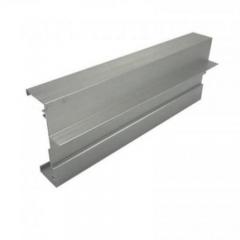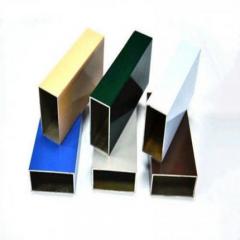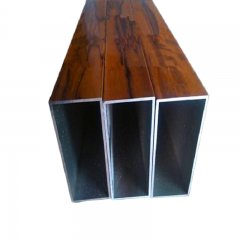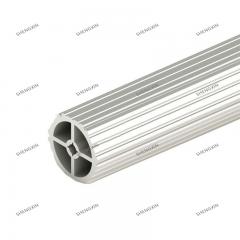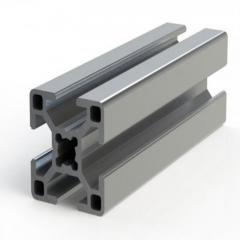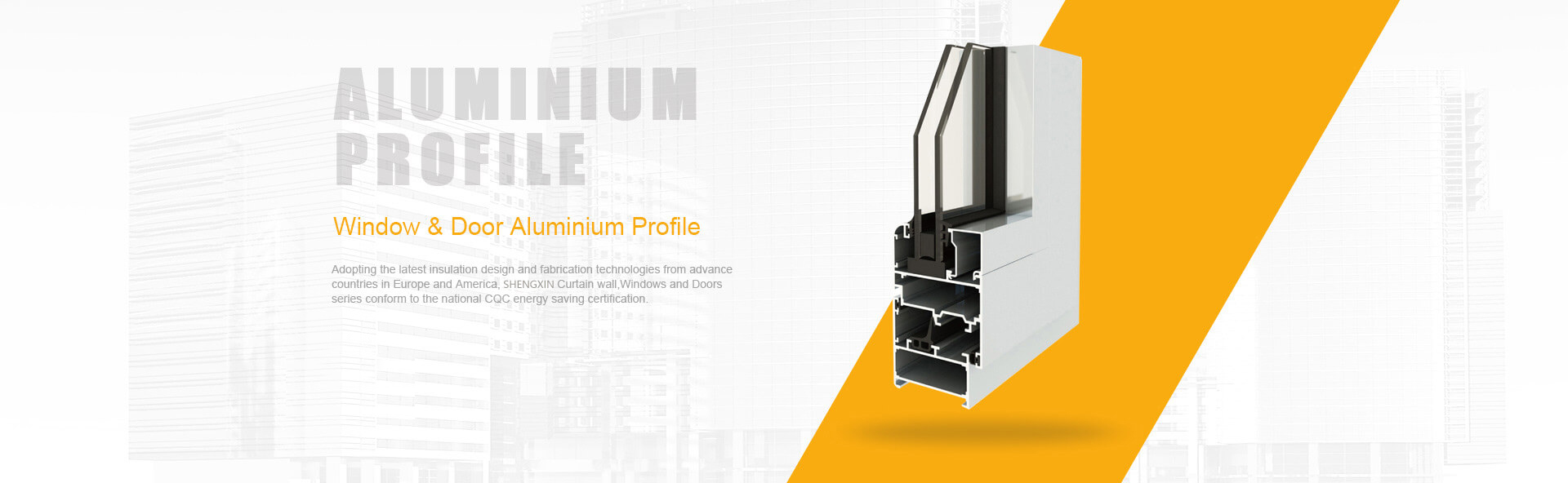
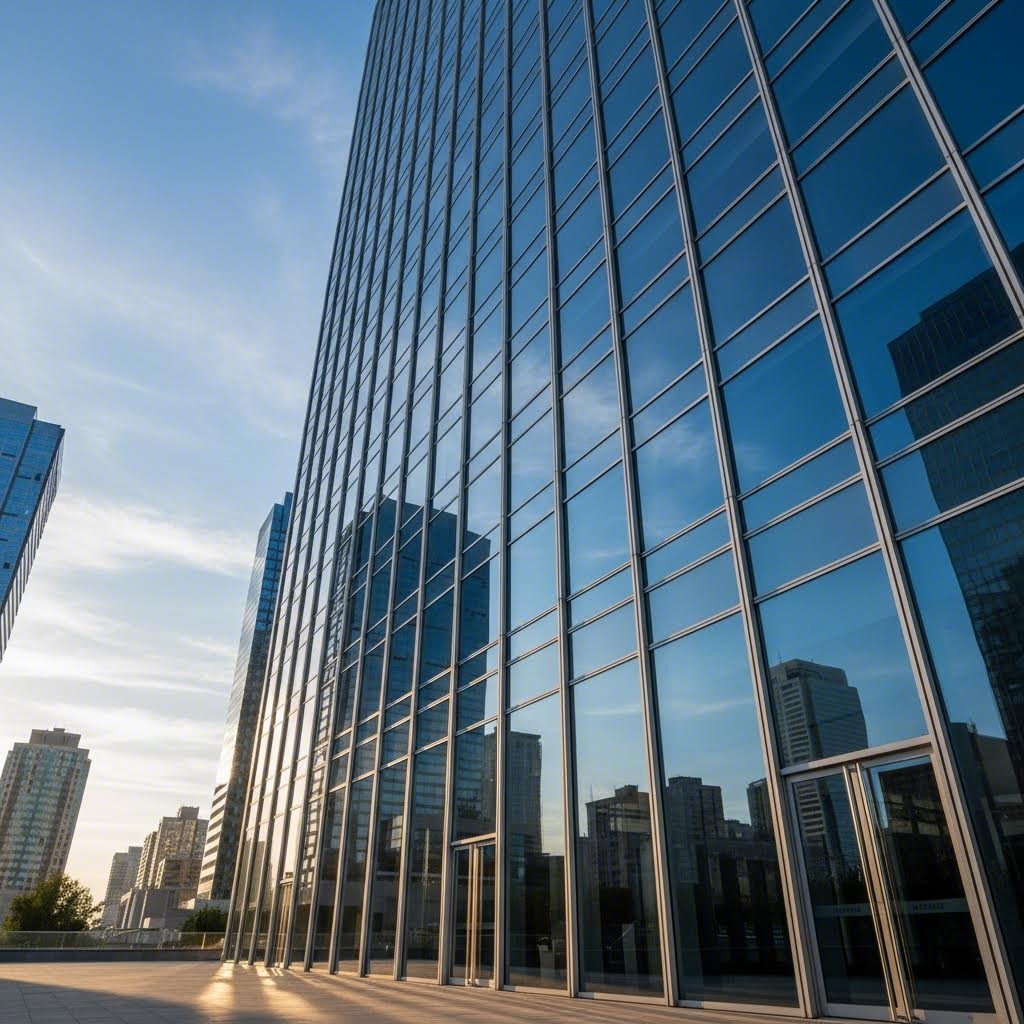
When you walk past a sleek commercial building with floor-to-ceiling glass or admire the clean lines of a modern curtain wall, you're looking at the result of precise engineering. Behind those seamless facades are custom aluminum extrusions—specialized profiles designed specifically for that project's unique requirements. Unlike standard off-the-shelf shapes you might find at a hardware store, these tailored solutions address the complex demands of contemporary building envelopes.
So what exactly sets custom aluminum extrusions apart? Standard profiles come in predetermined shapes like basic aluminum channel sections, simple tubes, or common aluminum angle configurations. They work fine for general applications. However, building facades present challenges that generic shapes simply cannot solve. Custom extrusion profiles are engineered from the ground up, allowing architects and contractors to achieve exact dimensions, integrate multiple functions into a single component, and optimize both structural performance and visual appeal.
Imagine trying to assemble a complex puzzle using pieces from different sets—that's essentially what happens when designers attempt to use standard aluminum extrusions for sophisticated facade systems. Custom aluminum extrusion profiles, on the other hand, are created specifically for your project's geometry, thermal requirements, and aesthetic vision.
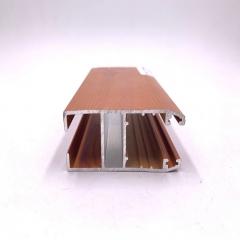
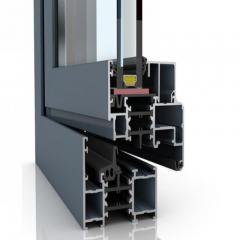
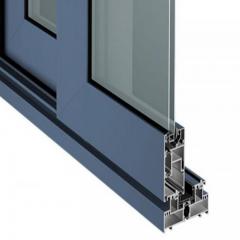
The distinction becomes clear when you consider how extruded aluminum facades must perform. A curtain wall mullion, for example, needs to accommodate glass panels, provide drainage channels, accept weatherseals, and often incorporate thermal break chambers—all within a single profile. Standard shapes require multiple components, additional fasteners, and compromise on performance. Custom solutions integrate these features seamlessly, reducing assembly steps and improving overall system integrity.
Building envelopes face relentless environmental stressors. Temperature swings cause expansion and contraction. Rain and humidity test weathertightness constantly. Wind loads demand structural precision. UV exposure challenges surface finishes year after year. These conditions require aluminum extrusion profiles engineered specifically for facade applications.
Custom profiles solve problems that standard shapes cannot address—they transform design intent into buildable reality by integrating structural, thermal, and aesthetic requirements into unified components that perform as systems rather than assemblies of parts.
Consider weathertightness alone. A facade system must manage water intrusion through carefully designed pressure equalization chambers, drainage pathways, and seal integration points. These features demand precise dimensional control and thoughtful profile geometry that standard extrusions simply don't offer. When you specify custom aluminum extrusions for your facade project, you're investing in components designed to work together as a complete building envelope solution.
For architects and contractors seeking specification-grade information, understanding these distinctions is essential. The performance gap between standard and custom solutions directly impacts long-term building performance, maintenance requirements, and occupant comfort. Whether you're developing a rainscreen cladding system or an elaborate unitized curtain wall, the right extruded aluminum profiles make the difference between a facade that merely exists and one that truly performs.
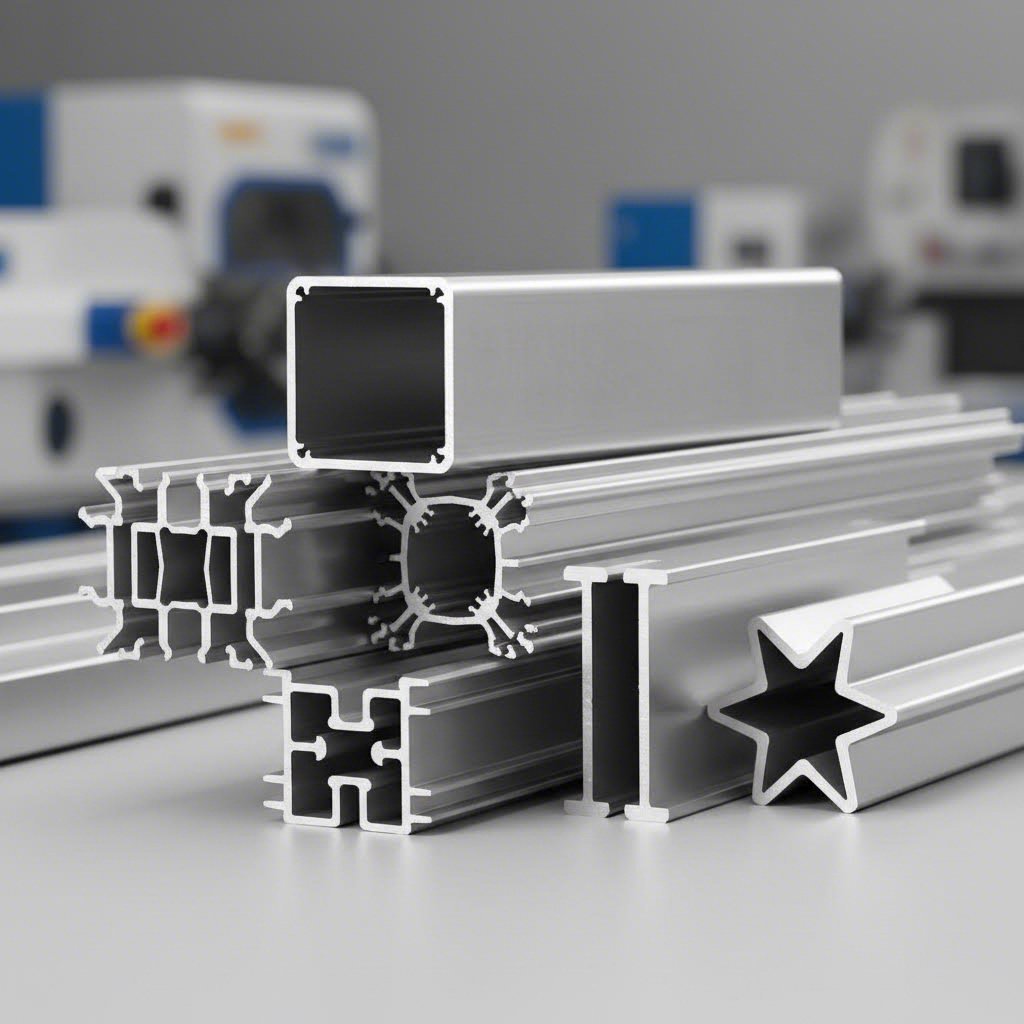
Understanding why aluminum dominates modern facade construction starts with its fundamental material properties. This lightweight metal delivers a rare combination of characteristics—corrosion resistance, structural capability, and thermal management—that few materials can match. But here's where it gets interesting: not all aluminum performs equally in building envelope applications. The specific alloy you select dramatically influences how your facade weathers decades of service.
What is tensile strength, and why does it matter for facades? The tensile strength definition refers to a material's resistance to breaking under tension—essentially how much pulling force it can handle before failure. For curtain walls and rainscreen systems supporting glass panels and cladding, this property directly determines how thin profiles can be while still meeting structural requirements. Aluminum's inherent strength-to-weight advantage means designers can achieve substantial load-bearing capacity without the bulk associated with steel alternatives.
When specifying custom aluminum extrusions for facades, the choice between 6061 aluminum and 6063 aluminum represents one of the most consequential decisions you'll make. Both belong to the 6000 series—magnesium and silicon-based alloys known for excellent corrosion resistance and workability—but they serve distinctly different purposes.
Aluminum 6063, often called "architectural aluminum," is the go-to choice for most facade applications. Why? Its superior surface finish and exceptional extrudability allow manufacturers to create complex profiles with smooth, visually appealing surfaces. Window frames, door frames, curtain wall mullions, and decorative trim all benefit from 6063's ability to accept anodizing and powder coating evenly.
Aluminum 6061, on the other hand, brings higher tensile breaking strength to applications requiring serious structural muscle. When your design calls for load-bearing beams, heavy-duty support brackets, or structural frames carrying significant weight, 6061 delivers the mechanical performance you need. According to Eagle Aluminum, 6061-T6 achieves an ultimate tensile strength of at least 42,000 psi compared to 6063-T6's 28,000 psi.
Consider this: aluminum's density is roughly one-third that of steel. This translates directly to reduced dead loads on building structures, simplified installation procedures, and lower transportation costs. For high-rise facades where every pound matters, this weight advantage proves invaluable.
But strength alone doesn't tell the complete story. Aluminum's natural corrosion resistance stems from an oxide layer that forms almost instantaneously when exposed to air. This self-protecting characteristic means facade extrusions resist weathering without requiring the protective coatings steel demands. In coastal or industrial environments where salt spray and pollutants attack building materials aggressively, aluminum maintains its integrity where other metals would deteriorate.
| Property | 6063-T6 Aluminum | 6061-T6 Aluminum | Facade Implications |
|---|---|---|---|
| Ultimate Tensile Strength | 28,000 psi minimum | 42,000 psi minimum | 6061 for structural members; 6063 for standard profiles |
| Yield Strength | 23,000 psi minimum | 35,000 psi minimum | Higher yield in 6061 resists permanent deformation |
| Corrosion Resistance | Excellent | Very Good | 6063 preferred for exposed exterior applications |
| Extrudability | Excellent | Good | 6063 enables complex, thin-walled profile geometries |
| Surface Finish Quality | Superior (smooth) | Good (may show marks) | 6063 for visible architectural elements |
| Anodizing Response | Excellent | Good | 6063 achieves more uniform color consistency |
| Weldability | Good | Excellent | 6061 for welded structural connections |
Thermal conductivity presents both opportunity and challenge for facade designers. Aluminum conducts heat approximately three times faster than steel, making it excellent for applications requiring heat dissipation but problematic where thermal bridging must be minimized. This characteristic drives the widespread use of thermal break technology in curtain wall systems—a topic we'll explore in detail when examining system integration strategies.
The practical takeaway? Most facade projects benefit from using 6063 aluminum for visible extrusion profiles where aesthetics and corrosion performance take priority. Reserve 6061 for concealed structural components where its superior strength justifies the trade-offs in surface quality and finishing characteristics. Understanding this 6061 vs 6063 distinction early in your design process ensures you're specifying the right material for each component's specific demands.
You've selected the right alloy for your facade application—now comes the exciting part. Transforming your design vision into production-ready aluminum extrusion profiles requires a structured process that balances creative intent with manufacturing reality. Whether you're developing a signature curtain wall system or engineering custom profile extrusions for a rainscreen assembly, understanding this workflow helps you collaborate effectively with your extrusion partner and avoid costly revisions.
The journey from concept sketch to finished extrusion involves far more than simply drawing a shape. Facade applications demand extrusion profiles that meet demanding tolerances, integrate seamlessly with other building components, and perform reliably for decades. Let's walk through each stage of this design-to-production process.
Die development represents the heart of custom aluminum extrusion manufacturing. The die—a hardened steel tool through which heated aluminum is forced—determines every dimension, feature, and detail of your finished profile. Getting this step right is essential because changes after die production add significant time and cost to your project.
Here's the sequential workflow that takes your facade concept from initial idea to production-ready components:
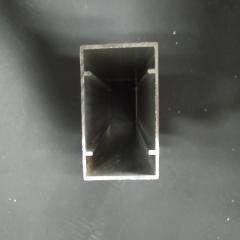
Facade applications increasingly demand hollow extruded aluminum profiles with internal chambers designed for thermal performance. These multi-void designs serve several critical functions: they reduce material weight while maintaining structural rigidity, create channels for thermal break insulation, and provide pathways for drainage and pressure equalization.
Sounds complex? The engineering considerations are indeed demanding. Hollow profiles require balanced internal geometry—asymmetrical voids or uneven wall thicknesses create uneven metal flow during extrusion, potentially causing distortion or surface defects. The Aluminum Extruders Council recommends maintaining somewhat balanced wall thicknesses and minimizing deep, narrow tongues that complicate die design.
Wall thickness optimization represents a careful balancing act for facade profiles. Thinner walls reduce material cost and weight but demand tighter process control to maintain dimensional accuracy. For weathertight facade assemblies, typical wall thicknesses range from 1.5mm to 4mm depending on structural requirements and profile complexity. Your extrusion partner can advise on optimal thicknesses based on your specific alloy selection and profile geometry.
Multi-void designs for curtain wall mullions often incorporate three or more internal chambers: one for structural rigidity, one to accept thermal break polyamide strips, and additional voids for drainage or accessory integration. Each chamber adds die complexity but enables superior thermal performance that meets increasingly stringent energy codes.
Weathertight facade systems live or die by dimensional precision. When a mullion profile arrives on site even slightly out of specification, the cascading effects impact glass fit, seal compression, and ultimately water management. Understanding tolerance requirements early in design ensures your custom aluminum extrusion delivers installation-ready performance.
Standard extrusion tolerances follow ANSI H35.2 specifications, but facade applications frequently require tighter controls. Critical dimensions—particularly those affecting weatherseal grooves, gasket channels, and component interfaces—may specify tolerances of ±0.1mm or tighter. Discuss these requirements with your extrusion partner during the design phase, as precision extrusions demand specific process controls and quality verification procedures.
Cross-sectional dimensions aren't the only consideration. Straightness, twist, and flatness tolerances matter equally for long facade profiles that must align precisely across multi-story applications. Profiles exhibiting excessive bow or twist create installation headaches and compromise weatherseal performance. Specifying appropriate straightness tolerances—and verifying your extrusion partner can meet them—prevents costly field corrections.
The weight-per-foot of your profile also influences production dynamics. According to industry guidelines, designs perform best when the CCD stays under 8 inches and weight-per-foot remains at 3 pounds or less. Heavier or larger profiles require specific press capabilities, potentially limiting your manufacturing partner options and affecting project economics.
With your custom profile designed, dies manufactured, and production validated, the next critical consideration is how these extrusions integrate with your specific facade system—whether curtain wall, rainscreen, or unitized assembly.
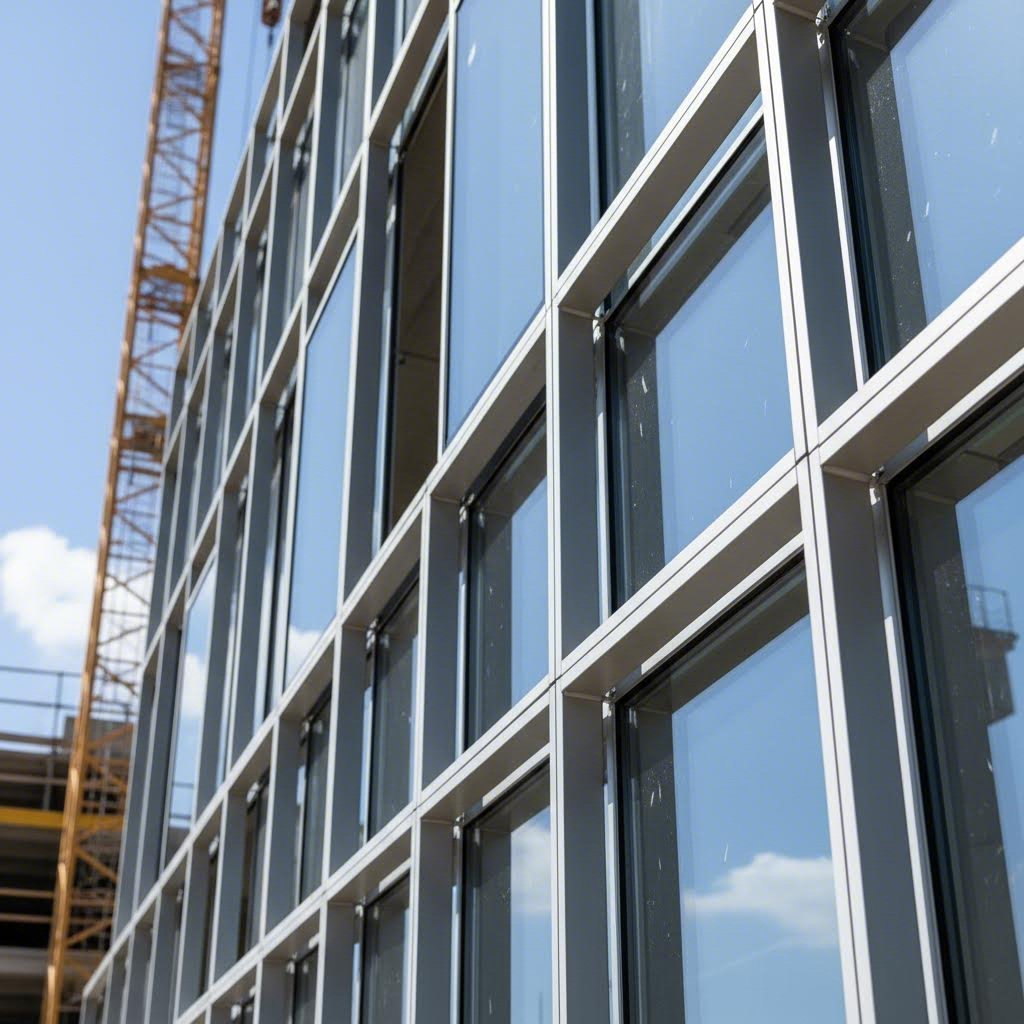
Your custom extrusion profile is engineered and ready for production—but how does it actually work within your chosen facade system? The answer depends heavily on whether you're building a curtain wall, rainscreen cladding assembly, unitized system, or stick-built configuration. Each approach places distinct demands on aluminum profiles, and understanding these requirements ensures your custom extrusions perform flawlessly once installed.
Modern facades rarely consist of a single system type. Mixed-material configurations—combining glazed curtain wall sections with aluminum cladding panels or perforated screens—have become increasingly common, particularly in commercial and institutional projects. According to Prance Building, successful integration requires coordinated detailing that maintains structural continuity, weather tightness, and aesthetic coherence across different facade zones.
Each facade system type demands specific extrusion characteristics. Here's what you need to consider:
The interface between different system types deserves particular attention. When glass meets metal panels, perimeter flashing, continuous cavity drainage, and air barriers must extend seamlessly across the transition. Custom profiles designed with these junctions in mind prevent water penetration at vulnerable connection points.
Coordination of fixings, edge profiles, and mounting brackets also impacts long-term serviceability. Individual cladding panels or curtain wall units should be replaceable without major dismantling—a requirement that influences how z clip attachments and channel profiles are detailed.
Remember that thermal conductivity challenge we mentioned earlier? Aluminum's excellent heat transfer becomes problematic when profiles span from exterior to interior environments. Without intervention, these profiles create thermal bridges—pathways for heat loss that undermine building energy performance and potentially cause condensation problems.
Thermal break technology solves this challenge by interrupting the conductive pathway. According to Technoform, high-precision extruded polyamide profiles improve thermal performance of aluminum framed facade systems by lowering conductivity and increasing condensation resistance. The resulting low U-values allow broad expanses of glass to meet local energy codes and project specifications.
Thermal barriers integrated into custom aluminum profiles don't just meet energy codes—they fundamentally transform how facades perform by reducing thermal transfer while maintaining structural integrity across the building envelope.
Several thermal break solutions exist for different facade applications:
The thermal break approach you select directly impacts your ability to meet increasingly stringent green building codes. For stick-facade applications, polyamide spacers and pressure plates work together to ensure thermal performance. Element facades—exteriors combining various components and materials—benefit from optimization strategies developed through extensive window and door applications.
When specifying custom extrusions for thermally broken assemblies, consider how the polyamide components integrate with your aluminum profiles. The extrusion geometry must accommodate thermal break insertion, whether through mechanical crimping, pour-and-debridge techniques, or other connection methods. Early coordination with your extrusion partner ensures profiles arrive ready for thermal break assembly without costly modifications.
With your profiles designed for proper system integration and thermal performance, the next consideration is surface treatment—the finishing processes that protect your extrusions and define their visual character for decades of service.
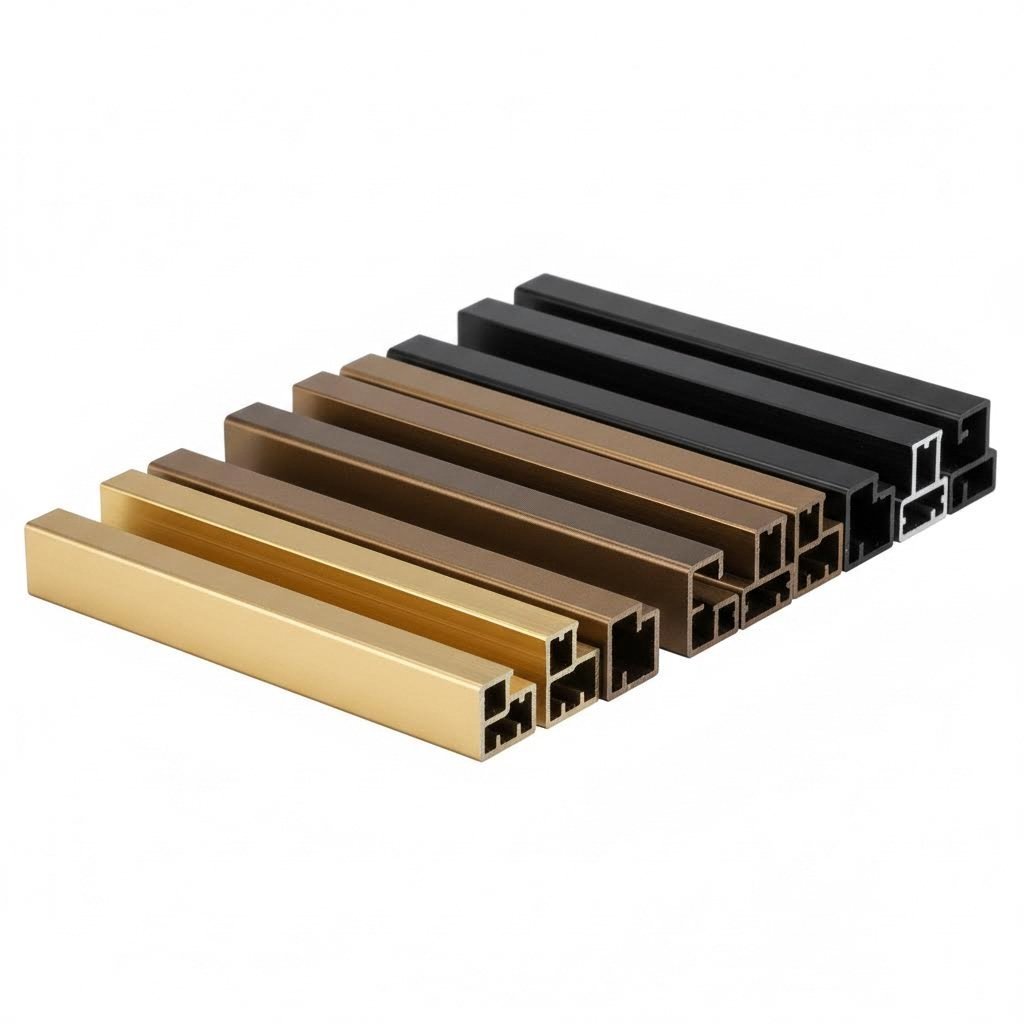
Your custom aluminum extrusions are engineered, manufactured, and ready for integration—but they're not quite complete. The surface treatment you specify determines how your facade looks on day one and, critically, how it performs after twenty years of sun, rain, and environmental exposure. Choosing the right finish isn't merely an aesthetic decision; it's a long-term durability commitment that directly impacts maintenance costs and building value.
So what is anodized aluminum, and why does it dominate architectural applications? Unlike paint or powder coatings that sit on the surface, anodizing transforms the aluminum itself through an electrochemical process. The result is an integral oxide layer that won't peel, chip, or flake because it's literally part of the metal. This characteristic makes anodized aluminum material exceptionally durable for facade applications where surface integrity matters.
When you examine a high-end curtain wall or aluminum trim detail, you're likely looking at anodized metal. The process works by immersing aluminum profiles in an acid electrolyte bath while passing electrical current through the solution. This thickens the natural oxide layer from a few nanometers to anywhere from 5 to 25 microns, depending on specifications.
According to Sculptform, anodizing offers several compelling advantages for facade applications:
Color options for anodized aluminum range from natural silver through bronze, champagne, and black. These metallic hues result from either the natural aluminum tone or dye absorption into the porous oxide layer before sealing. However, the color palette remains more limited than powder coating—if you need vibrant reds, blues, or custom brand colors, anodizing may not be your answer.
One consideration worth noting: anodized surfaces can show scratches more readily than powder-coated alternatives. For high-traffic areas or profiles subject to handling during installation, this vulnerability requires careful evaluation. Interior applications with minimal physical contact showcase anodizing's refined metallic aesthetic beautifully, while heavily trafficked exterior zones might benefit from more abrasion-resistant alternatives.
When your facade specification calls for specific colors, superior chemical resistance, or extreme weathering performance, coating systems move to the forefront. Two primary options dominate the architectural aluminum market: powder coating and PVDF (polyvinylidene fluoride) liquid coatings.
Powder coating applies dry powder electrostatically to aluminum profiles, which then fuses in a curing oven to create a uniform, durable finish. According to Fonnov Aluminium, powder coating excels in impact resistance, abrasion resistance, and corrosion protection. The extensive color selection—available in matte, satin, gloss, super matte, and textured finishes—gives architects nearly unlimited design flexibility.
PVDF coatings, originally developed by Pennwalt under the Kynar 500 trademark in 1965, represent the premium tier for architectural aluminum finishes. Applied through rotary electrostatic spray in 2-coat, 3-coat, or 4-coat systems, PVDF delivers exceptional performance characteristics:
How significant is the performance difference? A 12-year exposure test conducted in Florida's harsh environment—featuring intense sun and humid, salty air—demonstrated that PVDF coatings maintained 30-80% better stability and durability than super durable powder coatings and standard exterior powder coatings.
Industry specifications quantify these performance levels through AAMA standards. AAMA 2603 covers basic exterior powder coatings with one-year South Florida exposure requirements. AAMA 2604 specifies improved super durable powder coatings validated through five-year exposure testing. AAMA 2605—the gold standard for architectural applications—demands ten-year South Florida exposure performance, a requirement typically met only by PVDF coating systems.
| Surface Treatment | Durability Rating | Color Options | Relative Cost | Recommended Applications |
|---|---|---|---|---|
| Clear Anodizing | Excellent (20+ years) | Natural metallic tones only | Moderate | Architectural aluminum trim, curtain wall mullions, decorative elements |
| Color Anodizing | Excellent (20+ years) | Limited (bronze, black, champagne) | Moderate to High | Premium facades, feature walls, low-contact applications |
| Standard Powder Coating (AAMA 2603) | Good (5-10 years) | Extensive RAL/custom colors | Low to Moderate | Interior applications, protected exterior locations |
| Super Durable Powder (AAMA 2604) | Very Good (10-15 years) | Extensive RAL/custom colors | Moderate | Standard exterior facades, commercial buildings |
| PVDF Coating (AAMA 2605) | Superior (20+ years) | Extensive including metallics | High | Harsh environments, coastal locations, premium projects |
| Micro-Arc Oxidation | Excellent (specialized) | Limited | High | Extreme wear applications, emerging technology |
Emerging surface treatments continue expanding options for specialized applications. Micro-arc oxidation—also known as plasma electrolytic oxidation—creates ceramic-like oxide layers with exceptional hardness and wear resistance. While currently more common in industrial applications, this technology shows promise for high-performance architectural uses where extreme durability justifies premium investment.
When selecting surface treatments for your facade extrusions, consider the complete exposure profile. Coastal environments with salt spray demand maximum corrosion resistance. Desert climates with intense UV exposure prioritize fade resistance. Urban locations with air pollution benefit from PVDF's chemical resistance. Matching treatment selection to environmental conditions ensures your facade maintains its intended appearance throughout its service life.
The finish you specify also impacts installation and maintenance logistics. Powder-coated surfaces tolerate minor field repairs with touch-up paint, while anodized surfaces require more careful handling. PVDF coatings offer superior cleanability, reducing long-term maintenance costs despite higher initial investment. These lifecycle considerations often tip the balance toward premium finishes for prestige projects.
With surface treatments selected, your custom extrusions need secondary operations—precision cutting, machining, and fabrication—to transform raw profiles into installation-ready facade components.
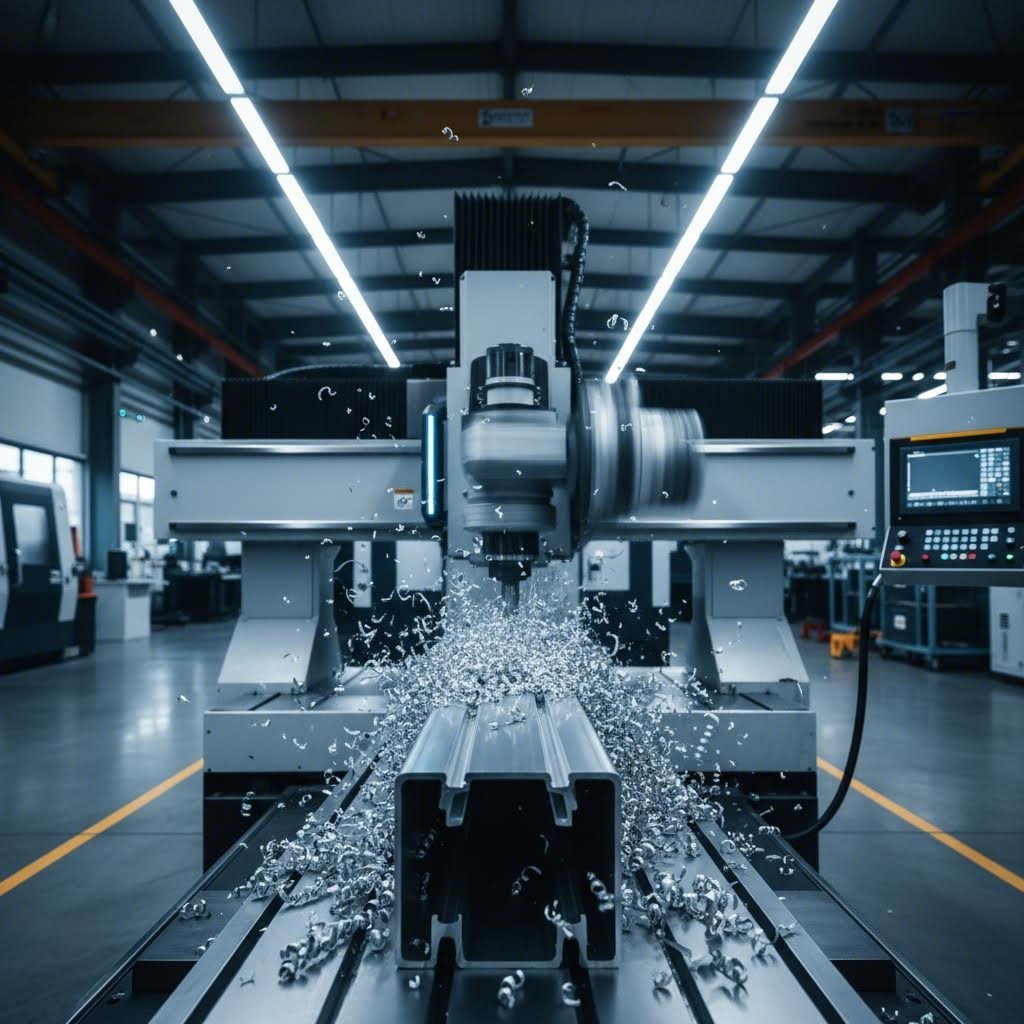
Your aluminum extrusion emerges from the die with the perfect cross-sectional profile—but it's still a long length of raw material. What transforms this semi-finished product into facade-ready components? Secondary operations bridge the gap between extruded aluminum profiles and installation-ready parts that fit precisely into your curtain wall or rainscreen assembly.
Think of it this way: extrusion creates the shape, but fabrication creates the part. A mullion profile might be flawless in cross-section, yet it still needs precise length cuts, machined connection pockets, drilled mounting holes, and notched corners before a glazier can install it. These aluminum extrusion shapes require careful post-processing to become functional facade components.
When your facade design calls for intricate connection details, integrated drainage channels, or complex corner assemblies, CNC machining delivers the precision you need. Computer-controlled machining centers can cut, mill, drill, and shape aluminum extrusion trim with tolerances measured in hundredths of a millimeter—accuracy that manual operations simply cannot achieve consistently.
According to PTSMAKE, leading manufacturers use CNC machining to add features along the length or on the faces of profiles that extrusion alone cannot create. This includes holes, slots, pockets, threads, chamfers, and complex contours essential for facade applications. The result? Extruded aluminum trim components that arrive on site ready for immediate installation.
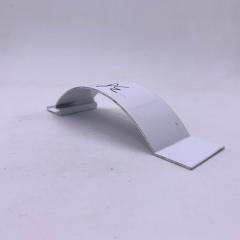
Curved aluminum extrusion applications showcase CNC capabilities particularly well. Radius corners on curtain walls, arched window frames, and organically shaped facade elements all require controlled bending operations. Modern roll-bending and stretch-forming equipment can curve profiles to specific radii while maintaining cross-sectional integrity—turning straight extrusions into flowing architectural forms.
Beyond shaping, CNC machining also handles material removal operations that prepare profiles for assembly. Miter cuts at precise angles enable clean corner joints. End machining creates mortise-and-tenon connections between mullions and transoms. Pocket milling recesses hardware and thermal break components flush with profile surfaces.
Every facade extrusion must be cut to length—but not all cutting operations are equal. High-speed precision saws deliver clean, burr-free cuts perpendicular to the profile axis. For aluminum flat bar and aluminum bar stock components used in facade support systems, accurate cutting ensures proper fit within structural assemblies.
Here's the range of secondary operations commonly applied to facade extrusions:
Quality control throughout secondary operations ensures dimensional accuracy for weathertight installations. Coordinate measuring machines (CMMs) verify critical dimensions against specifications. Optical scanners check profile geometry and hole positioning. Sample inspection protocols catch deviations before they reach the job site.
The integration of these fabrication capabilities under one roof—what industry professionals call "deep processing"—streamlines your supply chain significantly. Rather than coordinating between extrusion suppliers, machine shops, and finishing houses, working with a manufacturer offering comprehensive secondary operations means single-source accountability. Parts arrive fabricated, finished, and ready for installation.
Tolerance management becomes increasingly critical as fabrication complexity increases. Each operation introduces potential variation: saw blade wear, fixture positioning, tool deflection. Manufacturers with robust quality systems track these variables, adjusting processes to maintain dimensional accuracy across production runs. For facade applications where weathertight performance depends on precise component fit, this attention to process control proves invaluable.
With your extrusions cut, machined, and fabricated to specification, the next challenge is ensuring your specifications capture all the performance requirements your facade demands—a topic that requires familiarity with industry standards and testing protocols.
You've designed your custom aluminum profiles, selected alloys and finishes, and planned secondary operations—but how do you communicate all these requirements clearly to manufacturers and contractors? The answer lies in well-crafted specifications that leave no room for interpretation. Poorly written specs lead to project delays, budget overruns, and facades that don't perform as intended. Clear, standards-referenced specifications protect everyone involved.
Specification writing for aluminium extrusion profiles isn't simply listing what you want. It requires understanding the testing standards that validate performance, the industry benchmarks that define quality, and the documentation practices that ensure accountability. Whether you're an architect developing project specifications or a contractor reviewing submittals, familiarity with these frameworks helps you make informed decisions.
Two organizations dominate the aluminum facade specification landscape: ASTM International and AAMA (now known as FGIA—Fenestration and Glazing Industry Alliance). ASTM standards address material properties and testing methods, while AAMA specifications focus specifically on architectural performance requirements.
For aluminum profiles themselves, ASTM B221 covers standard specifications for aluminum and aluminum-alloy extruded bars, rods, wire, profiles, and tubes. This standard establishes baseline mechanical properties, dimensional tolerances, and quality requirements. When specifying 6063-T6 or 6061-T6 alloys for facade applications, reference to ASTM B221 ensures your aluminum extrusion companies deliver material meeting established industry benchmarks.
Surface finish specifications rely heavily on AAMA standards. According to Aegis Finishing, AAMA 2603, 2604, and 2605 outline performance requirements for organic coatings on architectural aluminum extrusions and panels. These standards specify testing protocols including South Florida outdoor exposure, color retention measurements, gloss retention, and erosion resistance:
For anodized finishes, AAMA 611 establishes requirements for anodic coatings on aluminum, covering coating thickness, seal quality, and colorfastness. Specifying these standards rather than vague phrases like "high-quality finish" gives everyone a measurable benchmark.
Effective specifications translate design intent into actionable requirements. According to Danda Lee, architects should use clear and concise language easily understood by individuals with varying levels of technical expertise, while providing references to relevant codes and regulations.
Here are the key elements your facade extrusion specifications should include:
Common specification gaps create predictable problems. Omitting straightness and twist tolerances leads to installation difficulties with long mullion profiles. Failing to specify color matching requirements across production lots results in visible inconsistencies on completed facades. Neglecting to define acceptable surface defect criteria invites disputes during quality inspections.
Performance-based specifications often serve projects better than prescriptive ones. Rather than mandating a specific coating brand, specify the AAMA 2605 performance standard and let manufacturers propose compliant solutions. This approach encourages competitive pricing while maintaining quality requirements. However, balance this flexibility with sufficient detail—stating "finish shall be durable" provides no measurable standard for compliance verification.
Documentation requirements deserve equal attention. Specify what certifications, test reports, and quality records must accompany material deliveries. Require sample submittals for color and finish approval before production begins. These upfront requirements prevent disputes and ensure your aluminum profile matches design intent when it arrives on site.
With specifications properly documented, your next challenge is finding a manufacturing partner capable of delivering on those requirements—a decision that shapes your entire project's success.
Your specifications are written, your drawings are finalized, and your project timeline is set—but who will actually manufacture your custom aluminum products? Choosing the right aluminum extrusion suppliers can mean the difference between a smooth project and months of delays, quality disputes, and budget overruns. This decision deserves careful evaluation, not just a quick price comparison.
Think about it this way: your extrusion partner becomes an extension of your project team. They'll interpret your drawings, develop the tooling, manage production, and deliver components that must perform flawlessly for decades. Finding custom aluminum extrusions suppliers with the right capabilities, experience, and commitment to quality requires systematic evaluation across multiple criteria.
Press capacity defines what a manufacturer can produce. According to industry experts, different press sizes serve different applications:
Why does this matter? A supplier operating multiple press capacities can handle a wider range of custom extrusions and maintain flexibility when project requirements change. For facade applications, you might need delicate decorative profiles alongside substantial structural members—a manufacturer with diverse equipment handles both without outsourcing.
Beyond press size, evaluate the supplier's alloy capabilities. Most facade projects require 6063 for visible architectural elements and 6061 for structural components. Confirm your potential partner regularly works with these alloys and maintains proper billet management, including homogenization and preheating controls that ensure consistent extrusion quality.
Die development capabilities separate professional aluminum extrusion services from basic producers. Manufacturers with in-house die workshops can modify or repair tooling quickly, maintaining production continuity when issues arise. Those outsourcing die work face longer lead times and slower problem resolution—delays that cascade through your entire project schedule.
The most capable custom extrusion aluminum partners offer integrated services that streamline your supply chain. Rather than coordinating between separate extrusion plants, machine shops, and finishing houses, working with a manufacturer offering comprehensive capabilities means single-source accountability.
When evaluating potential partners, consider these essential criteria:
Consider Shengxin Aluminium as an example of comprehensive manufacturing capability. With 35 extrusion presses ranging from 600T to 5500T, they handle everything from precision architectural trim to substantial structural profiles. Their state-of-the-art CNC machining centers perform precise cutting, drilling, and bending to exact specifications, while diverse surface treatment options—including anodizing in custom colors, powder coating, PVDF, and micro-arc oxidation—cover the full spectrum of facade finish requirements.
What truly distinguishes capable partners is end-to-end project support. From initial die development through mass production, experienced manufacturers provide technical guidance that prevents problems before they occur. Explore custom extrusion and deep processing services to understand how integrated capabilities streamline complex facade projects.
Site visits, when possible, provide invaluable insight into actual operations. Seeing manufacturing processes firsthand, observing quality control measures, and meeting technical staff helps you assess whether a supplier can truly deliver on their promises. If visits aren't feasible, request detailed facility documentation, sample inspection reports, and references from similar projects.
Financial stability and regulatory compliance also warrant attention. Suppliers certified to ISO 9001, EN 755-9, and relevant regional standards demonstrate commitment to process control and traceability. For projects requiring specific certifications—RoHS, REACH, or EN1090-3 for structural applications—verify these credentials before committing.
Trial orders offer practical capability assessment. Placing a small initial order lets you evaluate production quality, dimensional accuracy, surface finish consistency, and delivery performance before committing to full production volumes. Many manufacturers, particularly those confident in their capabilities, welcome this approach as an opportunity to demonstrate their value.
The partnership you establish extends beyond a single transaction. Custom extruded aluminum facade projects often span months of production, requiring ongoing coordination, potential design refinements, and responsive communication. Selecting a partner who views your success as their success—who offers proactive technical support rather than merely filling orders—positions your project for the best possible outcome.
You've journeyed through the complete landscape of custom aluminum extrusions for facades—from material selection and profile engineering to system integration, surface treatments, and partner evaluation. Now comes the moment to synthesize these insights into actionable guidance for your next project. Whether you're an architect developing design specifications, a contractor preparing bid packages, or a specifier evaluating manufacturer capabilities, the decisions you make early in the process shape outcomes for decades to come.
The architectural aluminum extrusions industry continues evolving, with bespoke aluminium extrusion solutions enabling designs that simply weren't feasible a generation ago. Unique extrusions now integrate thermal breaks, drainage channels, and connection features into unified profiles—transforming how building envelopes perform while reducing installation complexity.
Successful aluminium extrusion projects share common characteristics. Consider these essential decision factors as you move forward:
Early collaboration between design teams and extrusion manufacturers prevents costly revisions and unlocks innovative solutions. The most successful facade projects begin with technical dialogue during concept development—not after drawings are finalized.
Ready to transform your facade vision into reality? The path forward involves several practical steps. Start by developing preliminary profile concepts with your design team, focusing on functional requirements before finalizing aesthetics. Engage potential manufacturing partners early—experienced architectural aluminum extrusions producers can identify optimization opportunities that reduce costs while maintaining design intent.
Request capability assessments from prospective suppliers. Evaluate their press range, finishing options, and secondary processing capabilities against your specific project requirements. Consider trial orders to validate quality before committing to production volumes.
For projects demanding comprehensive support from concept through delivery, established manufacturers like Shengxin Aluminium offer factory-direct pricing combined with technical consultation that guides your project through each phase. Their 35 extrusion presses, integrated CNC machining centers, and diverse surface treatment capabilities—from custom-color anodizing to PVDF coatings—provide the end-to-end support complex facade projects require.
The facades you build today will define skylines for generations. By making informed decisions about materials, profiles, finishes, and manufacturing partners, you're investing in building envelopes that perform beautifully while protecting occupants for decades to come. Your next step? Reach out to capable partners, share your vision, and discover how custom extrusion solutions can elevate your architectural aspirations into lasting reality.
Standard aluminum extrusions come in predetermined shapes like basic channels, tubes, and angles suitable for general applications. Custom aluminum extrusions are engineered specifically for your project's unique geometry, thermal requirements, and aesthetic vision. For facade applications, custom profiles integrate multiple functions—such as weatherseal grooves, drainage channels, and thermal break chambers—into a single component, reducing assembly steps and improving overall system integrity.
Most facade projects use 6063-T6 aluminum for visible architectural elements due to its superior surface finish, excellent extrudability, and outstanding anodizing response. For structural components requiring higher strength, 6061-T6 aluminum is preferred, offering tensile strength of at least 42,000 psi compared to 6063-T6's 28,000 psi. Many projects combine both alloys—6063 for decorative profiles and 6061 for load-bearing members.
Custom aluminum extrusion costs depend on several factors: die development (typically $1,500-$10,000 depending on complexity), alloy selection, profile weight-per-foot, surface treatment requirements, and secondary operations needed. Keeping your profile's circumscribing circle diameter under 8 inches and weight-per-foot at 3 pounds or less generally optimizes production economics. Many manufacturers like Shengxin Aluminium offer factory-direct pricing that reduces costs while providing technical consultation throughout the project.
Facade extrusions can receive anodizing (clear or colored in bronze, black, champagne), powder coating (AAMA 2603, 2604, or 2605 standards), or PVDF coatings for premium durability. Anodizing creates an integral oxide layer that won't peel or chip. PVDF coatings meeting AAMA 2605 standards offer superior UV resistance and 20+ years of color retention, making them ideal for harsh environments. Advanced options like micro-arc oxidation provide exceptional hardness for specialized applications.
Thermal breaks interrupt aluminum's conductive pathway by inserting insulating polyamide strips (typically PA66 GF25) between interior and exterior profile sections. This technology significantly reduces heat transfer, prevents condensation, and helps facades meet energy code requirements. Custom extrusion profiles can incorporate dedicated chambers for thermal break insertion, with modern systems achieving U-values as low as 1 W/m²K when combined with polyamide pressure plates.



 Servicio en línea
 0086 136 3563 2360
 sales@sxalu.com
 +86 136 3563 2360
 español
 English
 français
 Deutsch
 русский
 português
 العربية
 ไทย
ไทย Việt
Việt Українська