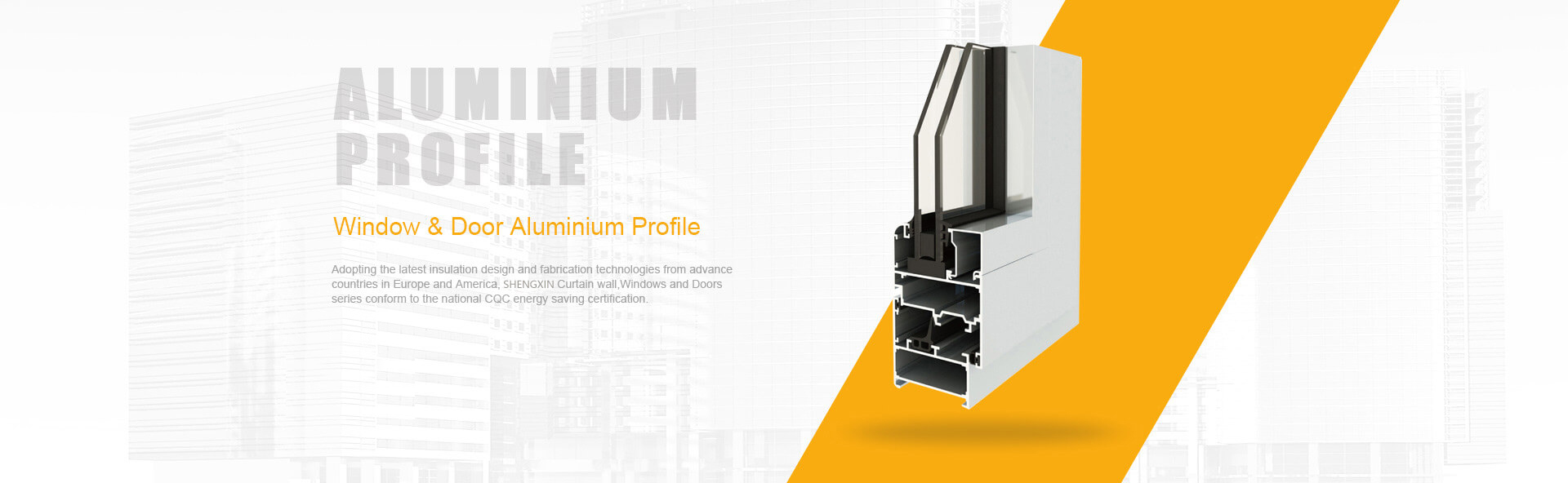
When you hear the term "large custom aluminum extrusions," what exactly qualifies as "large"? This distinction matters more than you might think. Ordering the wrong size category can lead to production delays, unexpected costs, or even project failure. Understanding where your profile falls on the size spectrum helps you select the right manufacturer, anticipate tooling requirements, and budget accurately.
The aluminum extrusion industry draws a clear line between standard and oversized profiles. This classification directly impacts which facilities can produce your parts, how much you will pay, and how long production takes. Let's break down the specific thresholds that separate large aluminum extrusions from their smaller counterparts.
The primary measurement that determines whether an extrusion qualifies as "large" is the circumscribing circle diameter (CCD). This is the smallest circle that can completely enclose the cross-section of your profile. According to industry tolerance standards, profiles with a CCD under 10 inches fall into the standard category, while those at 10 inches and above enter large extrusion territory.
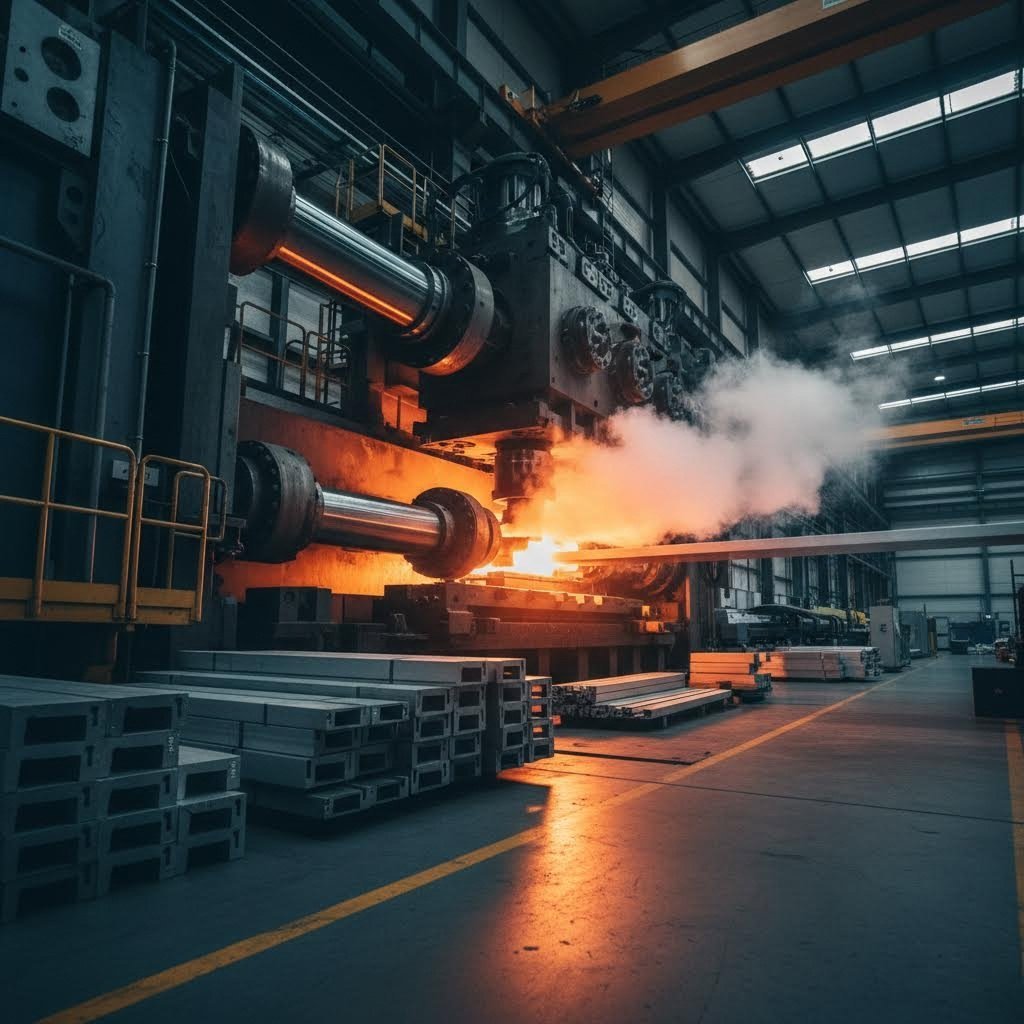
Why does this matter? Standard aluminum extrusions can be produced on conventional presses ranging from 600 to 2000 tons. Once you cross the 10-inch threshold, you need specialized equipment. Large profiles typically require press tonnage between 3000T and 5500T or higher. Not every extrusion facility has this capability, which immediately narrows your supplier options.
Think of it this way: a smaller press trying to extrude an oversized profile simply cannot generate enough force to push the aluminum through the die properly. The result would be incomplete fills, surface defects, or outright production failure.
Beyond the circumscribing circle, several other dimensional criteria help categorize extruded aluminum sizes. Here are the key factors that define large extrusion profiles:
These classifications are not arbitrary. They reflect real manufacturing constraints. As referenced in extrusion design guidelines, the maximum profile size depends directly on press capacity, with commercial presses typically handling widths up to 400-600mm. Larger profiles demand more controlled cooling, specialized handling equipment, and dies engineered to withstand greater stress.
Understanding these thresholds helps you communicate effectively with potential suppliers. When requesting quotes, specifying your CCD upfront allows manufacturers to quickly determine whether they have the equipment to handle your project. It also sets realistic expectations for tooling costs and lead times, since large aluminum extrusion profiles require more complex dies and longer production cycles than standard profiles.
Now that you understand what qualifies as a large aluminum extrusion, the next question becomes: why does size matter so much in production? The answer lies in the unique manufacturing challenges that oversized profiles present. These hurdles explain why fewer facilities can produce large extrusions and why costs tend to run higher than standard profiles.
Producing aluminum extrusions is often compared to squeezing toothpaste from a tube. The aluminum takes the shape of the die opening as it is forced through under immense pressure. But when you scale up to large profiles, every aspect of this process becomes exponentially more complex. Heat behaves differently, dies must withstand greater stress, and handling requires specialized equipment. Let's examine each challenge in detail.
Thermal management sits at the heart of successful aluminum profile extrusion. According to extrusion tooling specialists, aluminum billets must be preheated to approximately 700-930°F (370-500°C) to achieve the plasticity needed for extrusion. Maintaining consistent temperatures throughout the process directly influences the mechanical properties and surface quality of the finished profile.
With large extrusions, thermal control becomes significantly more difficult. Here's why:
The extrusion process involves a hydraulic ram applying anywhere from 1,000 to 15,000 tons of pressure to force softened aluminum through the die. At the upper end of this range—where large aluminum extrusions operate—heat generation from friction and compression intensifies dramatically. If temperatures climb too high, the aluminum can develop surface defects, structural weaknesses, or uneven textures.
Manufacturers address these challenges through sophisticated container heating systems, precise billet temperature monitoring, and optimized extrusion speeds. The goal is maintaining what engineers call the "extrusion window"—the narrow temperature range where the aluminum flows smoothly without overheating or becoming too rigid.
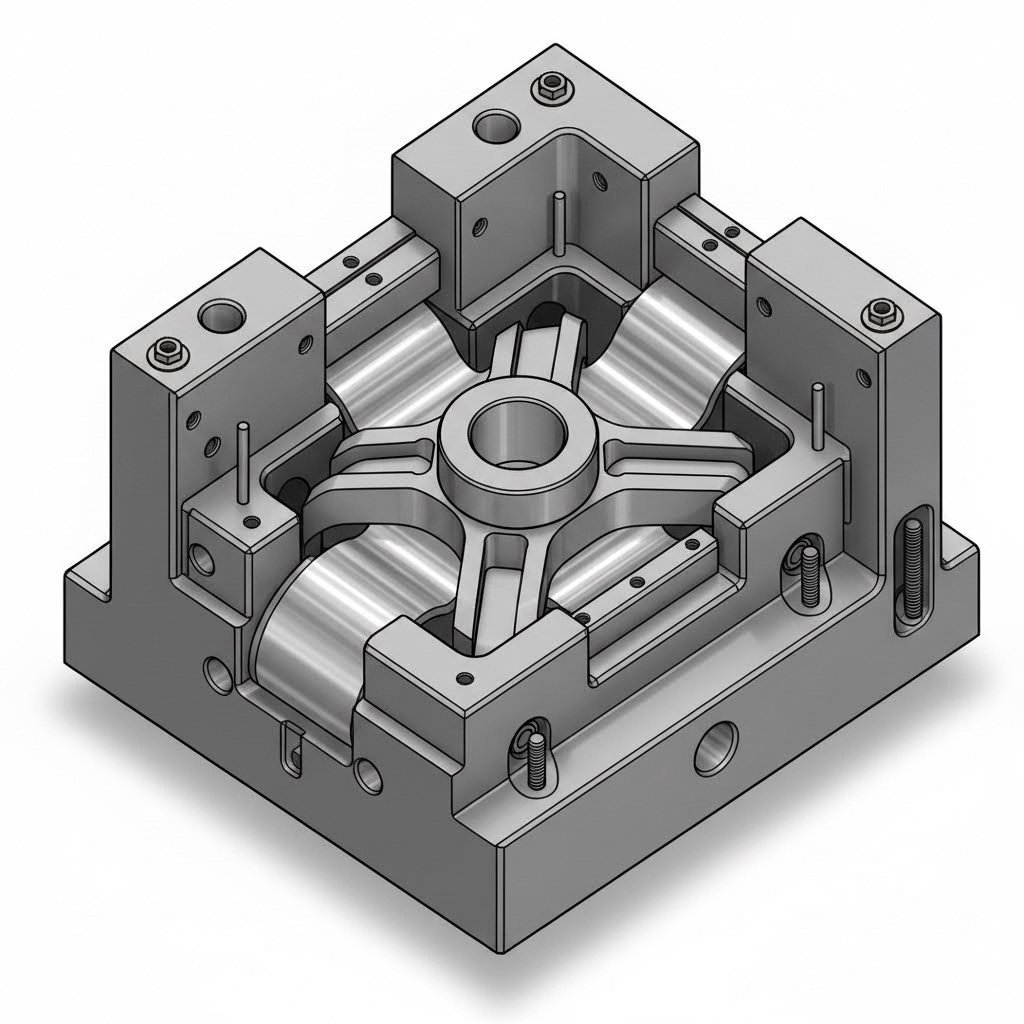
The aluminium extrusion die is the most critical tooling component in the entire process. As Gemini Group explains, dies are subjected to up to 15,000 tons of pressure during extrusion—enough force to crush 50 pickup trucks. For large profiles, aluminium extrusion dies face even greater stress across wider surface areas.
Designing effective dies for oversized profiles requires addressing several interconnected challenges:
For hollow sections—common in large structural extrusions—the complexity multiplies. Hollow dies require a mandrel to create internal voids, plus a die cap to shape the outer contour. Coordinating material flow around these components while maintaining dimensional accuracy demands extensive engineering expertise and finite element analysis (FEA) simulations.
The differences between producing standard and large extrusion aluminum profiles extend across every phase of manufacturing. This comparison highlights why specialized capabilities matter when ordering oversized custom profiles:
| Manufacturing Factor | Standard Extrusions (Under 10" CCD) | Large Extrusions (10"+ CCD) |
|---|---|---|
| Press Tonnage Required | 600T - 2000T | 3000T - 5500T+ |
| Billet Preheat Time | Standard heating cycles | Extended cycles for uniform temperature |
| Die Complexity | Moderate; standard support tooling | High; requires heavy backers and bolsters |
| Cooling Time | Rapid air or water quench | Controlled cooling to prevent warping |
| Handling Equipment | Conventional runout tables | Extended tables with specialized supports |
| Straightening Requirements | Standard stretching operations | Careful stretching to avoid distortion |
| Facility Availability | Most extrusion facilities | Limited to heavy-press operations |
Press tonnage requirements deserve special attention. As Hydro notes, their 8200-tonne press can deliver profiles up to 620mm wide and 26 meters long. This high pressure also enables thin-walled large profiles, adding up to lightweight components and material savings. However, not every manufacturer has access to such equipment.
Beyond the press itself, large extrusions require extended runout tables to support profiles as they exit the die. Standard tables simply cannot accommodate 20+ foot lengths of heavy aluminum without risking sag or surface damage. Specialized handling systems, including overhead cranes and custom supports, become necessary investments for facilities producing oversized profiles.
Understanding these manufacturing realities helps you evaluate potential suppliers more effectively. When choosing a partner for your project, the right press capacity and handling infrastructure are non-negotiable starting points.
You have determined your profile qualifies as a large extrusion and you understand the manufacturing challenges involved. Now comes a decision that will shape your project's performance for years: which aluminum alloy should you specify? This choice affects everything from structural integrity to surface finish quality, and for large aluminum profiles, the stakes are even higher.
The 6000-series aluminum alloys dominate the extrusion industry for good reason. According to the Aluminum Extruders Council, there are 110 registered alloys in this series alone—each formulated to balance strength, workability, and corrosion resistance differently. But when you are dealing with oversized profiles, not every alloy performs equally well. Let's explore why certain alloys excel in large extrusion applications and how to match material properties to your specific requirements.
Imagine trying to push a massive aluminum billet through a complex die opening. The alloy you choose directly determines how smoothly that process unfolds. Two alloys consistently outperform others for aluminum alloy extrusion in large-scale applications: 6063 and 6061.
Both belong to the 6xxx series, where the "6" indicates higher levels of magnesium and silicon as primary alloying elements. However, their compositions differ in ways that matter significantly for oversized profiles:
Why does this matter for large profiles? According to PSI Extrusions, 6063 is "generally the first pick for extrusions, and usually necessary for more intricate designs." When you scale up to oversized dimensions, the extrudability advantage becomes even more critical. The material must flow uniformly across a much wider die opening, and 6063's superior flow characteristics help prevent the defects that plague harder-to-extrude alloys.
However, strength requirements sometimes push designers toward 6061. In the T6 temper, 6061 delivers an ultimate tensile strength of at least 42,000 psi compared to 6063's 28,000 psi—a 50% advantage. For structural aluminium extrusions carrying significant loads, this difference can determine whether your design works or fails.
Selecting between alloys requires balancing competing priorities. Here's a practical framework for making this decision when ordering extruded aluminum profiles:
| Property | 6063-T6 | 6061-T6 | 7075-T6 |
|---|---|---|---|
| Ultimate Tensile Strength | 28,000 psi minimum | 42,000 psi minimum | 83,000 psi |
| Yield Strength | 23,000 psi minimum | 35,000 psi minimum | 73,000 psi |
| Brinell Hardness | 73 | 95 | 150 |
| Extrudability Index | Excellent (highest) | Good (moderate) | Poor (lowest) |
| Corrosion Resistance | Superior | Good | Fair (requires coating) |
| Weldability | Excellent | Good (requires filler) | Limited |
| Surface Finish Quality | Excellent (smooth) | Good | Fair |
| Typical Applications | Architectural, furniture, trim | Structural, transportation, aerospace | Aerospace, high-stress components |
Notice the trade-off between strength and extrudability. The Aluminum Extruders Council emphasizes that "as the extrudability index decreases, costs go up since additional press time is required and yields often decrease." For large profile aluminum applications, this cost impact multiplies because you are already working at the limits of press capacity.
What about 7075? While its strength figures look impressive, this aerospace alloy presents serious challenges for large extrusions. Its poor extrudability means slower press speeds, higher die wear, and increased scrap rates. Most manufacturers reserve 7075 for smaller, simpler shapes where its strength-to-weight ratio justifies the production difficulties.
Your aluminum profile design—not just its size—should guide alloy selection. Two geometric factors deserve special attention:
Wall Thickness Ratios: Large hollow aluminum profiles often feature varying wall thicknesses. Thinner walls benefit from 6063's superior flow characteristics, which help achieve uniform filling across the die. If your design includes sections under 0.080 inches thick adjacent to heavier walls, 6063 typically produces better results. For consistently thick-walled solid profiles where strength matters most, 6061 becomes more practical.
Hollow vs Solid Profiles: Hollow sections require aluminum to flow around a mandrel before rejoining—a process that stresses the material. The Eagle Aluminum comparison notes that 6063 "is the preferred material in custom product solutions, making possible the creation of complex shapes with smooth surfaces." When your large extrusion includes internal voids, 6063's weldability also helps ensure strong seam welds where the material rejoins.
Here's a practical guideline: if visual appeal and complex geometry drive your design, start with 6063. If structural calculations demand higher strength and your profile geometry is relatively simple, 6061 may be the better choice. And remember, as the Aluminum Extruders Council points out, "specifying a highly manufacturable alloy with the proper part geometry can yield excellent results." Sometimes redesigning for a more extrudable alloy beats fighting against material limitations.
With your alloy selected, the next step involves translating your design into production-ready specifications. This requires understanding the unique design-for-manufacturability principles that apply to large custom extrusions.
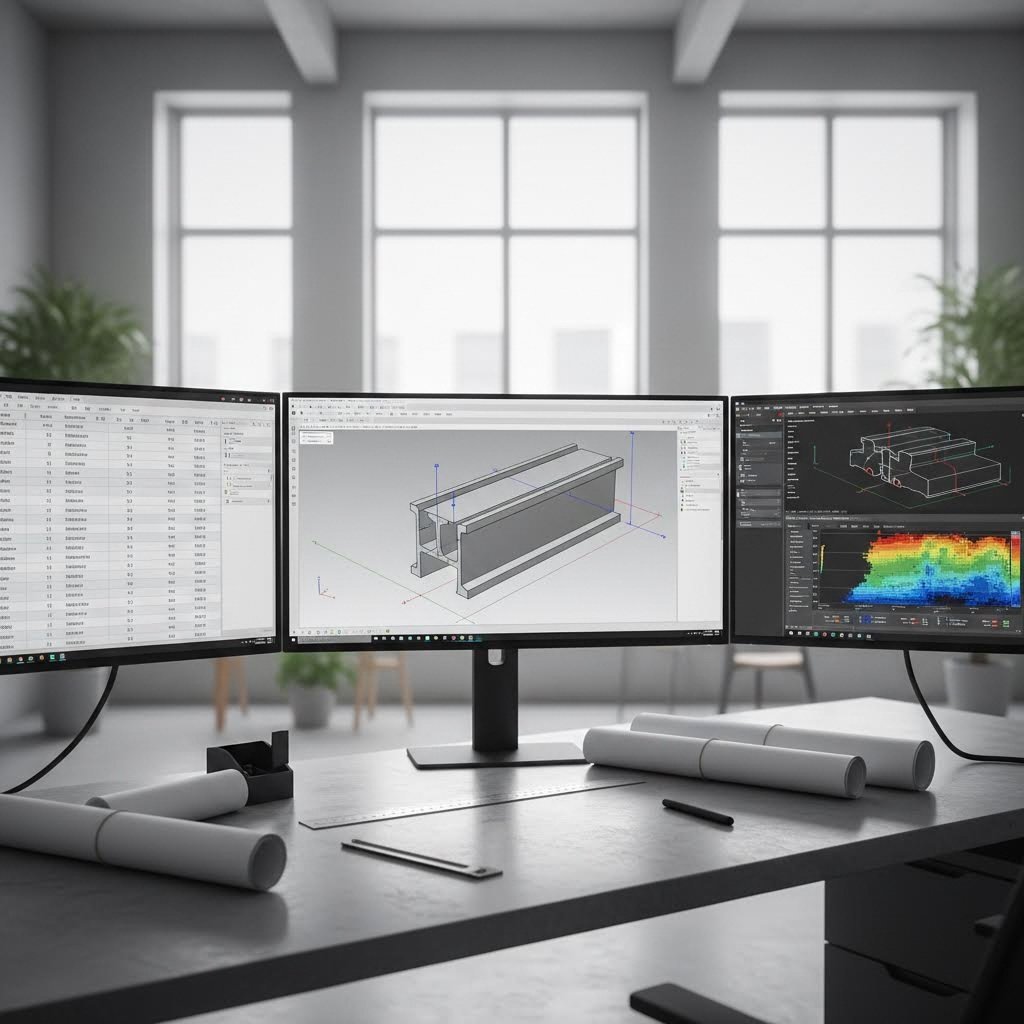
You have selected your alloy and understand the manufacturing challenges ahead. Now comes the phase where your concept transforms into a production-ready design. This journey from initial idea to mass production requires careful planning—especially for large custom aluminum extrusions where design errors become exponentially more costly to correct.
Many buyers underestimate this phase. They submit a CAD file and expect production to begin immediately. But rushing through design development often leads to rejected parts, expensive die modifications, or profiles that cannot be manufactured at all. Understanding the complete workflow helps you avoid these pitfalls and collaborate effectively with your extrusion partner.
Design-for-manufacturability (DFM) means creating profiles that can actually be produced efficiently and consistently. For custom aluminum extrusions, this involves balancing your functional requirements against the physical realities of pushing aluminum through a die under thousands of tons of pressure.
When designing large profiles, several principles become especially critical:
Wall Thickness Consistency: According to aluminum extrusion design guidelines, most custom aluminum extrusions have minimum wall thicknesses between 0.8mm and 1.2mm. However, the ratio between your thickest and thinnest walls matters just as much as absolute dimensions. Large profiles with dramatic thickness variations create uneven material flow, leading to warping or incomplete fills. Aim for gradual transitions rather than abrupt changes.
Symmetry Considerations: Symmetrical designs extrude more predictably than asymmetrical ones. When aluminum flows through the die, balanced geometry helps ensure uniform cooling and reduces internal stresses. If your application requires an asymmetrical profile, work with your engineering team to incorporate features that counterbalance the asymmetry—such as ribs or varying bearing lengths in the die design.
Corner Radii and Transitions: Sharp corners concentrate stress in both the die and the finished profile. Generous radii improve material flow, extend die life, and strengthen your finished part. For large aluminum extrusion profiles, specify minimum corner radii of 0.5mm to 1mm whenever possible.
Hollow Section Design: If your custom profile extrusions include hollow sections, the die requires a mandrel supported by legs or bridges. Aluminum must flow around these supports and reweld on the other side. Design hollow sections with adequate wall thickness and avoid extremely thin tongues that could deflect under extrusion pressure.
Tolerances define how much your finished profile can deviate from its theoretical dimensions. Here is where many buyers make costly mistakes—either specifying tolerances too tight (driving up costs and rejection rates) or too loose (resulting in parts that do not fit their assemblies).
Industry standards from ASTM and the Aluminum Association (AA) establish baseline tolerances for aluminum extrusion dimensions. However, these standards recognize that large profiles behave differently than standard ones. As extrusion design resources note, tolerance specifications directly impact both cost and lead time.
Standard tolerance categories for aluminum extrusions include:
For large extrusions, tolerances typically widen compared to standard profiles. A wall thickness tolerance of ±0.15mm on a small profile might become ±0.25mm or more on a profile custom extrusions exceeding 10 inches. This reflects the greater challenges in controlling material flow, cooling rates, and straightening operations at larger scales.
| Tolerance Type | Standard Profiles (Under 10" CCD) | Large Profiles (10"+ CCD) |
|---|---|---|
| Wall Thickness | ±0.15mm typical | ±0.25mm to ±0.40mm |
| Cross-Sectional Dimensions | ±0.25mm per 25mm | ±0.40mm per 25mm or wider |
| Straightness | 0.5mm per 300mm length | 0.8mm to 1.0mm per 300mm length |
| Twist | 1° per meter | 1.5° to 2° per meter |
| Angularity | ±1° | ±1.5° to ±2° |
When your application demands tighter tolerances than standard, communicate this early. Your manufacturer may need to adjust die design, slow extrusion speeds, or implement additional quality controls—all of which affect pricing and lead time.
Understanding the sequential steps from initial concept to finished parts helps you plan timelines and collaborate effectively with your extrusion partner. Here is how a typical custom extrusion project unfolds:
The design-to-production journey works best as a partnership rather than a transaction. Here are practical strategies for collaborating with your extrusion manufacturer's engineering team:
Share application context: When engineers understand how you will use the profile, they can suggest improvements you might not consider. Structural loads, assembly methods, and environmental factors all influence optimal design choices.
Communicate flexibility: Identify which dimensions are truly critical versus those with room for adjustment. If you can accept slightly wider tolerances on non-critical features, you may significantly reduce costs.
Request DFM feedback early: Do not wait until final design submission to involve your manufacturer. Early consultation catches issues when changes are still inexpensive. As die design specialists emphasize, effective communication among designers, manufacturers, and end-users ensures successful outcomes.
Plan for iterations: Even experienced designers rarely achieve perfect results on the first die trial. Budget time and resources for die corrections, especially on complex large profiles where material flow is harder to predict.
With your design finalized and production underway, attention shifts to how the finished profiles will look and perform. Surface finishing options for large extrusions present their own unique considerations—a topic that directly impacts both aesthetics and long-term durability.
Your large aluminum profile has been extruded, straightened, and cut to length. Now comes a decision that affects both how it looks and how long it lasts: surface finishing. But here's what many buyers discover too late—the same finishing process that works perfectly on standard profiles may not be feasible for oversized ones. Tank dimensions, coating uniformity, and handling logistics all change dramatically when you scale up.
Understanding these constraints before finalizing your specifications prevents frustrating delays and unexpected costs. Let's explore the unique challenges of finishing large aluminium extrusion profiles and the treatment options that deliver the best results.
Imagine lowering a 20-foot aluminum profile into an anodizing tank. Sounds straightforward—until you realize most finishing facilities were designed for standard-sized parts. According to industry equipment specialists, several factors limit what can be processed in painting and anodizing lines:
These limitations mean you cannot simply assume your preferred finish is available. When specifying aluminium extrusion profiles for projects requiring specific surface treatments, confirm your manufacturer's finishing capabilities match your profile dimensions before committing to a design.
Despite these challenges, several finishing methods work effectively on oversized extruded profiles when applied by facilities with appropriate equipment. Here's what you should know about each option:
Anodizing creates a durable oxide layer that protects aluminum from corrosion while providing a clean, professional appearance. According to surface treatment specialists, this electrochemical process offers three main variations:
For large aluminum extrusion trim and architectural applications, colored anodizing remains popular because the finish integrates permanently with the metal rather than sitting on top. However, tank size constraints often limit maximum treatable lengths. Ask your supplier about their specific capacity before specifying anodized finishes on oversized profiles.
Powder coating applies electrostatically charged particles that are then cured under high heat, creating a uniform protective layer. This process offers several advantages for large extruded aluminum trim:
Facilities with both vertical and horizontal powder coating lines can handle a wider variety of profile sizes. Vertical lines work well for long aluminium extruded profile applications, while horizontal systems excel at precision coating of complex shapes.
For aluminium extrusion trim exposed to harsh outdoor environments, PVDF (Polyvinylidene Fluoride) coating delivers premium performance. This multi-layer finish provides:
PVDF-coated profiles are widely specified for architectural facades, curtain walls, and any application where long-term appearance matters. The higher initial cost typically pays off through reduced maintenance and extended service life.
When standard finishes cannot meet your durability requirements, micro-arc oxidation offers an advanced alternative. According to finishing industry discussions, MAO creates a ceramic-like oxide layer with exceptional properties:
The MAO process uses alkaline solutions rather than acids, making it environmentally safer than traditional anodizing. However, it requires specialized equipment and consumes more energy, resulting in higher costs. Reserve this option for applications where extreme wear resistance, heat exposure, or demanding environments justify the premium.
Surface treatment selection impacts both aesthetics and long-term performance. Consider these factors when making your decision:
The right surface finish transforms raw extruded aluminum into a finished component ready for its intended application. With finishing considerations addressed, the next step involves understanding how different industries leverage these oversized profiles—and why large extrusions often outperform alternative fabrication methods.
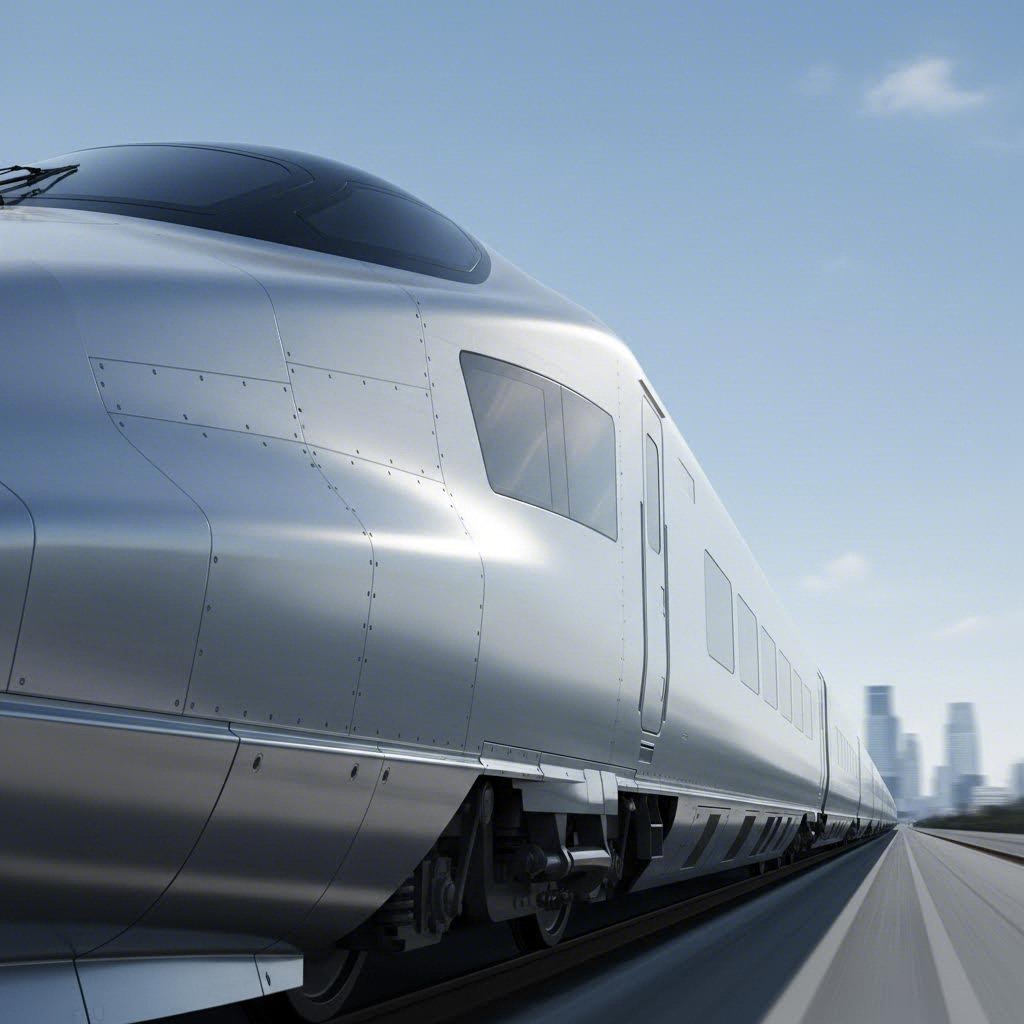
So you understand what makes an extrusion large, how it's manufactured, which alloys work best, and how to finish it. But here's the practical question: where do these oversized profiles actually go? The answer spans industries you might expect—and several you probably wouldn't.
Large custom aluminum extrusions solve problems that smaller profiles or alternative fabrication methods simply cannot address. When you need a 26-meter-long component with tight tolerances and consistent cross-sections, welding together smaller pieces introduces weak points, dimensional inconsistencies, and dramatically higher labor costs. Understanding how different industries leverage these capabilities helps you evaluate whether your own application is a good fit.
Transportation represents one of the largest markets for oversized aluminum profiles. Why? The answer comes down to a single metric: strength-to-weight ratio. According to structural framing analysis, while steel always wins in pure tensile strength (approximately 55,000 psi versus aluminum's 37,700 psi), the strength-to-weight ratio of aluminum extrusion framing is more than twice that of steel.
This difference transforms vehicle and vessel design economics. Every pound saved in structural weight translates to improved fuel efficiency, increased payload capacity, or both.
Rail Industry Applications:
As Hydro notes, wall sections for the railway industry represent a primary application for their largest extrusion capabilities. Profiles up to 620mm wide and 26 meters long—produced on their 8200-tonne press—enable single-piece construction that would otherwise require multiple welded components.
Marine Applications:
Automotive Applications:
Beyond transportation, large aluminum profiles enable innovations in industrial equipment and renewable energy infrastructure. These applications highlight why extrusion often beats alternative fabrication methods.
Structural Construction:
Solar Mounting Systems:
Industrial Equipment:
When evaluating fabrication options, the choice between a single large extrusion and a welded assembly from smaller components often determines project success. Here's why extrusion frequently wins:
Structural Integrity: According to structural analysis research, welding aluminum causes it to anneal, mitigating some of its heat treatment benefits. The anodized protective coating contaminates the weld and should be removed for effective joining. A single extruded profile maintains consistent metallurgical properties throughout—no heat-affected zones, no weakened areas where components join.
Assembly Efficiency: Consider a 15-meter structural member. Fabricating it from smaller welded pieces requires:
A single extruded profile arrives ready for installation. Hydro's application engineers emphasize that large profiles provide simplified design work, simplified production processes, and reduced assembly time.
Weight Reduction: Large profiles from high-tonnage presses can be manufactured as thin-walled sections—something impossible to achieve consistently through welding. This adds up to lightweight components and material savings without sacrificing structural performance.
Dimensional Consistency: Every inch of an extruded profile maintains identical cross-sectional dimensions. Welded assemblies introduce variables at every joint, requiring additional inspection and potentially causing fit problems during final assembly.
Surface Quality: Extruded aluminum products deliver high-level surface quality directly from production. Welded assemblies require additional grinding, filling, and finishing to match the appearance of surrounding material—if matching is even possible.
For applications requiring the advantages of even larger sections, joining technology extends possibilities further. Friction stir welding (FSW) can join big structural extrusions into aluminum panels wider than any single press can produce, while maintaining most of extrusion's quality advantages over conventional welding.
Understanding these application-specific benefits helps you communicate requirements effectively when requesting quotes. Now that you know where large extrusions excel, the next consideration becomes equally practical: what will they cost?
You have explored applications, alloys, and finishing options. Now comes the question every procurement manager asks first: what will this actually cost? Unlike standard catalog profiles where pricing is straightforward, large custom aluminum extrusions involve multiple cost components that interact in surprising ways. Understanding these factors before requesting quotes helps you budget accurately and negotiate effectively.
The aluminum extrusion cost equation includes variables that competitors rarely discuss openly. From tooling investments that can reach thousands of dollars to volume economics that dramatically shift per-piece pricing, transparency matters. Let's break down exactly what drives costs for oversized custom profiles—and where you might find savings.
Every custom extrusion starts with a die, and that die represents your first significant investment. According to industry cost analysis, tooling costs for extrusion dies used in normal architectural and industrial applications range from $400 to $1,000. But here's what many buyers don't realize: tool costs for large parts produced on 2,000-4,000 ton presses can reach as high as $2,000 or more.
Why such a dramatic difference? Several factors drive aluminum extrusion tooling costs upward for oversized profiles:
The good news? As Gabrian notes, some manufacturers refund tool costs if a stipulated amount is purchased within 2 years. Most also do not charge for replacement tools after their useful life expires—provided orders continue. Normal tool turnaround time runs 3-4 weeks, with production following within a week of sample approval.
When evaluating custom aluminum extruders, ask about their die amortization policies. A higher initial tooling quote from one supplier might actually cost less over time if they offer tool cost rebates or free die replacement programs.
The relationship between order quantity and per-unit pricing follows a predictable pattern—but the inflection points differ significantly between standard and large profiles. Understanding these economics helps you optimize order timing and quantities.
Minimum order quantities exist for solid technical and economic reasons:
Lead times for custom aluminum extrusion cost planning involve three distinct phases. Tooling lead time typically requires 2-4 weeks to construct the die, with more intricate geometries extending this period. Extrusion lead time depends on where your order falls in the production schedule, plus time for trial runs and sample approval. Fabrication lead time adds days or weeks if secondary operations like anodizing, CNC machining, or special cutting are required.
This comparison illustrates how costs and timelines differ between custom large extrusions and standard profiles across key categories:
| Cost Factor | Standard Profiles (Under 10" CCD) | Large Custom Profiles (10"+ CCD) |
|---|---|---|
| Initial Tooling Cost | $400 - $1,000 | $1,500 - $2,000+ |
| Die Design Time | 1-2 weeks | 2-4 weeks |
| Die Fabrication Time | 2-3 weeks | 3-4+ weeks |
| Minimum Order Quantity | 500-1,000 lbs typical | 1,500-3,000+ lbs typical |
| Per-Unit Cost (Low Volume) | Moderate premium | Significant premium |
| Per-Unit Cost (High Volume) | Competitive pricing | Approaches standard rates |
| Total Lead Time | 4-6 weeks | 6-10+ weeks |
| Supplier Availability | Broad selection | Limited to heavy-press facilities |
Here's something many buyers overlook: the press tonnage required for your profile directly impacts which extrusion companies can bid on your project—and therefore what you'll pay. As tooling specialists explain, extrusion presses range from 600 tons to 10,000 tons, with larger presses requiring heavier, thicker dies that cost more to manufacture and maintain.
When your profile requires a 4,000-ton press, you've immediately eliminated most extrusion facilities from consideration. Fewer qualified suppliers means less competitive pressure on pricing. This reality makes aluminum extrusion supply relationships particularly valuable for large profile buyers—developing a partnership with a well-equipped manufacturer often yields better pricing than constantly shopping the market.
Material costs add another variable. According to industry analysis, raw aluminum prices have fluctuated anywhere from $1,500 to $3,500 per metric ton in recent years, driven by global demand, political events, and energy costs. For large profiles consuming significant material volume, these fluctuations directly impact project budgets.
Your custom aluminum products rarely ship directly from the extrusion press. Secondary operations add value—and cost—to the finished profile:
Choosing a manufacturer with vertically integrated capabilities—combining extrusion, fabrication, and finishing under one roof—typically reduces total cost compared to coordinating operations across multiple vendors. You save on logistics, reduce handling damage risk, and eliminate markup layers.
With costs understood, the final consideration before ordering involves ensuring your finished profiles meet specifications consistently. Quality control for large extrusions presents unique challenges—challenges that separate reliable manufacturers from those who deliver headaches along with their aluminum.
You have invested in tooling, selected your alloy, and approved a die design. Now your aluminum extruded profiles are coming off the press—but how do you know they meet specifications? For large extrusions, quality control becomes especially critical. The same factors that make oversized profiles challenging to manufacture also make defects harder to detect and more costly to correct.
Understanding common quality issues helps you identify problems early, communicate effectively with your manufacturer, and evaluate whether a potential supplier has the capabilities to deliver consistently. Let's examine the challenges that affect profile precision extrusions at larger scales—and the prevention strategies that separate reliable manufacturers from those who deliver headaches along with their aluminum.
Warping ranks among the most frustrating defects in large aluminum extrusions. According to extrusion process specialists, warping occurs when the material distorts or bends due to uneven cooling or internal stresses during production. For oversized profiles, these risks multiply because larger cross-sections retain heat longer and cool less uniformly.
What causes warping in extruded aluminum shapes? Several interconnected factors contribute:
Preventing these issues requires attention at every production stage. Manufacturers producing unique extrusions at scale implement several key strategies:
When evaluating potential suppliers, ask about their straightness tolerances for profiles matching your dimensions. Manufacturers with robust thermal management and stretching capabilities will quote tighter tolerances confidently—those without may hedge or decline to commit.
Beyond dimensional accuracy, surface quality determines whether your extruded shapes meet aesthetic and functional requirements. Common surface defects in aluminium extrusion parts include:
According to manufacturing quality guidance, defect prevention requires systematic attention to multiple process variables. Temperature control, billet quality verification, die maintenance schedules, and handling protocols all contribute to consistent surface quality.
How do you assess whether a potential supplier can deliver consistent quality on your large extrusion project? Look for these indicators:
Quality assurance for large profiles goes beyond checking boxes. As quality control specialists emphasize, mechanical property testing—including tensile testing to verify strength, ductility, and other critical characteristics—provides objective evidence that your profiles will perform as designed.
When problems do occur, how a manufacturer responds reveals their true quality culture. Do they acknowledge issues promptly? Investigate root causes rather than just addressing symptoms? Implement corrective actions that prevent recurrence? These responses matter more than any certification hanging on the wall.
With quality considerations understood, the final piece of the puzzle involves selecting a manufacturing partner equipped to handle your specific project requirements—from press capacity to post-extrusion services.
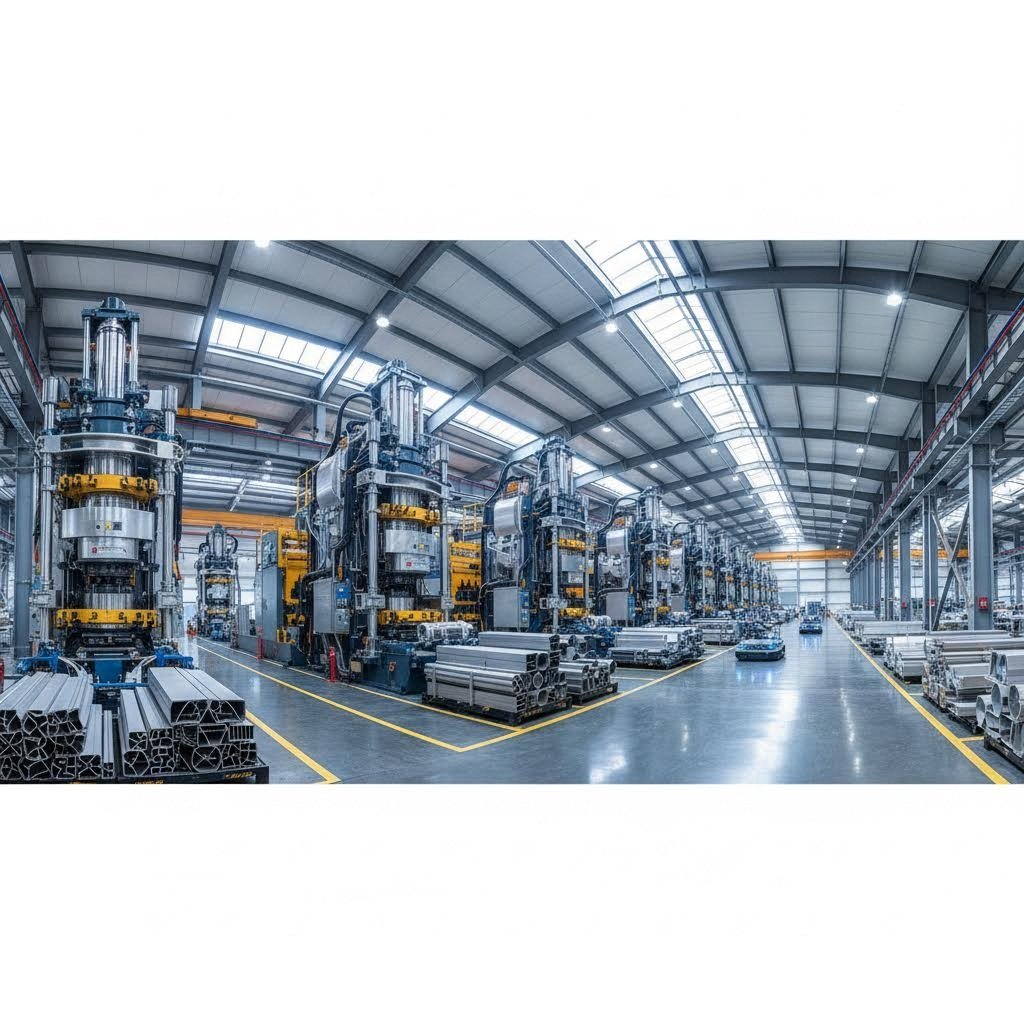
You have navigated the complexities of large aluminum extrusions—from understanding size thresholds and manufacturing challenges to specifying alloys, tolerances, and surface treatments. Now comes the decision that determines whether your project succeeds or stumbles: choosing the right manufacturing partner. This choice affects everything from initial tooling costs to long-term supply reliability.
Where to buy aluminum extrusion for oversized profiles? Unlike standard catalog shapes available from dozens of suppliers, large custom aluminum extrusions require facilities with specialized capabilities that immediately narrow your options. Not every manufacturer can handle your project, but the ones who can vary dramatically in expertise, equipment, and service quality. Here's how to evaluate potential partners systematically.
Press tonnage represents the most fundamental qualification criterion. According to supplier capability assessments, extrusion presses fall into distinct categories that determine what profiles they can produce:
Why does this matter for your project? A supplier with multiple press capacities—such as Shengxin Aluminium's 35 advanced extrusion presses ranging from 600T to 5500T—can handle a wider range of projects and maintain flexibility when production volumes change. This capability becomes invaluable as your needs evolve or when different components require different press sizes.
Beyond press tonnage, evaluate the complete equipment ecosystem:
A procurement insight worth remembering: suppliers investing in modern automation and temperature monitoring systems deliver more consistent results. As capability evaluation specialists note, automation reduces human error and ensures dimensional repeatability—especially critical for clients requiring tolerance control within ±0.1 mm.
The best custom aluminum extrusion suppliers offer far more than press capacity. They function as comprehensive manufacturing partners supporting your project from initial concept through finished delivery. When evaluating aluminum extrusion suppliers, look for integrated capabilities that simplify your supply chain:
Many suppliers outsource die manufacturing to third parties, leading to longer lead times and slower problem resolution. According to industry analysis, if the die fails or produces inaccurate dimensions, delays ripple across the entire project. Suppliers with in-house die workshops can modify or repair dies quickly, ensuring production continuity and consistent quality.
Top aluminum suppliers for custom products maintain dedicated tooling teams that collaborate directly with extrusion engineers. This integration accelerates the design-to-production cycle and enables rapid iteration when adjustments are needed.
Raw extrusions rarely ship directly to end users. Custom extrusion aluminum projects typically require secondary operations that add significant value:
Manufacturers like Shengxin Aluminium, with over 30 years of experience and state-of-the-art CNC machining centers, deliver aluminum extrusion services that transform raw profiles into components ready for your assembly line. This integration reduces transportation between subcontractors, prevents handling damage, and shortens lead times.
Your finishing requirements should align with supplier capabilities. Evaluate whether potential partners offer the treatments your application demands:
Custom aluminum extrusions suppliers with vertically integrated finishing capabilities maintain tighter quality control and faster turnaround than those coordinating with external vendors.
When comparing custom aluminum extrusions suppliers, this structured evaluation framework helps identify the strongest partners:
The right manufacturing partner transforms your custom extruded aluminum project from a procurement headache into a competitive advantage. Beyond checking capability boxes, consider how potential suppliers approach the relationship itself.
Do they invest time understanding your application before quoting? Do they proactively identify potential issues rather than waiting for defects to occur? Do they offer factory-direct pricing that eliminates middleman markups?
These qualitative factors often matter as much as equipment specifications. A technically capable supplier who communicates poorly or responds slowly creates friction that accumulates across every order. Conversely, a partner committed to transparency and collaboration simplifies your entire supply chain.
For projects requiring large custom aluminum extrusions, the stakes justify thorough evaluation. Request facility tours when possible. Ask for references from similar applications. Review quality documentation before committing to tooling investments.
The nine essential points covered in this guide—from size classifications and manufacturing challenges through alloy selection, design principles, finishing options, applications, costs, and quality control—equip you to ask the right questions and evaluate answers critically. Armed with this knowledge, you can confidently select a manufacturing partner who delivers consistent quality, competitive pricing, and the reliable supply your projects demand.
Large aluminum extrusions typically exceed 10-inch circumscribing circle diameters (CCD) and require specialized press tonnage between 3000T and 5500T or higher. The maximum achievable dimensions depend on press capacity, with the largest commercial presses (8200-tonne) producing profiles up to 620mm wide and 26 meters long. Cross-sectional areas exceeding 25-32 square inches and weights over 3 pounds per foot also classify extrusions as large. Manufacturers like Shengxin Aluminium operate 35 presses ranging from 600T to 5500T, enabling production of both standard and oversized profiles.
Custom aluminum extrusion costs vary based on several factors. Tooling for standard profiles ranges from $400 to $1,000, while large profile dies (10-inch CCD or greater) can reach $1,500 to $2,000 or more due to larger die blocks and complex engineering. Per-unit costs depend on order volume, with minimum order quantities typically ranging from 500-1,000 lbs for standard profiles and 1,500-3,000+ lbs for large ones. Secondary operations like anodizing ($1,200-$1,400 per metric ton) and CNC machining add to total costs. Working with vertically integrated manufacturers offering factory-direct pricing can reduce overall expenses.
The 6000-series alloys dominate large extrusion applications, with 6063 and 6061 being the top choices. 6063 aluminum offers excellent extrudability, superior surface finish, and outstanding corrosion resistance, making it ideal for complex architectural profiles. 6061 delivers 50% higher tensile strength (42,000 psi vs 28,000 psi) for structural applications requiring greater load-bearing capacity. The choice depends on your priorities: 6063 for intricate designs and aesthetics, 6061 for strength-critical structural components. Both alloys weld well and accept various surface treatments.
Lead times for large custom aluminum extrusions typically range from 6-10+ weeks, compared to 4-6 weeks for standard profiles. This timeline includes die design (2-4 weeks), die fabrication (3-4+ weeks), trial extrusion runs, and sample approval. Secondary operations like anodizing, powder coating, or CNC machining add additional time. Experienced manufacturers with in-house die workshops and integrated finishing capabilities can often accelerate these timelines. Planning ahead and providing complete specifications early helps minimize delays.
Large aluminum extrusions can receive various surface treatments, though tank size limitations may restrict options for oversized profiles. Common finishes include standard anodizing (transparent protective layer), colored anodizing (custom colors including champagne and rose gold), powder coating (broad color selection with excellent durability), PVDF coating (premium UV and weather resistance for exterior applications), and micro-arc oxidation (ceramic-like hardness for extreme wear resistance). Confirm your manufacturer's finishing equipment can accommodate your specific profile dimensions before specifying treatments.



 Servicio en línea
 0086 136 3563 2360
 sales@sxalu.com
 +86 136 3563 2360
 español
 English
 français
 Deutsch
 русский
 português
 العربية
 ไทย
ไทย Việt
Việt Українська