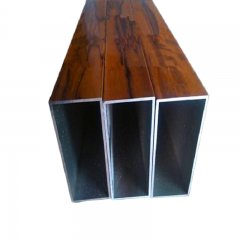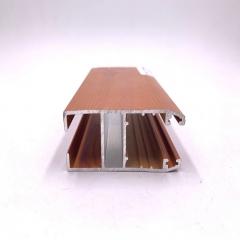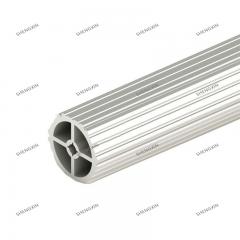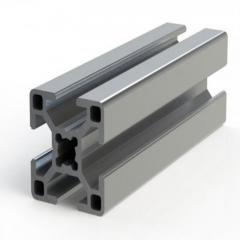
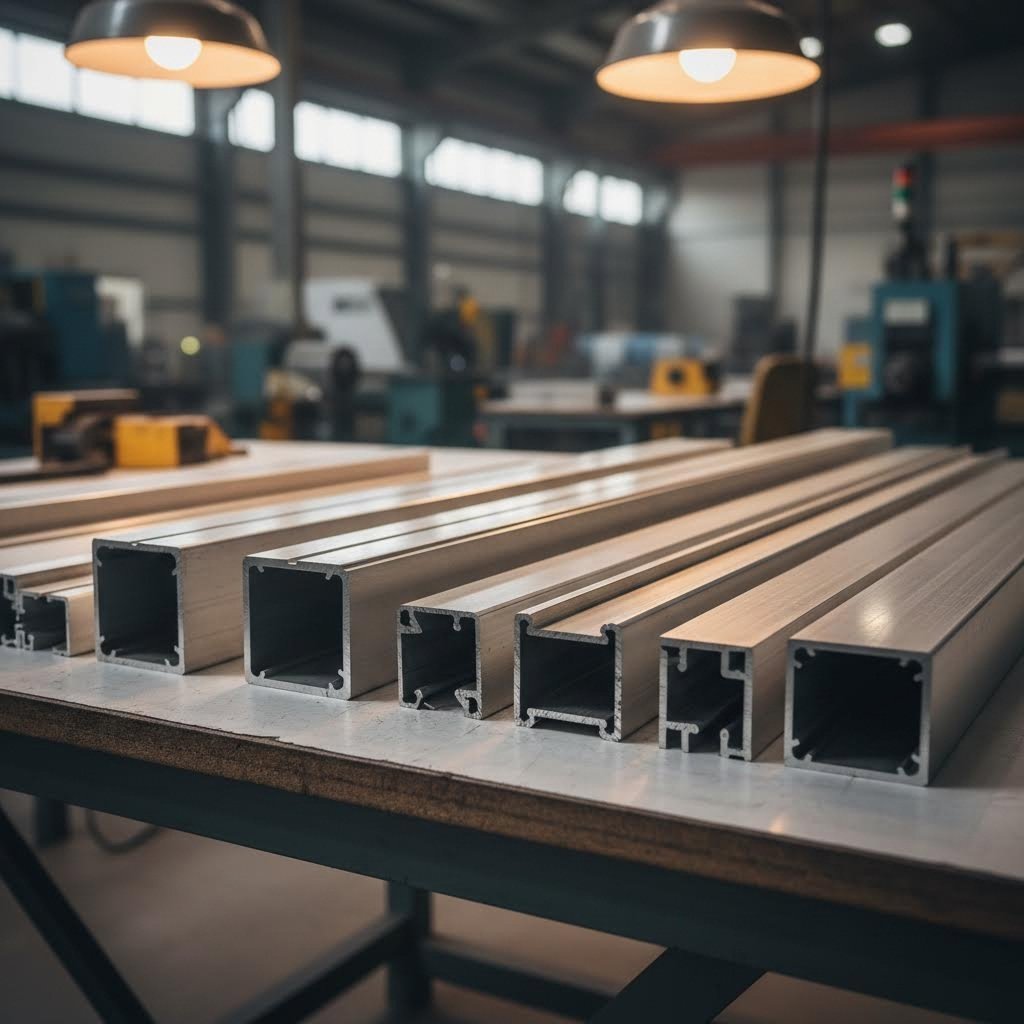
When you receive aluminum profiles straight from the extrusion line, you're looking at mill finish aluminum in its purest form. But what exactly does this mean for your engineering specifications and project requirements?
Mill finish refers to the natural, unprocessed surface condition of aluminum immediately after extrusion—before any secondary treatments like anodizing, powder coating, or painting are applied.
This baseline finish represents the most fundamental state of extruded aluminum, characterized by a slightly matte, textured appearance that carries the distinctive marks of the manufacturing process itself. Understanding this finish is essential for engineers who need to make informed decisions about material specifications and downstream processing requirements.
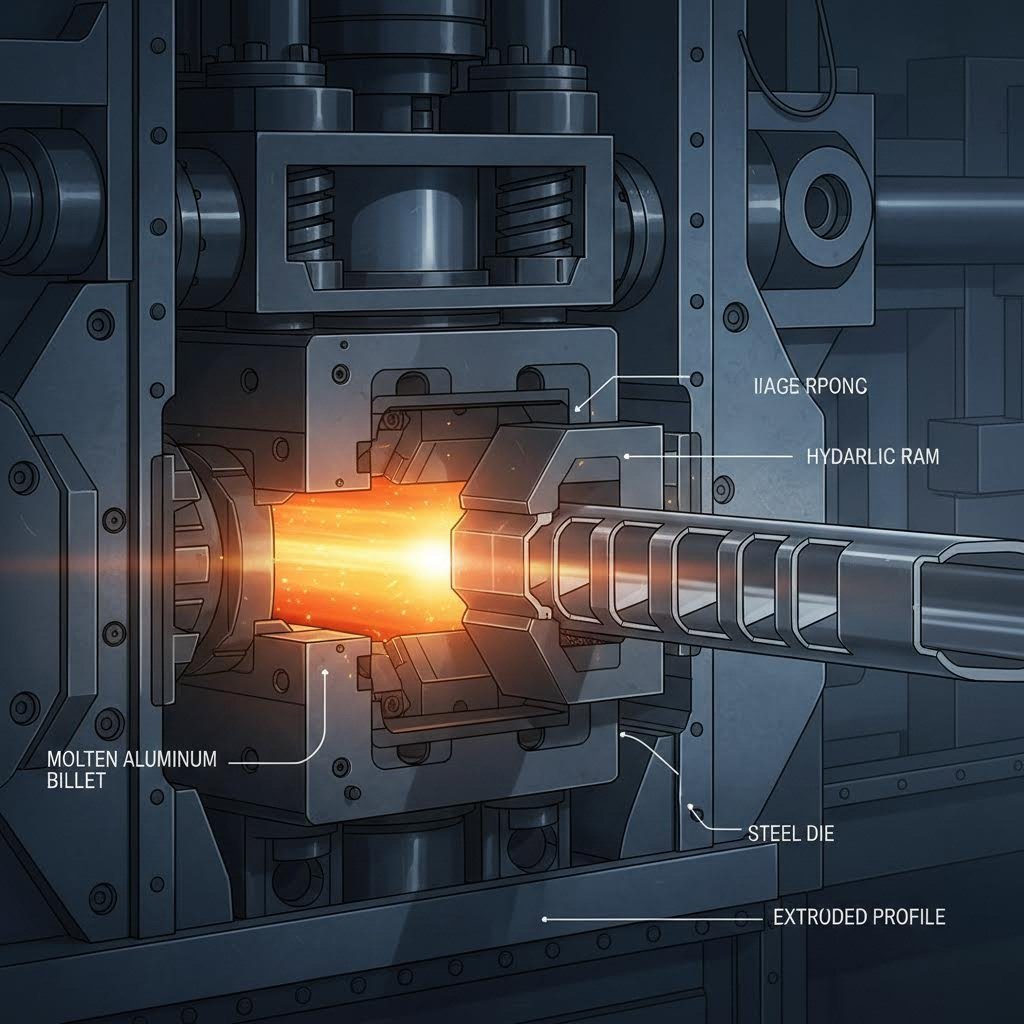
The journey to mill finish aluminum begins with a cylindrical billet—a solid piece of aluminum alloy. During extrusion, this billet is heated to temperatures typically between 600 and 650 degrees Celsius, making it malleable enough to be forced through a precision-engineered die under tremendous hydraulic pressure.
As the softened aluminum passes through the die's opening, it takes on the exact cross-sectional shape of that die. The resulting profile emerges with surface characteristics directly influenced by:
The surface you see on mill finish aluminum often displays subtle die lines—parallel striations that run along the extrusion direction. These lines are not defects but rather characteristic signatures of the extrusion process itself. You'll also notice that the surface appears somewhat dull compared to polished or anodized alternatives, with a natural aluminum oxide layer already forming upon exposure to air.
From an engineering perspective, mill finish aluminum offers distinct advantages that make it the preferred choice for many applications. Because it requires no additional processing after extrusion, it represents the most cost-effective option when appearance is secondary to function.
The natural oxide layer (Al₂O₃) that forms on the surface provides baseline corrosion resistance without any treatment. According to Gabrian, this makes mill finish aluminum durable for many applications, though it won't offer the same protection level as anodized or powder-coated surfaces.
Another critical consideration: mill finish aluminum maintains superior electrical conductivity compared to finished alternatives. Anodizing and powder coating act as insulators, so when electrical conductivity is a priority, the unprocessed surface becomes the logical choice.
In the sections ahead, you'll discover how die design influences surface quality, which alloys deliver the best mill finish results, and how to properly specify these extrusions for your projects. Whether you're designing HVAC components, structural frames, or prototypes destined for end-user finishing, understanding these technical nuances will help you make better material decisions.
Ever wondered why two mill finish aluminum extrusions from different suppliers can look noticeably different? The answer lies in the complex interplay of process variables that occur during those critical moments when heated aluminum flows through the die. Understanding these variables gives you the technical foundation to specify exactly what you need—and to identify quality issues when they arise.
Unlike secondary finishes that mask underlying surface conditions, mill finished aluminum reveals everything about how it was made. The surface becomes a record of the extrusion process itself, making process control absolutely essential for consistent quality.
The die is where aluminum surface finishes are truly born. As the heated billet material flows through the die's bearing surface, every imperfection, every variation in polish level, transfers directly to the extruded profile.
Die lines—those characteristic parallel striations you'll see on any milled aluminum surface—form through direct metal-to-die contact in the bearing area. According to research published in High Temperature Material Processes, these surface features result from friction between the flowing material and the die bearing, with the severity depending on die condition, bearing length, and lubrication factors.
The die's polish level directly correlates with final surface smoothness. A well-polished die bearing produces finer, less pronounced die lines, while a worn or poorly maintained die creates deeper, more visible striations. For applications requiring superior aluminum finishing results, die maintenance becomes a critical quality control point.
Die design also influences metal flow uniformity. When aluminum flows unevenly through complex profile shapes—particularly at intersections or varying wall thicknesses—localized deformation differences can create visible surface variations. Good die design corrects for these flow imbalances, allowing non-uniform shapes to exit the die with consistent surface characteristics across all faces.
Achieving consistent mill finish aluminum requires tight control over multiple interdependent variables. Here's what engineers need to understand about each critical factor:
Billet temperature stands among the most influential variables. For 6xxx series alloys commonly used in aluminum extrusion, optimal temperatures typically range from 800 to 925°F (427 to 496°C). Temperature control matters because it affects both metal flow characteristics and surface quality outcomes.
When billet temperature runs too low relative to the container, the flow pattern changes and surface material can become entrapped into the section, creating streak defects. Conversely, excessively high temperatures—particularly at the centerline—accelerate flow in certain regions, generating inhomogeneous deformation that shows up as visible surface variations after etching or anodizing.
Extrusion speed creates another critical balance point. Higher ram speeds reduce time for heat conduction, generating localized temperature spikes in the deformation zone. Research indicates that higher extrusion speeds can make die streaks more pronounced, particularly on thin-walled shapes where heat dissipation is limited.
When specifying mill finished aluminum for your projects, surface roughness values provide the quantitative language you need. The Ra (roughness average) measurement expresses the arithmetic mean deviation of surface peaks and valleys from the centerline.
For standard mill finish aluminum extrusions, expect Ra values typically in the range of 63 to 125 microinches (1.6 to 3.2 micrometers). According to surface roughness specifications from manufacturing resources, Ra represents the average of all individual measurements of a surface's peaks and valleys across the sampling length.
To put these numbers in perspective:
| Surface Condition | Typical Ra (microinches) | Typical Ra (μm) | Visual Appearance |
|---|---|---|---|
| Standard mill finish | 63-125 | 1.6-3.2 | Visible die lines, matte texture |
| Fine mill finish | 32-63 | 0.8-1.6 | Subtle die lines, smoother feel |
| As-machined (CNC) | 63-125 | 1.6-3.2 | Visible tool marks |
The dimensional tolerances for mill finish profiles typically follow standards such as EN 12020-2, EN 755, or ASTM B221-14, depending on your market and application requirements. These standards provide guidance on linear dimensions, angles, straightness, flatness, and twist—all factors that interact with surface quality to determine final product acceptability.
Understanding these aluminum surface finishes specifications allows you to communicate precisely with suppliers about your requirements. Rather than relying on subjective terms like "smooth" or "acceptable," you can specify exact Ra ranges and reference appropriate standards for dimensional tolerances.
With this foundation in process variables and surface specifications established, the next consideration becomes equally important: which aluminum alloy delivers the best mill finish quality for your specific application?
Here's something many engineers overlook: the alloy you choose fundamentally determines the surface quality of your mill finish aluminum extrusion. Two profiles with identical die designs and process parameters can look dramatically different simply because one uses 6063 while the other uses 6061. Understanding why this happens—and how to leverage it—separates informed specification from guesswork.
Both alloys belong to the 6000 series, meaning they share magnesium and silicon as primary alloying elements. But the specific percentages of these elements create meaningful differences in extrudability, surface finish quality, and mechanical performance. Let's break down what this means for your aluminum finishes decisions.
When you see aluminum window frames, door profiles, or decorative trim with that clean, consistent aluminium surface finish, you're almost certainly looking at 6063 alloy. According to American Douglas Metals, 6063 is the most popular aluminum alloy for extrusions, particularly for applications requiring thin walls and architectural features.
What makes 6063 the go-to choice for finish aluminum applications? It comes down to chemistry. This alloy contains lower percentages of magnesium (0.45-0.9%) and silicon (0.2-0.6%) compared to 6061. These reduced alloying element levels translate directly into:
The 6063-T5 and 6063-T6 tempers are particularly favored for architectural mill finish extrusions. The T5 temper (cooled from elevated temperature shaping and artificially aged) offers good strength with excellent surface quality. The T6 temper (solution heat-treated and artificially aged) provides higher strength while maintaining the alloy's inherent alu finish advantages.
As noted by Gabrian, 6063 offers slightly better corrosion resistance than 6061, making it preferable for applications where exposure to weather or water is expected. This combination of surface quality and environmental durability explains why architects and designers consistently specify this alloy.
Imagine you're specifying profiles for a structural frame that will be concealed within equipment housing. Does surface quality still matter as much as mechanical performance? This is exactly where 6061 enters the conversation.
Often called "structural aluminum," 6061 contains higher levels of magnesium (0.8-1.2%) and silicon (0.4-0.8%), plus small amounts of copper and chromium. According to Wellste, 6061 aluminum alloy contains about 30-50% more magnesium and silicon than 6063. This enhanced chemistry delivers superior mechanical properties—but at a cost to surface quality.
The higher alloying content increases flow resistance during extrusion, resulting in more pronounced die lines and a generally rougher mill finish appearance. For applications where the aluminum will be machined, painted by the end user, or hidden from view, this trade-off makes perfect sense. You gain strength where you need it without paying for surface quality you won't use.
Here's a direct comparison to guide your selection:
| Characteristic | 6063 Alloy | 6061 Alloy | 6005A Alloy |
|---|---|---|---|
| Typical Applications | Window frames, door profiles, railings, architectural trim | Truck frames, aerospace components, machine parts, structural members | Rail profiles, ladder frames, transportation structures |
| Surface Quality Rating | Excellent—fine die lines, consistent appearance | Good—more pronounced die lines, acceptable for functional uses | Very Good—intermediate between 6063 and 6061 |
| Tensile Strength (T6) | 241 MPa | 310 MPa | 270 MPa |
| Yield Strength (T6) | 214 MPa | 276 MPa | 225 MPa |
| Hardness (Brinell, T6) | 73 | 95 | 85 |
| Best Mill Finish Use Cases | Visible architectural elements, products requiring anodizing, decorative applications | Concealed structural components, parts for machining, prototypes for end-user finishing | Applications needing balance of strength and appearance, transportation profiles |
Notice the 6005A alloy in the comparison? This intermediate option deserves attention when you need more strength than 6063 provides but want better surface quality than typical 6061 delivers. According to American Douglas Metals, 6005 aluminum alloy offers higher strength compared to 6063 with better extrusion characteristics than 6082, making it suitable for applications requiring more strength than 6060 and 6063 can offer.
When making your final decision, consider these practical guidelines:
One more consideration: cost. As Wellste notes, 6063 alloy is more commonly extruded, meaning lower minimum order quantities and generally more competitive pricing compared to 6061. This economic factor often reinforces the technical decision when 6063's strength is adequate for your application.
With the right alloy selected for your aluminum surface finish requirements, the next question becomes equally practical: how does mill finish compare to secondary finishes when you factor in total project costs?
You've selected the right alloy and specified your dimensional tolerances—but now comes the question that impacts every project budget: should you stay with mill finish or invest in secondary finishing? This decision affects not just upfront costs but long-term performance, maintenance requirements, and total cost of ownership.
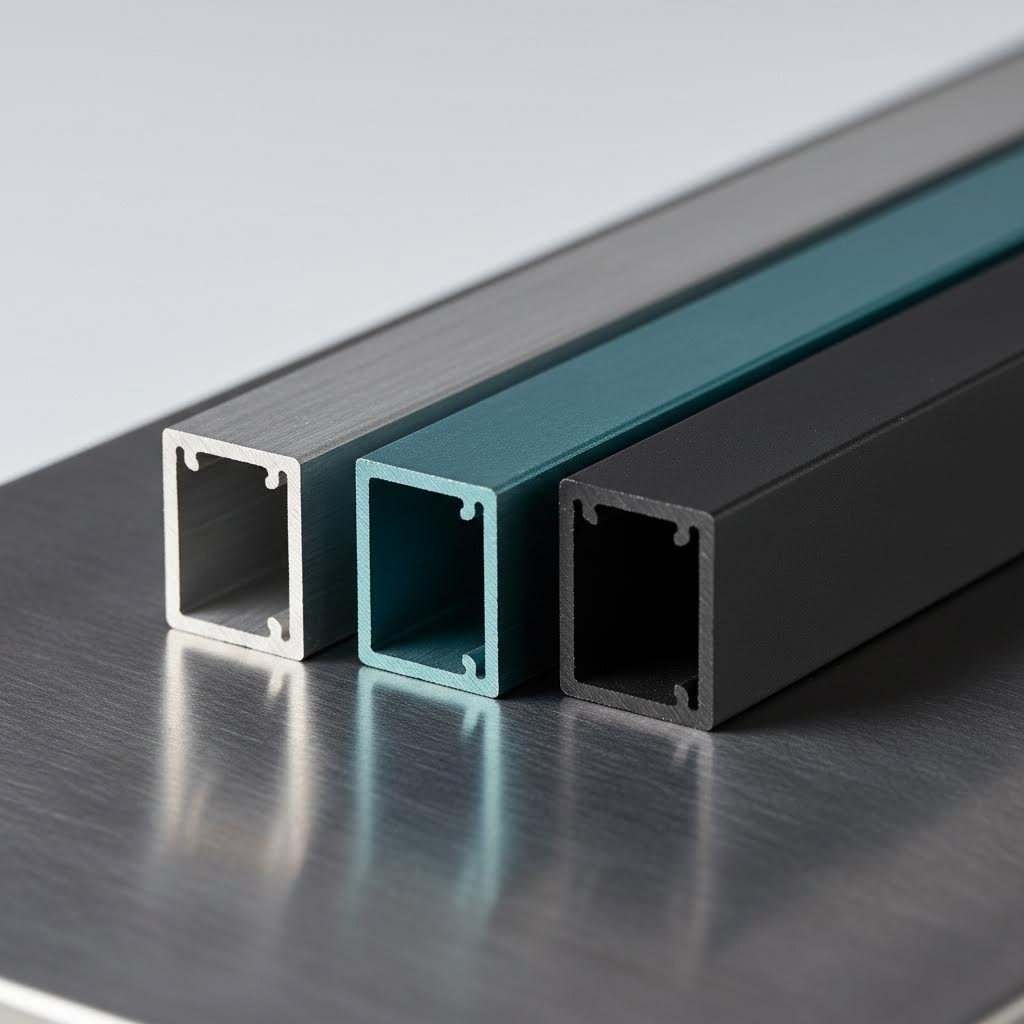
Understanding the true economics of aluminium finishes requires looking beyond simple price tags. You need to weigh processing costs against durability benefits, aesthetic requirements, and application-specific demands. Let's break down what each finishing option actually costs—and when that investment makes sense.
Mill finish aluminum represents your lowest-cost option for one straightforward reason: it requires zero additional processing after extrusion. The profile comes off the press, gets cut to length, and ships directly to you. No electrochemical baths, no powder application booths, no curing ovens—and none of the associated labor, equipment, or energy costs.
This simplicity translates into meaningful savings, particularly for high-volume orders where per-unit finishing costs multiply quickly. When you're ordering thousands of meters of structural framing destined for concealed applications, those finishing costs would add up to substantial amounts with no functional benefit.
According to Valence Surface Technologies, mill finish aluminum is reasonably priced, making it a popular choice for projects with tight budgets. The natural aluminum oxide layer that forms upon air exposure provides baseline corrosion resistance without any treatment cost.
However, cost-effectiveness depends entirely on application suitability. Mill finish works well when:
Sounds simple—just use mill finish everywhere and save money? Not quite. The real question is whether the upfront savings outweigh the costs of reduced durability, maintenance requirements, or aesthetic limitations over your product's lifetime.
Secondary finishes add cost because they add value. According to PTSMAKE, anodising typically adds 5% to 15% to the total cost of a CNC machined part, with the final price depending on anodising type, coating thickness, part size, batch quantity, and masking requirements. For extrusions, expect anodizing to add roughly 15-30% to your base extrusion cost, while powder coating typically adds 20-40%, and PVDF (polyvinylidene fluoride) coatings can add 35-50% or more.
Why would you pay these premiums? Consider these scenarios:
Here's a comprehensive comparison to guide your finish selection:
| Finish Type | Relative Cost vs. Mill Finish | Durability Rating | Aesthetic Options | Recommended Applications |
|---|---|---|---|---|
| Mill Finish | Baseline (1.0x) | Moderate—natural oxide provides basic protection | Limited—natural silver-gray, visible die lines | Internal structures, prototypes, electrical applications, budget-conscious projects |
| Anodized (Type II) | 1.15x - 1.30x | Good—0.0002" to 0.001" oxide layer resists corrosion and scratching | Wide color range through dyeing, matte to bright finishes | Architectural exteriors, consumer electronics, decorative components |
| Anodized (Type III Hard Coat) | 1.25x - 1.40x | Excellent—>0.001" layer harder than tool steel | Limited—typically dark gray to black | Aerospace components, high-wear industrial parts, military applications |
| Powder Coated | 1.20x - 1.40x | Very Good—impact resistant, UV stable | Virtually unlimited colors and textures | Outdoor furniture, building facades, automotive trim, consumer products |
| PVDF Coated | 1.35x - 1.50x | Excellent—superior UV and chemical resistance | Full color range, maintains appearance 20+ years | Architectural curtain walls, signage, marine applications |
| Painted (Wet) | 1.15x - 1.25x | Fair to Good—varies by paint system | Full color flexibility | Custom color matching, touch-up capability, small batch production |
The cost comparison above tells only part of the story. To make a truly informed decision, consider total cost of ownership rather than just initial purchase price.
For example, imagine specifying mill finish aluminum for outdoor handrails to save 25% on finishing costs. Within two years, oxidation and environmental staining require cleaning and potentially refinishing. The maintenance labor—or customer complaints—quickly erases those initial savings. In contrast, properly specified finishes for aluminum in demanding environments may cost more upfront but eliminate ongoing maintenance costs entirely.
Conversely, consider HVAC ductwork or internal equipment framing. Paying for anodizing or powder coating on components that nobody will ever see represents pure waste. The natural oxide layer on mill finish aluminum provides adequate protection for these controlled environments.
The optimal finish choice balances three factors: initial cost, environmental demands, and lifecycle requirements. Mill finish wins when function outweighs appearance; secondary finishes win when durability or aesthetics drive long-term value.
One more consideration: batch size affects finishing economics significantly. As noted by PTSMAKE, anodising is a batch process where larger batches distribute setup and labor costs over more units, significantly lowering the cost per part. For small prototype runs, finishing costs per piece run higher—sometimes making mill finish the only economically viable option.
With the cost framework established, understanding how mill finish aluminum performs in different environments becomes essential for making the right specification decision.
Will your mill finish aluminum extrusion corrode like steel when exposed to moisture? This common concern stems from a fundamental misunderstanding of how aluminum interacts with its environment. Unlike steel—which forms flaky, progressively destructive rust—aluminum develops a remarkably different relationship with oxygen. Understanding this distinction is critical for specifying the right aluminum finish for your application.
The truth is that aluminum corrodes, but it doesn't rust. According to Jeelix, the white or gray powder that sometimes appears on aged aluminum surfaces is actually aluminum oxide—the visible outcome of corrosion, not "aluminum rust." This distinction matters enormously because aluminum's corrosion behavior provides inherent protection rather than progressive destruction.
Here's something fascinating about aluminum: its high reactivity is precisely what makes it corrosion resistant. The moment a clean aluminum surface contacts oxygen—within mere milliseconds—it forms a thin, transparent film of aluminum oxide (Al₂O₃). This passivation layer, typically only 2 to 5 nanometers thick, acts as the metal's innate protective shield.
According to Orange Aluminum, this naturally occurring oxide layer for mill finish aluminum products is roughly 2-3 nanometers thick. You can think of this process as oxygen slowly absorbing into the aluminum until the surface has sufficiently oxidized, creating a barrier that prevents further absorption.
This invisible defense barrier possesses several remarkable properties:
Research from leading institutions has revealed something even more extraordinary about this protective mechanism. According to breakthrough studies using high-resolution transmission electron microscopy, the nanoscale aluminum oxide film displays astonishing liquid-like mobility even at room temperature. This means the protective layer can literally flow to fill gaps and repair damage at the atomic level—a phenomenon that goes far beyond simple re-oxidation.
Aluminum's protective oxide layer is self-healing at the nanoscale, providing continuous corrosion resistance under ordinary environmental conditions without any applied treatment.
So if aluminum protects itself naturally, why does environmental exposure matter? The answer lies in understanding what can overwhelm or destroy this protective barrier. While the oxide layer handles everyday conditions admirably, certain environments push beyond its capabilities.
Dry Indoor Applications: Excellent Performance
In controlled indoor environments with low humidity, mill finish aluminum performs exceptionally well. The protective oxide layer remains intact and undisturbed, providing decades of reliable service without visible degradation. HVAC components, internal structural frames, and concealed mounting hardware represent ideal applications where aluminium surface finishing beyond mill finish adds cost without benefit.
Mild Outdoor Conditions: Acceptable Performance
In moderate climates with average rainfall and humidity, mill finish aluminum surface finish holds up reasonably well. The natural oxide layer handles intermittent moisture exposure, though you'll notice gradual dulling and some surface oxidation over time. For applications where appearance is secondary—utility poles, agricultural equipment frames, or temporary structures—this level of performance often proves adequate.
Challenging Environments: Protection Required
Three environmental conditions can overwhelm aluminum's natural defenses:
Unlike mill finished steel, which requires immediate protective treatment to prevent rust formation, mill finish aluminum tolerates these challenging conditions for limited periods. However, long-term exposure without protection will eventually cause visible pitting, staining, and surface degradation.
When your application exposes mill finish aluminum to demanding conditions, several protective measures can extend service life significantly:
One critical storage consideration: avoid contact with dissimilar metals. When aluminum contacts copper, stainless steel, or carbon fiber composites in the presence of moisture, galvanic corrosion occurs. The aluminum sacrifices itself to protect the more noble material, accelerating degradation beyond what environmental exposure alone would cause.
With corrosion behavior understood, you're ready to match these performance characteristics to specific industry applications where mill finish makes the most sense.
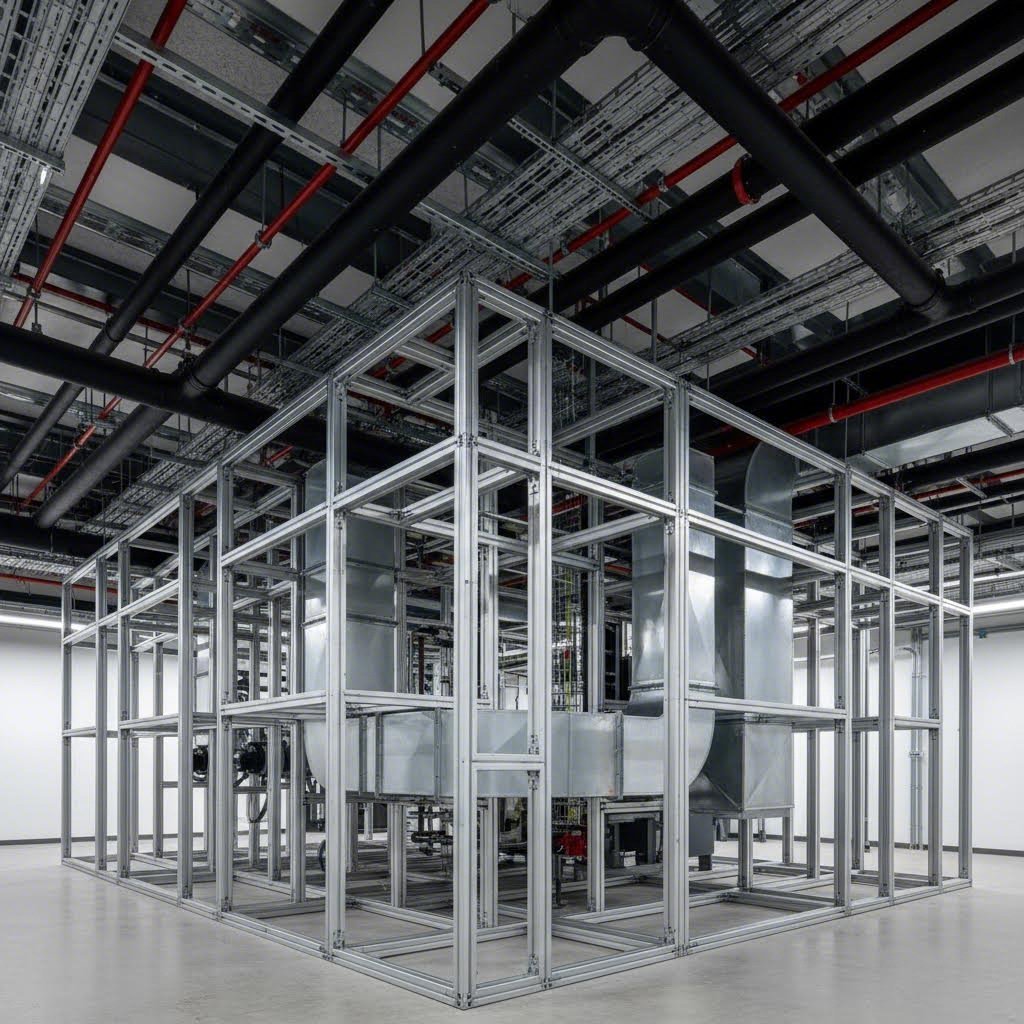
Now that you understand how mill finish aluminum performs in different environments, a practical question emerges: which industries actually specify this finish—and why? The answer reveals something many product catalogs miss entirely. Certain sectors default to mill finish not because they're cutting corners, but because it represents the optimal engineering choice for their specific requirements.
Understanding these industry-specific applications helps you recognize when mill finish delivers genuine value versus when secondary finishing is worth the investment. Let's explore where aluminum mill products make the most technical and economic sense.
Some sectors have built their standard specifications around mill metal finishes because the natural surface condition aligns perfectly with their operational requirements. Here's where you'll find mill finish aluminum specified as the baseline choice:
Beyond specific industries, certain application characteristics make mill finish the logical choice regardless of sector. When you encounter these situations, colored aluminum or other secondary finishes often represent unnecessary expense:
Here's a practical framework for matching applications to finish decisions:
| Application Characteristic | Mill Finish Recommended? | Reasoning |
|---|---|---|
| Component is permanently concealed | Yes | No aesthetic benefit from finishing |
| Part will be welded after delivery | Yes | Welding damages finishes; post-weld treatment more efficient |
| Adhesive bonding is primary joining method | Often yes | Mill finish provides reliable bonding substrate |
| Electrical conductivity required | Yes | Coatings act as insulators |
| Customer applies their own finish | Yes | Clean starting point for downstream processing |
| Outdoor exposure in harsh environment | No | Natural oxide insufficient protection |
| Consumer-facing product surface | Usually no | Aesthetic consistency typically required |
The key insight here bridges what product catalogs show and what engineers actually need to know: mill finish isn't a budget compromise—it's often the technically correct specification. Understanding when this applies to your projects prevents both over-specification (paying for unnecessary finishing) and under-specification (using mill finish where it will fail).
With industry applications clarified, the next critical step is knowing how to evaluate the quality of mill finish extrusions when they arrive at your receiving dock.
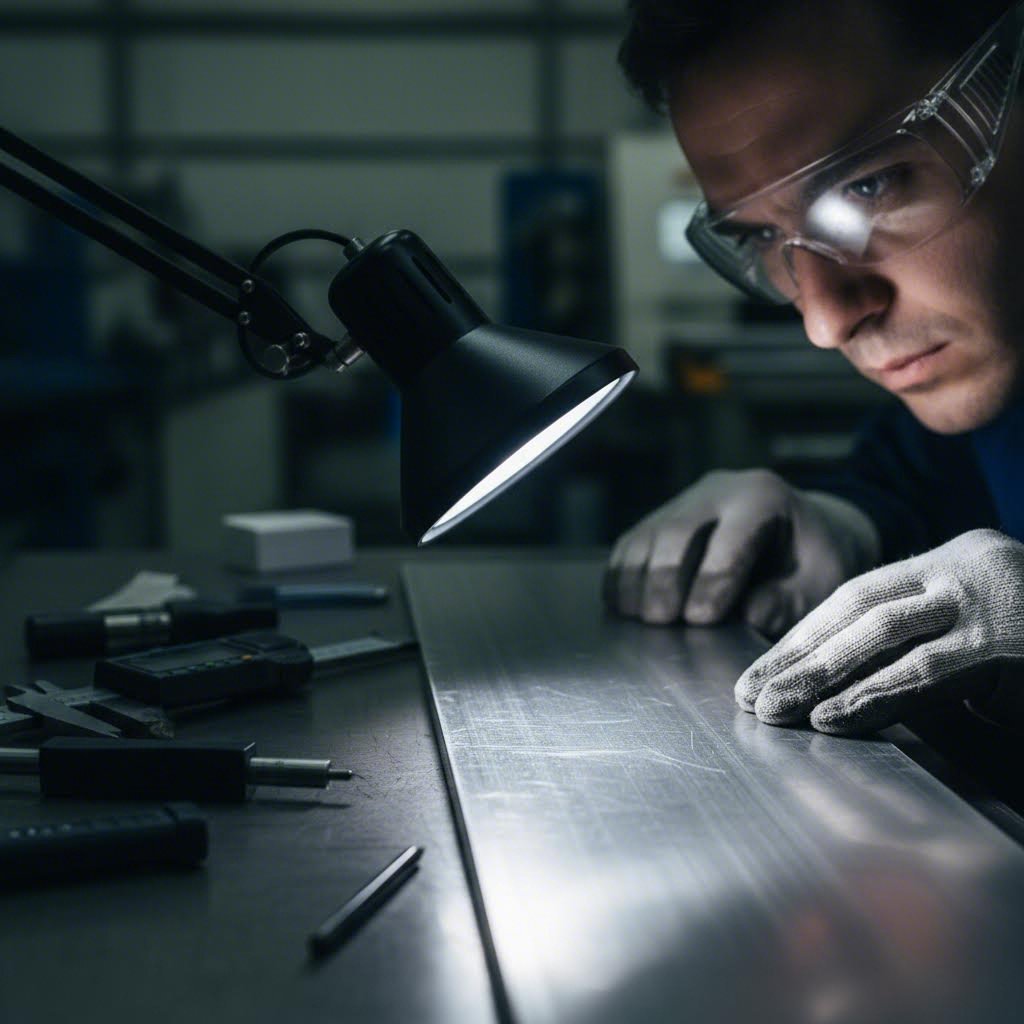
Your mill aluminum order just arrived at the receiving dock. Now what? Unlike anodized or powder-coated profiles where defects hide beneath surface treatments, mill finish aluminum reveals everything—the good and the problematic. Knowing what to look for separates routine acceptance from costly quality escapes that surface only after assembly or installation.
The challenge with extrusion finish inspection is distinguishing between normal process characteristics and genuine defects. Die lines are inherent to the process, but when do they cross into rejectable territory? Handling marks happen during transport, but which ones compromise functionality? This section provides the actionable criteria you need to make confident accept/reject decisions.
Visual inspection forms your first line of defense in quality assurance. According to industry quality standards, surface quality in aluminum profile production is assessed through visual inspections, surface roughness tests, and coating evaluations—with visual checks serving as the primary screening method for mill finish products.
Start by examining profiles under consistent lighting conditions. Angled lighting reveals surface irregularities that direct overhead lighting misses. Look for these specific conditions:
Acceptable Conditions (Normal for Mill Finish):
Rejectable Conditions (Defects Requiring Action):
When you identify potential defects, systematic documentation enables effective communication with suppliers and supports root cause analysis. Photograph defects with a scale reference and note their location, frequency, and extent across the shipment.
Different defect types point to different root causes requiring different corrective actions:
| Defect Type | Likely Root Cause | Corrective Action Required |
|---|---|---|
| Excessive die lines | Die bearing wear, improper polishing, or buildup on bearing surface | Die maintenance: remove die from press for cleaning and bearing polishing |
| Pick-up (cauliflower/comet appearance) | Exit temperature too high, deteriorated die bearing condition, or inferior billet quality | Optimize billet temperature, adjust extrusion speed, ensure correct re-nitriding of dies |
| Streaks or banding | Non-uniform metal flow, die design issues, or contaminant buildup in dead zones | Die design review, bearing length adjustment, regular die cleaning between runs |
| Surface scratches | Improper handling, worn tooling, inadequate packaging | Improved packaging protocols, handling training, protective interleaving |
| Blisters | Entrapped air during billet upsetting, billet temperature issues | Implement burp cycle, check container liner condition, verify billet quality |
| Water stains or corrosion marks | Improper storage, moisture exposure, handling with bare hands | Covered dry storage, proper interleaving, gloved handling requirements |
According to comprehensive inspection guidelines, a complete QC plan includes incoming inspection at the buyer's facility, with standard documentation including inspection reports with measurement data and photographs of inspected parts.
Use this systematic checklist when evaluating incoming mill finish extrusions. Each category addresses critical quality attributes that affect downstream performance:
According to inspection best practices, working with a reliable extrusion supplier who follows established QC protocols can significantly reduce the burden of inspection on the buyer's side. However, incoming inspection remains essential for catching shipping damage, handling issues, or occasional process deviations that escape supplier quality systems.
With clear quality criteria established, your next step is understanding how to communicate these requirements effectively when specifying mill finish extrusions for your projects.
You've inspected incoming material, understand the quality criteria, and know what defects to reject. But here's where many engineers stumble: communicating these requirements clearly before the order ships. A well-written specification prevents quality disputes, reduces rejections, and ensures you receive exactly what your application demands.
The gap between what you need and what you receive often traces back to ambiguous specifications. Terms like "good surface quality" or "standard tolerances" mean different things to different suppliers. This section provides the precise language and structured approach you need to eliminate that ambiguity.
Effective specifications for mill finish aluminium extrusions address five essential elements. Miss any one, and you're leaving critical quality decisions to supplier interpretation rather than your engineering requirements.
Alloy and Temper Designation
Always specify the complete alloy-temper designation using recognized standards. According to ASTM B221M standard specifications, the chemical composition limits for various aluminum alloys are defined in Table 1, ensuring material purity and meeting alloying element specifications. Your specification should read something like "6063-T6 per ASTM B221" or "6061-T6 per EN 755-2"—never just "aluminum" or even "6063."
The temper designation matters as much as the alloy. A 6063-T5 extrusion has different mechanical properties than 6063-T6, even though both use identical base chemistry. Specify the exact temper required and reference the applicable standard for mechanical property verification.
Dimensional Tolerances
Reference specific tolerance standards rather than assuming "standard" means the same thing globally. ASTM B221 covers dimensional tolerances for North American specifications, while EN 12020-2 and EN 755-2 apply to European requirements. According to the Aluminum Extrusion Manual, permissible variations from specified dimensions are detailed in ANSI H35.2M, ensuring dimensional accuracy essential for proper fit and function in applications.
Your dimensional specification should include:
Surface Quality Requirements
This is where most mill aluminum finish specifications fall short. Vague terms like "acceptable surface" invite dispute. Instead, quantify your requirements:
Packaging and Handling Requirements
Surface quality at shipment means nothing if profiles arrive damaged. Your specification should address:
Even the most detailed written specification benefits from direct technical discussion with your extrusion supplier. Experienced manufacturers bring application knowledge that can prevent specification errors before they become production problems.
When you engage suppliers early in the design process, you'll often discover opportunities to optimize both quality and cost. A seasoned extrusion partner can advise whether your surface requirements are achievable with standard processing or require special die preparation, whether your dimensional tolerances align with the profile geometry, and whether your alloy selection matches your actual performance needs.
For complex projects, manufacturers like Shengxin Aluminium—with over 30 years of extrusion expertise and 35 advanced presses ranging from 600T to 5500T—can provide technical consultation on specification development. This end-to-end support from die development through mass production helps ensure your specifications translate into consistent production results.
Here's a structured approach to developing and communicating your mill aluminum finish specifications:
Here's how a complete mill finish specification might read for a structural alum angle application:
Material: Aluminum alloy 6063-T6 per ASTM B221, with chemical composition per Table 1 and mechanical properties per Table 11.1 minimum values.
Dimensional Tolerances: Cross-sectional dimensions per ASTM B221 Table 11.8 (Standard Tolerances). Length tolerance: ±1.5mm. Straightness: maximum 0.8mm per 300mm length. Twist: per Table 11.13 for the specified profile width.
Surface Quality: Mill finish with die lines not exceeding 25 microinches Ra on critical surfaces (marked on drawing). No scratches deeper than 0.05mm. No pick-up defects, blisters, or corrosion staining. Uniform coloration without visible banding.
Packaging: Individual pieces interleaved with non-abrasive paper. Maximum bundle weight 500kg. Covered transport required. Store indoors in dry conditions.
Notice how this specification leaves no room for interpretation. The supplier knows exactly what alloy, what tolerances, what surface quality, and what packaging—all traceable to recognized standards.
For projects requiring surface treatments beyond mill finish—including anodizing in custom colors, powder coating, PVDF, or micro-arc oxidation—working with manufacturers offering comprehensive deep processing services provides single-source accountability from raw extrusion through finished product.
With your specifications clearly documented and communicated, the final step is understanding when to choose mill finish over alternatives—and when those alternatives deliver better long-term value for your specific application.
You've now explored the technical depth of mill finish aluminum extrusion—from process variables and alloy selection to corrosion behavior, industry applications, quality inspection, and specification writing. But here's the question that matters most: how do you synthesize all this knowledge into confident decisions for your specific projects?
The answer isn't about finding a universal "best" finish. It's about matching finish selection to your unique combination of budget constraints, environmental demands, aesthetic requirements, and downstream processing plans. Let's bring together everything we've covered into a practical decision framework.
Every finish decision balances four interconnected factors. Understanding how these interact for your specific application eliminates guesswork and prevents costly specification errors.
Budget Constraints
Mill finish delivers the lowest per-unit cost because it requires zero post-extrusion processing. For high-volume orders of concealed components, this cost advantage compounds dramatically. However, evaluating budget impact requires looking beyond purchase price to total cost of ownership—including maintenance, replacement cycles, and potential warranty claims from premature degradation.
Environmental Exposure
The natural oxide layer on mill finish aluminum handles controlled indoor environments admirably. But coastal installations, industrial atmospheres, or high-humidity conditions can overwhelm this protection. According to Momentum Manufacturing Group, while aluminum is naturally resistant to corrosion, when exposed to extreme environments aluminum products can benefit from an additional protective layer of finish. Match your finish investment to actual exposure conditions—not worst-case assumptions.
Aesthetic Requirements
How visible is the aluminum in the final application? Consumer-facing products typically demand the color options and consistent aluminum appearance that anodizing or powder coating provides. Concealed structural members or internal frames have no aesthetic requirements worth paying for. Be honest about what end users will actually see.
Downstream Processing Needs
Will profiles be welded, adhesive-bonded, or finished by your customer? Mill finish often represents the optimal starting point for downstream processing. Welding damages applied finishes anyway. Many adhesive systems bond better to clean mill finish than to sealed anodized surfaces. And OEM components destined for customer-applied finishes arrive ready for immediate processing.
Based on everything we've examined, mill finish aluminum extrusion emerges as the optimal specification when specific conditions align:
Mill finish aluminum is the ideal choice when function outweighs appearance—or when secondary finishing will be applied by the end user. In these applications, paying for decorative or protective finishes adds cost without adding value.
Conversely, secondary finishes justify their investment when environmental exposure exceeds natural oxide capabilities, when aesthetic consistency drives customer perception, when regulatory requirements mandate specific surface treatments, or when lifecycle cost analysis shows that finish durability reduces total ownership costs despite higher initial investment.
Some projects start with mill finish aluminum but require surface treatments for specific components or applications. Managing multiple vendors for extrusion and finishing creates coordination complexity, extends lead times, and diffuses accountability for quality issues.
Manufacturers offering comprehensive deep processing services eliminate these complications. When a single source handles everything from die development through finished product—including anodizing in custom colors like champagne and rose gold, powder coating, PVDF, and micro-arc oxidation—you gain streamlined procurement and unified quality responsibility.
For projects requiring this integrated approach, Shengxin Aluminium's deep processing capabilities provide an example of single-source solutions spanning the full range from raw extrusion through surface treatment. Their 35 advanced extrusion presses and state-of-the-art CNC machining centers enable precise cutting, drilling, and bending alongside comprehensive finishing options.
Looking ahead, mill finish aluminum retains clear relevance in manufacturing economics. As supply chains face ongoing pressure to reduce costs without sacrificing performance, the cost efficiency of eliminating unnecessary finishing operations becomes increasingly attractive.
The key insight from this comprehensive exploration is straightforward: mill finish isn't a compromise or a budget shortcut. For appropriate applications, it represents the technically correct specification—delivering adequate performance without wasteful over-specification.
When you understand what mill finish actually means, how extrusion processes affect surface quality, which alloys deliver optimal results, how costs compare across finish options, where corrosion resistance limits apply, which industries default to this finish, how to inspect incoming quality, and how to write unambiguous specifications—you're equipped to make finish decisions that optimize both performance and cost.
That's the engineering approach to mill finish aluminum extrusion: informed specification based on application requirements, not arbitrary assumptions about what "quality" should look like.
Mill finish refers to the natural, unprocessed surface condition of aluminum immediately after extrusion—before any secondary treatments like anodizing or powder coating. It features a semi-dull, slightly reflective appearance with characteristic die lines running along the extrusion direction. The surface typically has an Ra (roughness average) of 63-125 microinches. This baseline finish forms a thin protective aluminum oxide layer (Al₂O₃) within milliseconds of air exposure, providing inherent corrosion resistance for many applications.
Mill finish aluminum comes directly from the extrusion press with no post-processing, featuring visible die lines, a matte texture, and minor manufacturing marks. Brushed aluminum undergoes additional mechanical finishing that creates uniform, parallel grain lines through abrasive processes. While mill finish is the most cost-effective option with a somewhat rough, dull appearance, brushed aluminum offers a refined aesthetic with consistent directional texture. Mill finish is ideal for concealed applications or when end users apply their own finish, while brushed aluminum suits decorative and consumer-facing products.
Mill finish represents your baseline cost with zero additional processing, while anodizing typically adds 15-30% to the base extrusion price. Performance differences are significant: mill finish relies on a natural 2-3 nanometer oxide layer for protection, adequate for indoor or mild conditions. Anodizing creates a thicker, harder oxide layer (0.0002" to 0.001") offering superior corrosion resistance, scratch protection, and color options. Choose mill finish for concealed components or budget-conscious projects; invest in anodizing for outdoor exposure, decorative applications, or harsh environments.
6063 alloy delivers the best mill finish surface quality due to its lower magnesium and silicon content compared to 6061. This chemistry allows smoother metal flow through dies, producing finer die lines and more consistent appearance. 6063-T5 and 6063-T6 tempers are preferred for architectural applications where surface quality matters. For structural applications where strength outweighs appearance, 6061-T6 offers higher mechanical properties but typically shows more pronounced die lines. 6005A provides an intermediate option balancing strength and surface quality.
Mill finish aluminum does corrode but differently than steel—it forms a self-healing aluminum oxide layer rather than destructive rust. This natural protection handles dry indoor environments excellently but can be overwhelmed by coastal salt spray, industrial pollutants, or prolonged moisture exposure. Protective measures include applying clear coat sealers, cleaning surfaces 4-6 times yearly (more frequently in saltwater environments), storing in dry covered areas, and avoiding contact with dissimilar metals. For harsh environments, consider upgrading to anodized or powder-coated finishes for superior long-term protection.



 Servicio en línea
 0086 136 3563 2360
 sales@sxalu.com
 +86 136 3563 2360
 español
 English
 français
 Deutsch
 русский
 português
 العربية
 ไทย
ไทย Việt
Việt Українська