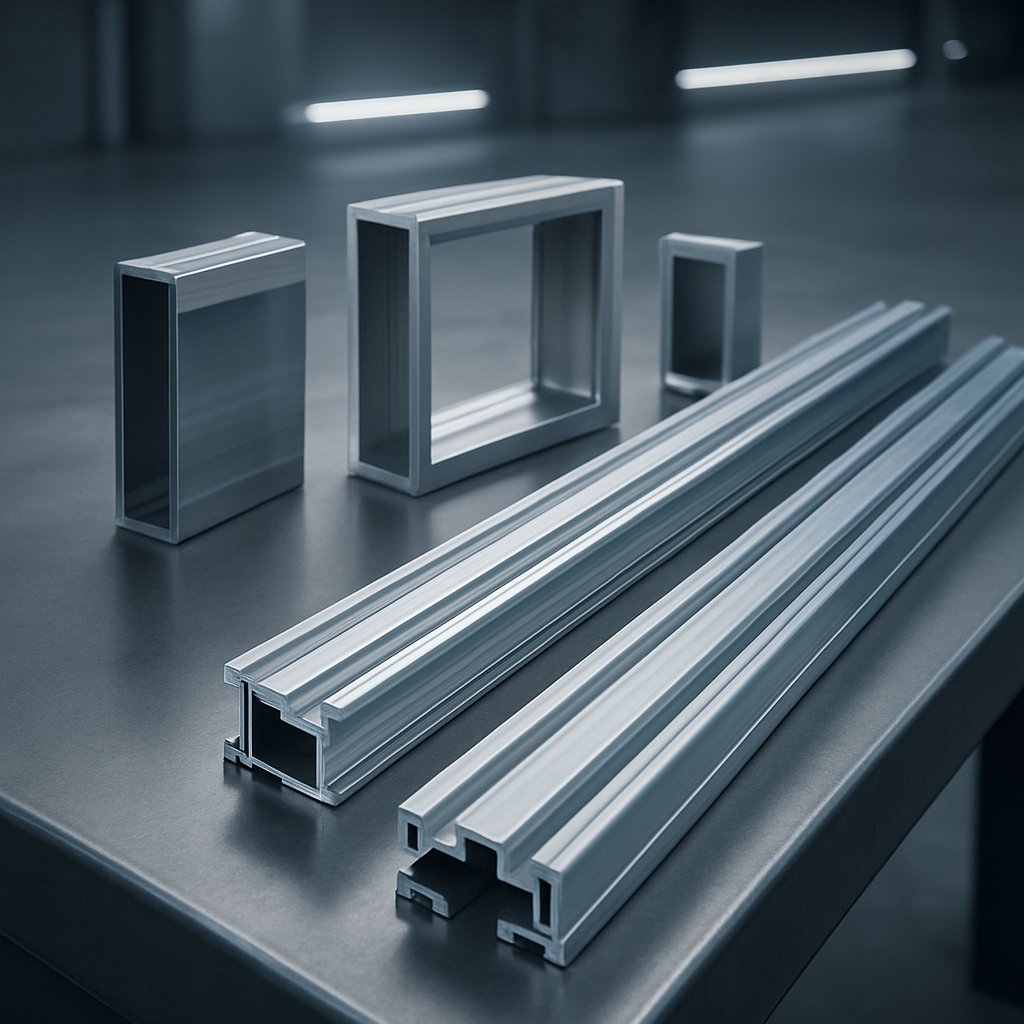
Material callouts can look cryptic at first, especially if you keep seeing 6063-T5 aluminum on quotes or extrusion drawings. The shorthand matters because the letters and numbers describe both what the metal is made of and how it was processed.
T5 aluminum is aluminum cooled from an elevated-temperature shaping process and then artificially aged.
In the aluminum temper system, T-designations describe heat-treated conditions. Guidance on temper designations defines T5 as material cooled from a high-temperature shaping process and then artificially aged. In plain English, the part comes out of a hot process such as extrusion, cools, and is then aged to raise strength.
A quick t5 t6 comparison helps place it. T4 generally means solution heat treated and naturally aged. A common follow-up question is, what is T6 aluminum? T6 means the alloy was solution heat treated and then artificially aged. T5 skips that full solution heat treatment step, so it often lands in a practical middle ground between easier processing and higher strength.
T5 is not a universal performance grade. Properties depend on the alloy family and the product form, especially in extrusion work. For extruded 6063, the 6063 data sheet lists T4 at 130 MPa ultimate tensile strength and 70 MPa yield, 6063-T5 at 150 MPa ultimate and 110 MPa yield, and T6 at 205 MPa ultimate and 170 MPa yield within the stated thickness ranges. Notes from Engineering Express also highlight lower residual stress and better dimensional stability as common T5 advantages in 6063 extrusions. That is why 6063-T5 aluminum says much more than T5 alone, and why the full designation on a drawing is worth decoding carefully.
A full material callout says more than the temper alone. When a print lists 6063-T5 or 6005-T5, the left side names the alloy and the right side names the condition created by processing. Reading both parts correctly helps buyers, engineers, and fabricators avoid bad assumptions before they ever compare performance.
Start from left to right. In 6063-T5, 6063 is the wrought alloy number and T5 is the temper. In the AA system, suppliers may also write AA6063-T5 or AA6005-T5. Some catalogs drop the AA prefix. Others use a space instead of a hyphen. The formatting changes, but the logic does not.
| Designation | Alloy family | Temper meaning | Common product context | What still needs a datasheet check |
|---|---|---|---|---|
| 6063-T5 | 6xxx wrought aluminum, Mg + Si | Cooled from an elevated-temperature shaping process and artificially aged | 6xxx extrusion and profile stock | Strength by thickness, finish expectations, fabrication limits |
| 6005-T5 | 6xxx wrought aluminum, Mg + Si | Same T5 definition | 6xxx profile and extrusion stock | Exact mechanical properties, section suitability, weld response |
| AA6005-T5 | Same alloy as 6005, shown with AA prefix | Same T5 definition | Catalogs and mill paperwork using Aluminum Association style | Certification details, standard equivalence, property limits |
| 6063-T52 | Same 6063 alloy family | More specific temper suffix within the T-family system | Profile or extrusion stock with tighter paperwork detail | Actual mechanical values and processing-specific differences |
The first digit places the material in a family. Both 6063 and 6005 belong to the 6xxx series, which uses magnesium and silicon as the primary alloying elements. That family is known for formability, weldability, corrosion resistance, and medium strength in guidance on 6xxx alloys and tempers. The remaining digits separate one chemistry from another, so 6063-T5 and AA6005-T5 should never be treated as automatic substitutes.
The suffix tells you the treatment route, not the whole performance story. T5 means the material was cooled from an elevated-temperature shaping process and then artificially aged. Extra digits can make the condition more specific. For example, 6063 t52 is still 6063, but the added digits narrow the temper designation. A 6063-T5 vs 6063-T52 comparison shows the same alloy composition, while some mechanical properties differ.
Short callouts are useful, but they are still shorthand. The real choice becomes clearer when similar tempers are lined up against each other on strength, formability, and fabrication behavior.
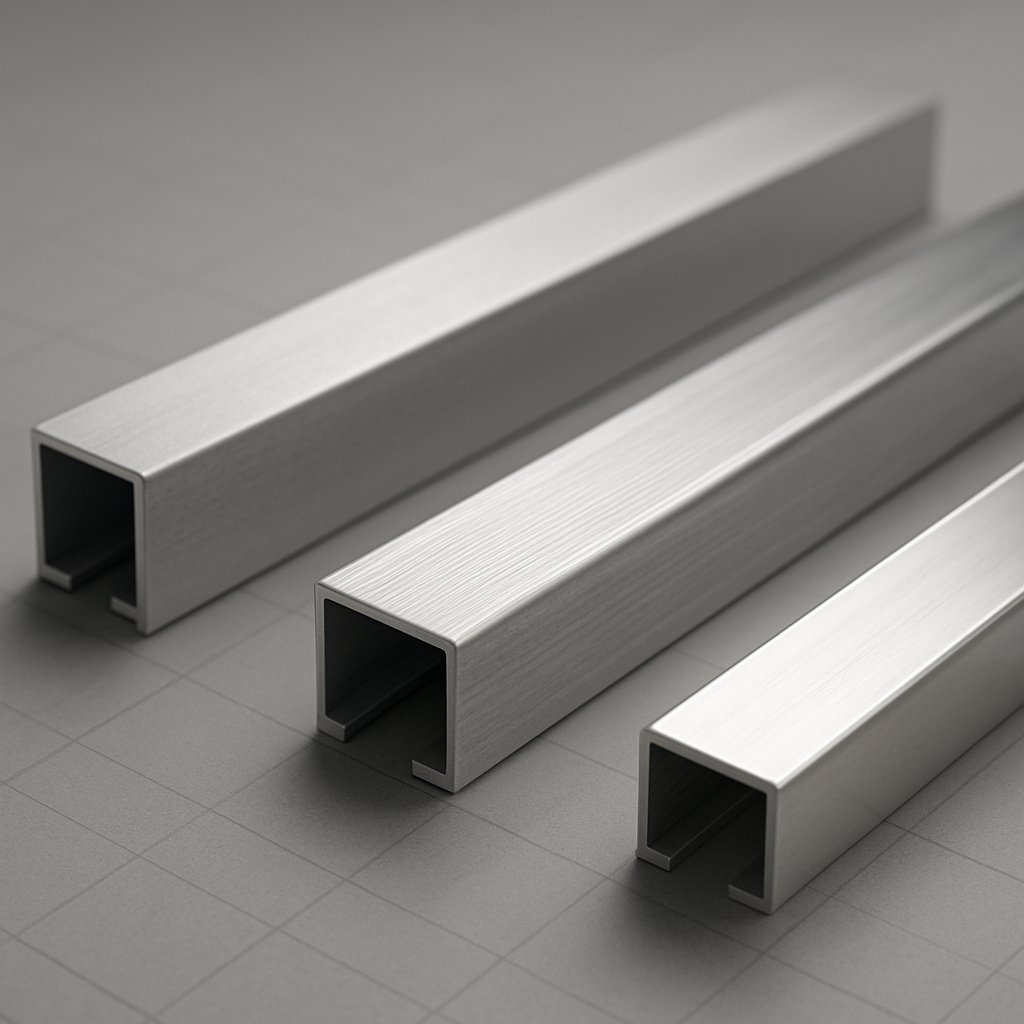
Temper differences stop being abstract the moment a drawing includes load, finish, and fabrication requirements on the same part. In real projects, T4, T5, and T6 affect more than hardness. They influence bending behavior, machining feel, dimensional control, and how much aluminum tensile strength you can rely on in service.
A heat-treatment guide describes T4 as solution heat treated and naturally aged, T5 as cooled from the extrusion heat and then artificially aged, and T6 as solution heat treated and artificially aged. That process path explains the usual hierarchy. T4 is the most form-friendly. T5 raises strength without the full T6 route, which is why 6063 t5 is so common in extrusion work. T6 usually pushes strength higher, but some manufacturers note that hollow or intricate profiles can become harder to produce cleanly when T6 is required, especially in shape-sensitive extrusion work, as discussed in Yuhfield's comparison.
Exact values depend on alloy, thickness, and product form. The table below uses published 6063 figures where the references provide them and stays qualitative where they do not. That matters because the practical choice is often not between tempers in the abstract, but between 6063 t5 and aluminium 6063 t6 in a specific profile.
| Property | T4 | T5 | T6 | What it means in design |
|---|---|---|---|---|
| Yield strength | Lower than aged tempers | 6063: about 186 MPa | 6063: about 214 MPa | T6 better resists permanent deformation |
| Tensile strength | Lower than aged tempers | 6063: about 214 MPa | 6063: about 241 MPa | T6 carries more peak load before fracture |
| Hardness | Lower | 6063: about 60 HB | 6063: about 73 HB | Harder tempers resist denting and wear better |
| Elongation | Higher | Moderate | Moderate | T4 is usually easier to bend and form |
| Formability | Highest | Moderate | Lower | Small-radius forming usually favors T4 over T6 |
| Machinability | Fair | Good | Better | Harder aged tempers generally cut cleaner |
| Weldability | Good | Good to excellent in 6063 | Good, but weld heat still softens the zone | Base-metal temper is not the same as post-weld performance |
| Dimensional stability | Moderate | Good | High | Aged tempers usually hold shape more consistently |
| Corrosion behavior | Good | Very good in 6063 | Very good in 6063 | Alloy chemistry matters as much as temper |
| Anodizing response | Good | Very good in 6063 | Very good in 6063 | 6063 remains a strong choice for appearance-focused extrusions |
The 6063-T5 and 6063-T6 numbers above come from an ASM-based comparison. A separate 6063 overview reinforces the broader pattern: 6063 trades some strength for better extrudability, corrosion resistance, and surface quality.
T6 is the obvious answer when maximum strength is the only target. Most extrusion jobs are not that simple. A profile may also need thin walls, tight tolerances, secondary bending, or cleaner visual results after anodizing. That is where T5 often makes sense. It sits between form-friendly T4 and strength-first T6, giving a useful balance of performance and extrusion practicality.
T5 often wins when the job needs enough strength and efficient extrusion behavior, while T6 wins when higher strength is the real constraint.
That tradeoff gets even more specific once the alloy changes, because 6063, 6005, and 6061 do not reward the same temper in exactly the same way.
Here is where the alloy number starts doing real work. A T5 temper on 6063 does not point to the same kind of profile, finish priority, or fabrication outcome as T5 on 6005 aluminum. The suffix may match, but the alloy underneath still changes the result.
In extrusion-heavy projects, 6063 is often the alloy people picture first. It shows up again and again in T5 discussions because it is closely tied to profile-based parts where shape quality and visual finish matter, not just raw strength. That makes it a useful baseline. When teams ask whether they should stay with 6063 or step into a stronger 6xxx option, they are usually weighing appearance and extrusion ease against added performance.
The balance shifts with AA6005. Material guidance from AZoM describes 6005/6005A as a medium-strength, heat-treatable alloy with excellent corrosion resistance. The same source places its properties between 6061 and 6082, notes better extrusion characteristics and better mill surface finish than those alloys, and adds an important limitation: thin-wall, complicated shapes are difficult to produce in 6005/6005A. It is also usually supplied in tube or extruded form, with T5 listed as its most common temper.
| Alloy | Extrusion suitability | Appearance potential | Typical strength direction | Fabrication implications |
|---|---|---|---|---|
| 6063 | Very well suited to profile-driven extrusions, especially where shape detail matters | Often favored when clean visual finish is important | Typically lower than 6005-family options | Common choice when extrusion quality and finish matter as much as moderate strength |
| 6005 / AA6005 | Good extrusion characteristics, but less suitable for very thin-wall, complicated shapes | Better mill surface finish is noted in the AZoM source | Used where greater strength is needed than 6060 and 6063 provide | Tube has very good bending properties, machinability is fair, and weldability is excellent |
| 6061 | Commonly evaluated as a comparison alloy rather than assumed as a direct swap | Project-dependent, so finish expectations should be checked against actual product data | Often treated as a stronger reference point in 6xxx buying decisions | Use form- and temper-specific datasheets before substituting it for a profile originally considered in 6063 or AA6005 |
6061 usually appears in this discussion as a benchmark. The useful clue comes from the 6005/6005A reference: 6005 sits between 6061 and 6082 in properties, yet offers better extrusion characteristics than those alloys. That is why a designer who starts with 6063 may look at 6005 before jumping straight to 6061. It is a way to shift the balance toward more strength without ignoring profile performance.
Exact numbers still belong in a datasheet, not in guesswork. If a buyer is cross-checking catalogs, mill certs, or a MatWeb 6061 entry, the smart move is to compare the actual product form and temper being purchased. That is where alloy choice stops being theoretical and starts affecting bending, welding, machining, and anodized results in the shop.
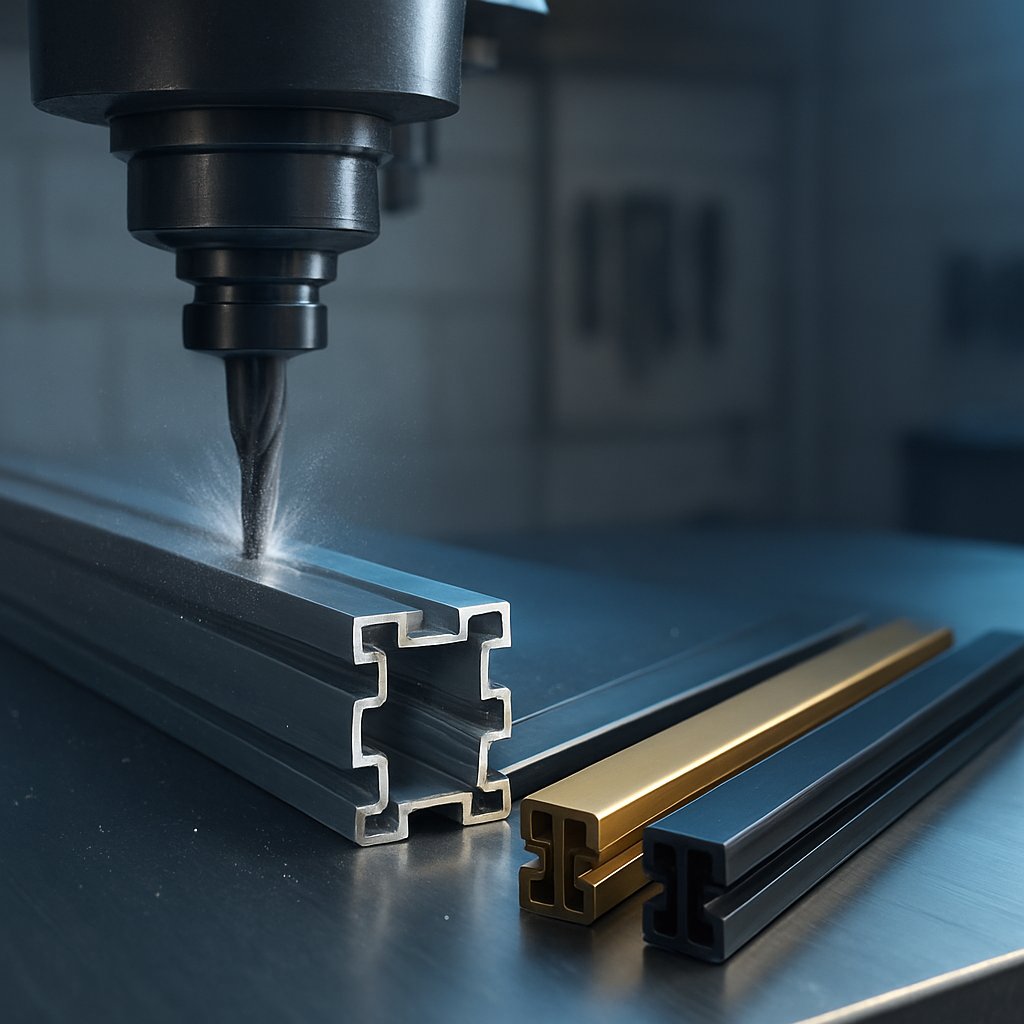
The alloy and temper printed on a drawing only tell part of the story. In the shop, the real question is how the material behaves when it is cut, bent, drilled, welded, and finished. In common T5 work, especially with aluminum 6063 extrusion, that practical behavior is often what decides whether the spec was a smart one.
For 6063-T5, the balance is usually favorable but not effortless. Notes in the Tuofa 6063-T5 guide and the ALEKVS 6063 guide describe good formability and machinability, while also pointing out a familiar downside: the alloy's ductility can produce long chips, burrs, and built-up edge if tooling, speed, or lubrication are not well controlled. That is why extruded aluminum 6063 often machines cleanly in good conditions but gets messy fast in poor ones. If a buyer is comparing that behavior to 6063 aluminum sheet, the safe move is to verify the actual product form and temper instead of assuming one datasheet covers everything.
Welding changes the picture much more than drilling or cutting. 6063 is widely regarded as easy to weld, and the references describe good TIG and MIG performance with relatively low deformation. Even so, heat-treatable 6xxx alloys pay a penalty near the weld. The Hobart welding guide notes that in welded 6xxx alloys, heat-affected-zone properties are typically reduced by about 30% to 50%. The same guide also notes that 6xxx alloys have higher thermal conductivity than 5xxx alloys, so they often need more heat input to achieve penetration, which can increase distortion.
This is where T5 often earns its place. The references consistently describe 6063 as strong in corrosion resistance and surface quality, and the ALEKVS guide explains that its low iron and copper help create a more uniform oxide layer and more consistent anodized color. That makes 6063-T5 especially attractive when the finish is part of the product, not just an afterthought.
Those shop-floor tradeoffs explain why this temper shows up so often in profile-driven parts. The strongest option is not always the one that delivers the best finished component, especially when appearance, moderate fabrication, and corrosion resistance all matter at once.
Some material choices make sense the moment you picture the finished part. If the profile will stay visible, face weather, and depend on extrusion quality as much as raw strength, aluminum 6063 t5 often rises quickly on the shortlist. Guidance from SinoExtrud and American Douglas Metals consistently connects 6063 to smooth surface finish, good corrosion resistance, strong anodizing response, and moderate strength, which is why it appears so often in profile-based applications.
This is the clearest home for the temper. In building products, finish quality is often part of performance, not just appearance.
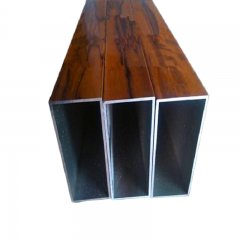
The same balance also works in lighter industrial settings. The reference materials point to furniture tubing and solar panel supports, and the logic extends to rails, guards, frames, and simple enclosures where corrosion resistance, shape complexity, and finish quality matter together. A hollow profile such as 6063 aluminum pipe can be a sensible choice when the load is moderate and the environment is not especially aggressive.
Some specifications are really finish-driven decisions. That is where T5 keeps winning. Because 6063 extrudes and anodizes so well, it is often chosen for parts that need a refined look without giving up everyday durability. That advantage matters less when the project is driven by high structural stress, or when a 6063 sheet application is being evaluated instead of an extrusion-heavy design.
T5 is often selected for balanced finish, corrosion resistance, and sufficient strength, not for peak strength alone.
That balance becomes much easier to specify when the real constraint is named first, whether it is load, forming, welding, or appearance.
A profile can suit the application and still be the wrong temper in production. That is why the smarter question is not which temper sounds stronger, but which limit actually controls the part. In Engineering Express, 6063-T6 is tied to higher yield and tensile strength, while 6063-T5 is linked to lower residual stress, better dimensional stability, and easier production of complex or thin extrusions.
| Project priority | Best temper direction | Why |
|---|---|---|
| Higher strength and load capacity | T6 | Better suited when strength and deflection control dominate |
| Easier forming after extrusion | T4 or softer route to review | Aged tempers may not be ideal for significant secondary forming |
| Better finish quality | T5 | Often preferred in appearance-sensitive 6063 extrusion work |
| Complex extrusions or thin walls | T5 | Supports manufacturability and dimensional control |
| Cleaner anodizing appearance | 6063-T5 direction | Common choice where visible finish matters |
| Heavy welded structural use | T6 with weld review | Higher base strength helps, but weld-zone softening still matters |
Alu4all frames alloy and temper selection as a balance of strength, formability, corrosion resistance, weldability, and surface finish. That is the practical way to spec aluminum in the real world. With those priorities written down, profile catalogs, mill certs, and supplier quotes become much easier to compare.
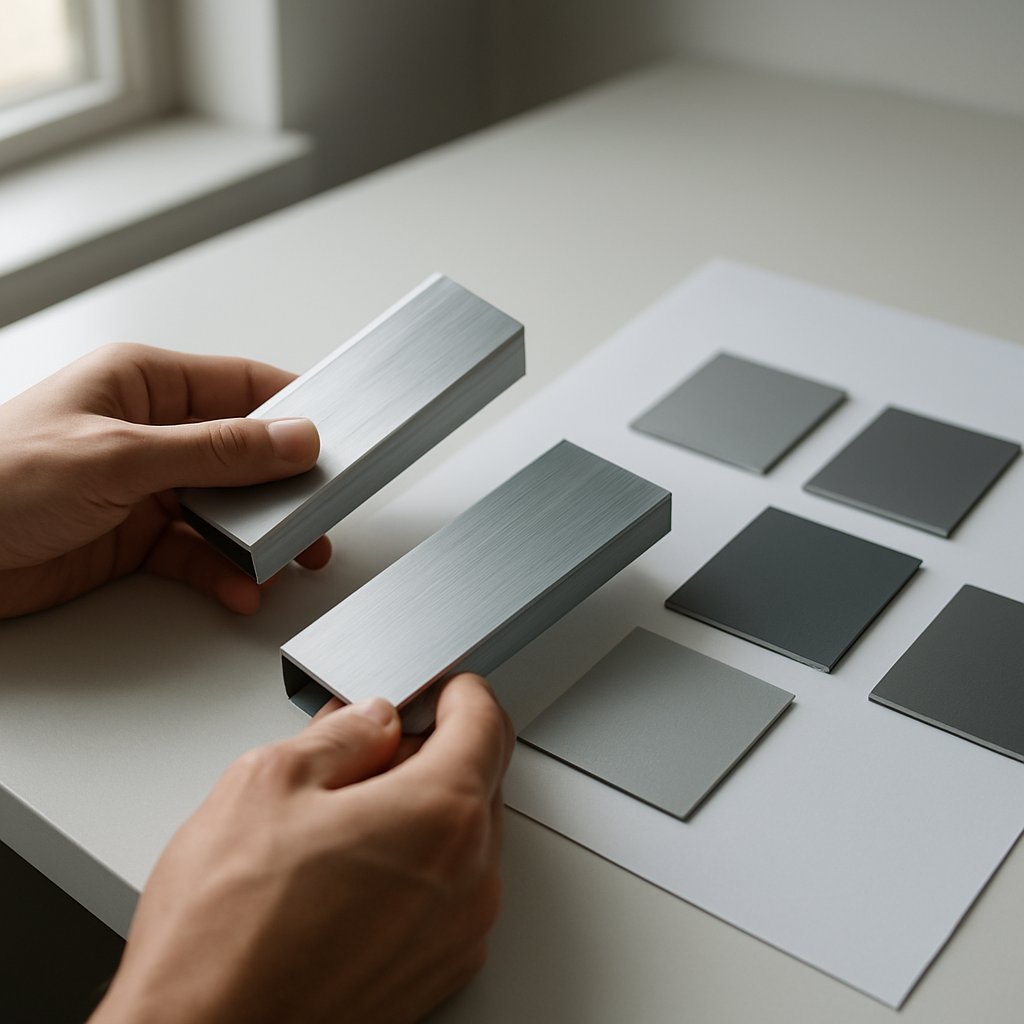
Once the temper direction is narrowed down, the real decision moves to sourcing discipline. A clean RFQ package makes it much easier to compare mills, catch missing details, and confirm whether a 6063 t5 aluminum extrusion request actually matches the part you need. The Profile Precision checklist is a strong reference because it centers on the items buyers often leave vague in early quote requests.
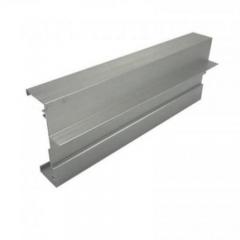
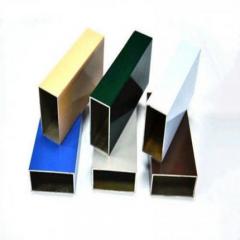
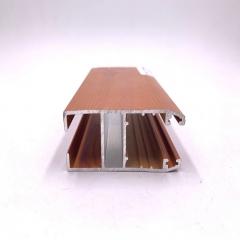
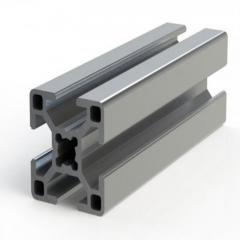
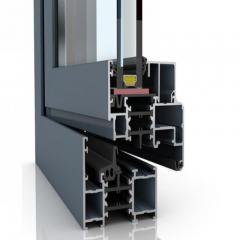
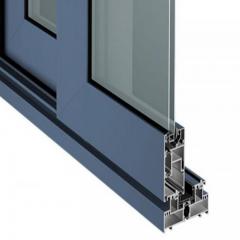
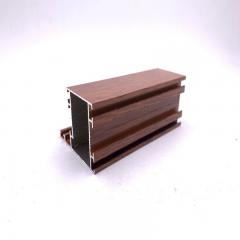
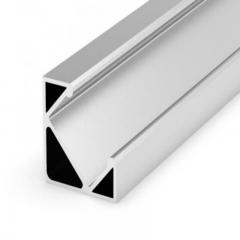
Extrusion is used for everything from simple structural shapes to intricate custom profiles, so custom work tends to add the most value when shape, finish, and downstream processing all matter together. That is a common situation for appearance-sensitive 6063 t5 aluminium profiles, especially when cosmetically important surfaces, anodizing, machining, or tight dimensions need to be defined before production starts.
That extra preparation usually prevents the most expensive kind of mistake: ordering the right alloy family with the wrong processing details. In extrusion sourcing, the temper code starts the conversation, but the drawing, finish notes, and documentation are what turn it into a part that performs as expected.
T5 describes the temper, not the alloy chemistry. It means the aluminum was cooled after a high-temperature shaping step, such as extrusion, and then artificially aged to improve strength. That temper code still does not tell the whole story, because final performance also depends on the alloy number, product form, thickness, and the supplier's datasheet.
No. T5 and T6 can appear on the same alloy family, but they do not represent the same processing route or the same balance of properties. In many 6xxx extrusions, T6 is selected when higher strength and hardness are the main priority, while T5 is often chosen when profile quality, appearance, dimensional control, or production practicality matter more. The right choice depends on the part's real constraint.
Often yes. 6063-T5 is widely used for visible extrusions because it can support a smooth surface, a clean anodized finish, and solid corrosion resistance in many outdoor applications. That is why it appears so often in frames, trim, facade parts, rails, and similar profiles. Even so, final appearance still depends on handling, surface preparation, and whether the part includes welds or other fabrication marks.
Usually yes, but results vary by alloy, section shape, and shop process. Many 6xxx T5 extrusions are practical for welded frames and profile assemblies, yet weld heat can soften the area near the joint, so base temper values should not be treated as the final as-welded condition. Bending is also possible, but tighter forming generally becomes easier as the material gets softer, so the full fabrication route should be reviewed before locking in the temper.
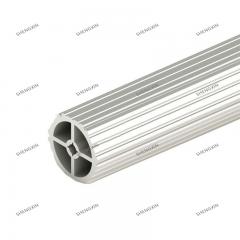
Start with the full callout, such as alloy plus temper, then confirm profile geometry, tolerances, finish, visible surfaces, cut length, machining, welding plans, and required certificates. For custom work, it can also help to review available profile and finish options from experienced extrusion suppliers, such as Shengxin Aluminium's catalog, and then compare those options against your drawing and specification needs. A clear RFQ lowers the risk of buying the right alloy family in the wrong condition.



 Servicio en línea
 0086 136 3563 2360
 sales@sxalu.com
 +86 136 3563 2360
 español
 English
 français
 Deutsch
 русский
 português
 العربية
 ไทย
ไทย Việt
Việt Українська