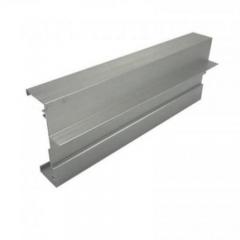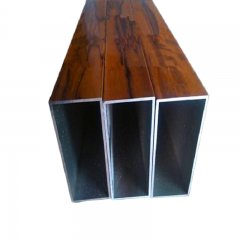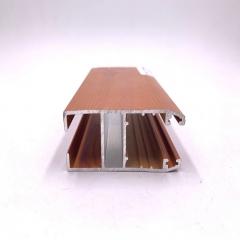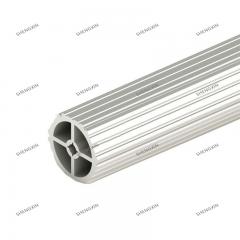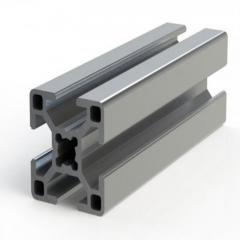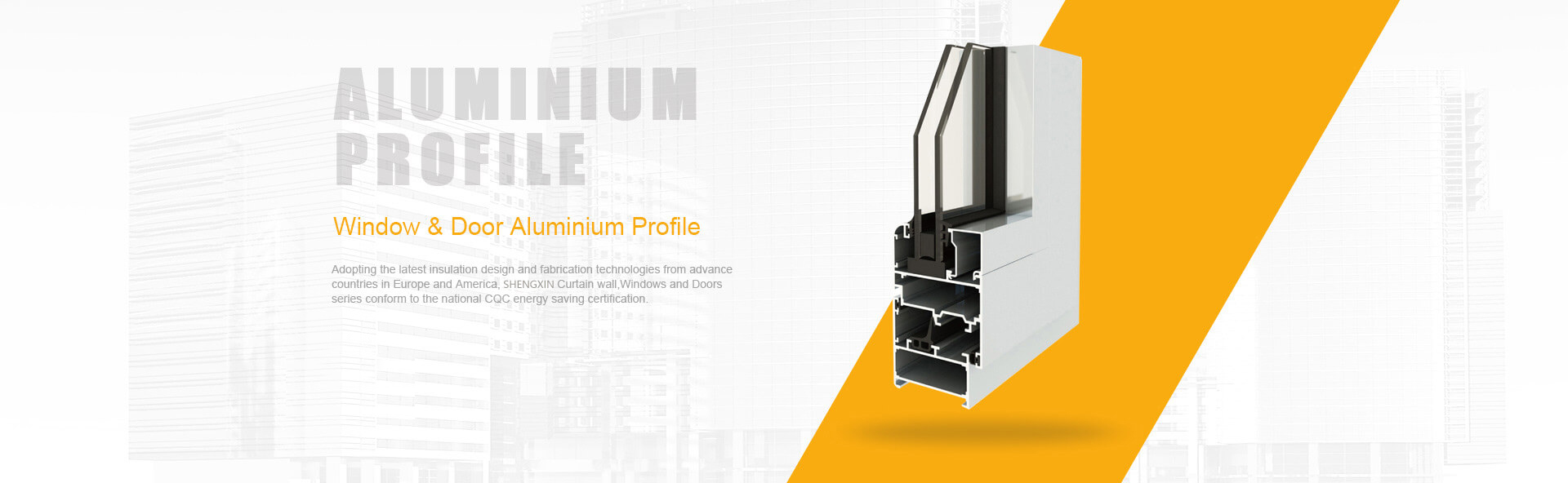
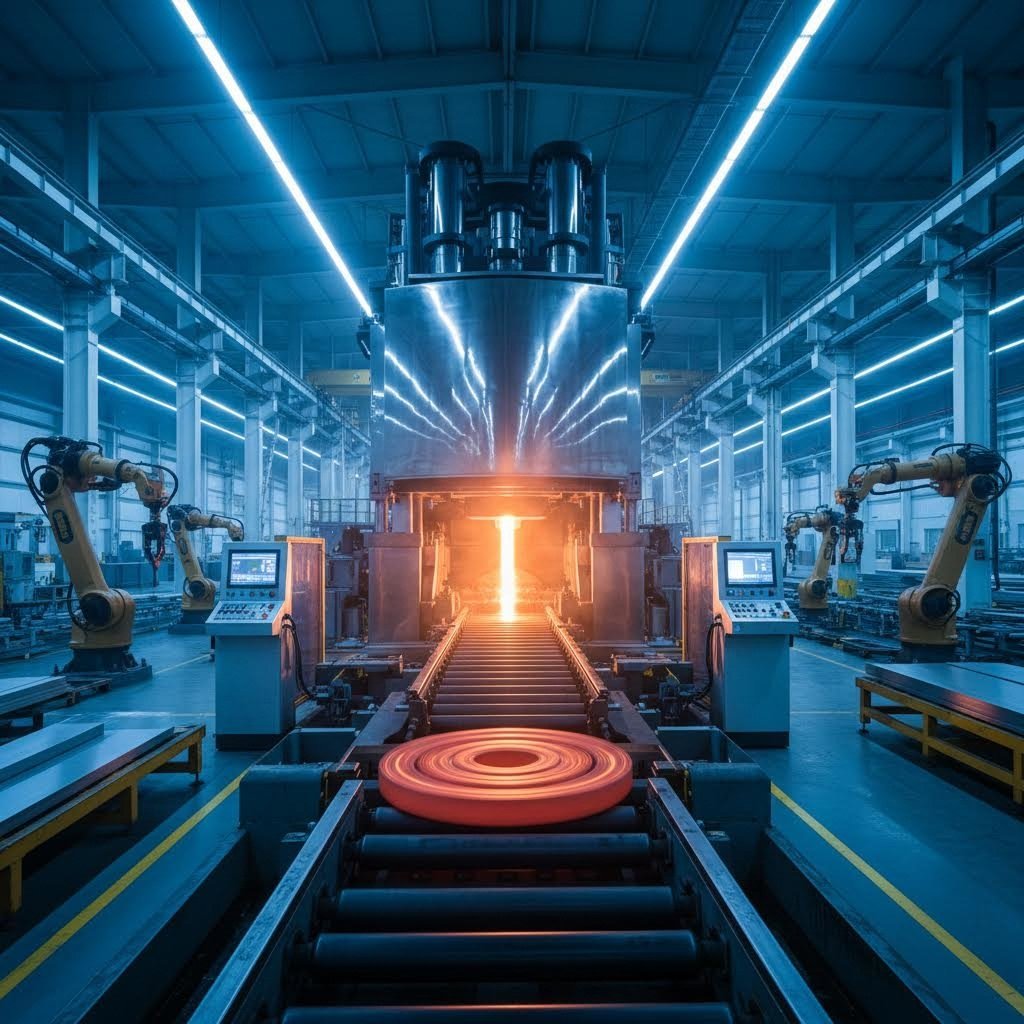
Imagine needing a custom aluminum component for your next project. You contact one company for design, another for die creation, a third for the actual extrusion, and yet another for machining and finishing. Sound exhausting? That's the reality of traditional fragmented manufacturing—and it's exactly what turnkey aluminum extrusion manufacturers eliminate.
A turnkey solution in aluminum extrusion means one provider handles everything from your initial concept through final delivery. As industry experts define it, a turnkey approach is where "the contractor or provider undertakes the entire responsibility from design through completion and commissioning." You simply explain what you need, and your manufacturing partner manages every step that follows.
Traditional aluminum manufacturing often involves farming out work to various subcontractors. One company creates designs, ships them to a manufacturer for production, then sends the product to another facility for machining, and yet another for surface finishing. Each handoff introduces delays, communication gaps, and potential quality inconsistencies.
Turnkey aluminum extrusion services consolidate this entire workflow under one roof. When you partner with a comprehensive manufacturer, they control the complete process—from the moment heated aluminum alloy is forced through a specially shaped die to create your profile, all the way through final assembly and inspection.
The core components of a truly turnkey aluminum extrusion operation include:
Why does consolidating these aluminum extrusion systems matter so much? Consider the communication flow. In a fragmented supply chain, you're constantly coordinating between vendors, clarifying specifications, and troubleshooting issues that arise during handoffs. With a single-source manufacturer, communication happens faster and more efficiently within one organization.
This integrated approach enables manufacturers to build complete engineered component systems rather than isolated parts. When the same team oversees die design, extrusion, and secondary operations, they can optimize each stage for the next—catching potential problems before they compound.
Perhaps most importantly, turnkey manufacturers can identify and correct issues quickly because they oversee every aspect of production. There's no "passing the buck" between subcontractors or waiting weeks to discover a problem that occurred three vendors ago. Profile systems move seamlessly from one phase to the next, resulting in tighter tolerances, consistent quality, and significantly faster project completion.
As you explore your options for aluminum extrusion projects, understanding this fundamental difference between turnkey and traditional approaches will help you make smarter sourcing decisions—and ultimately get better results with less hassle.
Now that you understand what makes manufacturing truly turnkey, let's walk through exactly how your project moves from initial idea to finished aluminum extrusion profiles ready for use. Each stage builds on the previous one, and when a single manufacturer controls the entire workflow, the handoffs become seamless rather than problematic.
Every successful aluminum extrusion project begins with design and engineering consultation. During this phase, you'll work directly with technical specialists who translate your functional requirements into manufacturable specifications. They'll consider factors like load-bearing needs, environmental exposure, assembly requirements, and aesthetic preferences.
The design process really begins with understanding your product's intended use, as this determines many of the ultimate production parameters. Questions regarding machinability, finishing, and environment of use lead to alloy selection, while the function of the profile determines the form design—and ultimately, the die that shapes it.
Once specifications are finalized, die creation begins. The die is essentially a precision-machined steel tool with openings shaped exactly like your desired profile's cross-section. Before the extrusion process starts, manufacturers preheat the die to approximately 450-500°C (roughly 840-930°F). This ensures even metal flow and maximizes die lifespan.
Die testing follows fabrication. Manufacturers run initial extrusions to verify dimensional accuracy, surface quality, and material flow characteristics. Any necessary adjustments happen before full production begins—a critical quality checkpoint that prevents costly problems downstream.
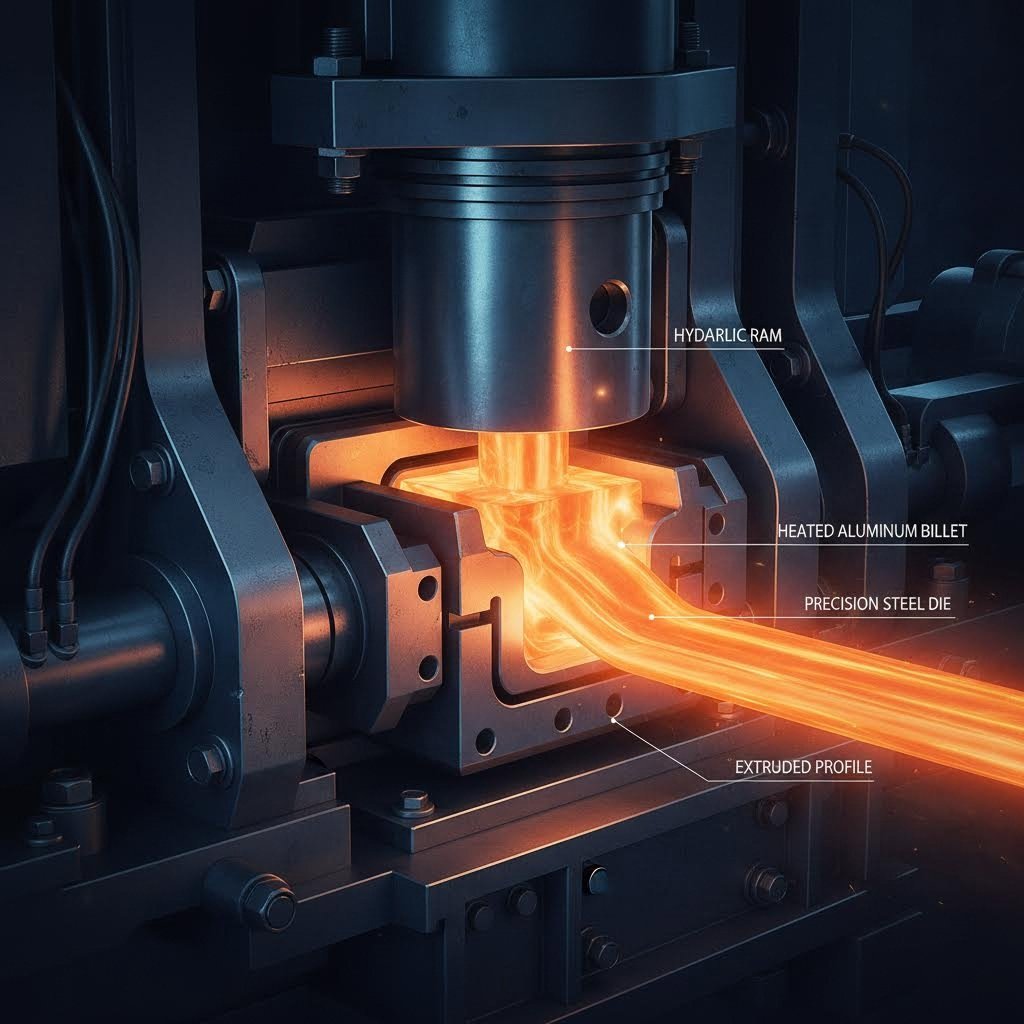
With an approved die loaded into the press, actual extrusion production can begin. The process starts with aluminum billet—cylindrical blocks of aluminum alloy typically ranging from 3 to 33 inches in diameter—heated to between 400-500°C (750-930°F). This temperature makes the aluminum malleable without melting it.
The heated billet transfers into the extrusion press container, where a powerful hydraulic ram applies tremendous pressure—anywhere from 100 to 15,000 tons depending on press capacity. This force pushes the softened aluminum through the die opening, and it emerges on the other side as a fully formed extrusion frame or profile shape.
Extrusion rates vary significantly based on alloy and shape complexity. Simple shapes in soft alloys might exit the press at 180 feet per minute or faster, while complex profiles in harder alloys may emerge at just one or two feet per minute. A single press stroke can produce continuous extrusions up to 200 feet long.
Immediately after exiting the die, the extrusion undergoes quenching—rapid cooling through air or water baths. This step is critical for achieving proper metallurgical properties. The profile then moves to stretching equipment that straightens any twisting and brings dimensions into final specification.
Raw extruded profiles rarely ship directly to customers. Secondary fabrication transforms basic extrusions into finished components through aluminum extrusion machining operations. This is where extrusion automation and CNC precision really shine in a turnkey environment.
Typical secondary operations include:
When you browse an extruded aluminum shapes catalog from a comprehensive manufacturer, you'll notice many standard profiles. However, aluminium extrusion machining capabilities allow customization of these standards—or creation of entirely bespoke designs—to match your exact specifications.
The following table illustrates each stage, what happens during it, and why having these operations integrated under one roof matters for your project outcomes:
| Manufacturing Stage | Typical Activities | Why Integration Matters |
|---|---|---|
| Design Consultation | Requirements analysis, alloy selection, profile optimization, DFM review | Engineers understand downstream capabilities and design for manufacturability from the start |
| Die Development | Die design, CNC machining of tooling, heat treatment, trial runs | Direct feedback loop between die makers and press operators accelerates refinement |
| Extrusion Production | Billet heating, pressing, quenching, stretching, initial cutting | Consistent process parameters maintained without external vendor variables |
| Secondary Fabrication | Precision cutting, drilling, milling, bending, punching | Extrusion machining teams receive profiles immediately—no shipping delays or damage |
| Surface Finishing | Anodizing, powder coating, painting, specialty treatments | Finishing specifications inform earlier stages; no mid-process contamination from transport |
| Assembly | Component joining, hardware installation, sub-assembly creation | Assembly issues trigger immediate upstream corrections rather than lengthy complaint cycles |
| Quality Inspection | Dimensional verification, surface inspection, mechanical testing, documentation | Quality data feeds back to every stage continuously, enabling real-time process improvement |
When multiple vendors handle different stages, each handoff introduces risk. Specifications get misinterpreted. Parts sit in shipping containers exposed to temperature swings or humidity. Accountability becomes murky when problems surface.
Integrated turnkey manufacturing eliminates these gaps. The team managing your die development understands exactly what the finishing department needs. The extrusion operators know which tolerances are critical for downstream machining. Quality inspectors can trace any issue back to its source within hours rather than weeks.
This closed-loop environment enables tighter tolerances because adjustments happen immediately. If a dimension drifts slightly during a production run, operators catch it and correct it before hundreds of out-of-spec parts accumulate. The result? More consistent aluminum extrusion profiles, fewer rejected parts, and faster overall project completion.
Understanding these production stages helps you evaluate potential manufacturing partners more effectively—but the process doesn't end with basic extrusion. Die design represents one of the most critical yet least understood aspects of successful projects.
Here's a surprising fact: for complex aluminum extrusion profiles, the quality of die design accounts for roughly 85% of overall die quality. That single steel disk with its precisely shaped opening determines whether your project succeeds or struggles—making die engineering one of the most critical yet overlooked aspects of working with turnkey aluminum extrusion manufacturers.
Think of the extrusion die as the heart of the entire process. It's a precision-machined tool, typically crafted from H13 tool steel, containing openings that shape molten aluminum into your exact cross-sectional profile. Every dimension, every wall thickness, every internal cavity originates from this single component. Get it right, and production runs smoothly. Get it wrong, and you'll face costly corrections, delays, and quality issues throughout your project.
What separates an excellent aluminum extrusion profile from a mediocre one often comes down to how well the die was engineered before a single billet ever entered the press. Experienced manufacturers approach die development as both science and art—applying proven engineering principles while drawing on decades of institutional knowledge about material behavior.
The most critical factor? Ensuring uniform material flow velocity. When heated aluminum pushes through the die opening, every particle ideally exits at the same speed. If thicker sections flow faster than thinner ones, the profile warps, twists, or develops surface defects. Industry specialists emphasize that achieving smooth, uniform material flow "minimizes turbulence, dead zones, and potential defects like warping."
This is where custom extruded profiles get tricky. Designers must calculate precise bearing lengths—the distance aluminum travels within the die—for each section of the profile. Longer bearing lengths increase resistance and slow flow, while shorter lengths accelerate it. By varying these lengths across the die face, engineers balance flow rates between thick and thin sections.
Several key factors influence every die design decision:
Modern die designers increasingly rely on Finite Element Analysis (FEA) simulations to model material flow before manufacturing the actual die. These digital tools predict potential problems—uneven flow zones, stress concentrations, thermal variations—allowing corrections before expensive steel cutting begins.
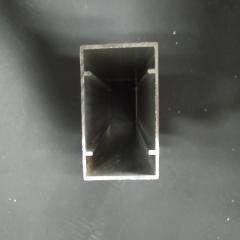
Not all extrusion aluminum profiles are created equal. Solid profiles—simple bars, angles, and channels—require relatively straightforward die designs. But hollow profiles with internal cavities? Semi-hollow shapes with partial enclosures? These demand considerably more engineering sophistication.
Hollow dies incorporate a mandrel component that creates internal voids as aluminum flows around it. The die cap shapes the outer contour while the mandrel forms interior channels. Getting both elements to work in harmony—ensuring the aluminum welds seamlessly after splitting around the mandrel—requires precise engineering and extensive testing.
For small aluminum extrusions with thin walls, designers face particular challenges. As die engineering experts note, when wall thickness falls below 2mm, special "oblique air knife" structures become necessary at the die exit to support the delicate cantilever sections. These details separate manufacturers with deep die expertise from those simply buying off-the-shelf tooling.
Press tonnage capabilities directly influence what profile custom extrusions a manufacturer can produce. The relationship works through extrusion ratio—the ratio between the billet's cross-sectional area and the profile's area. Higher ratios require greater force. Industry guidelines suggest extrusion ratios around 30 for solid profiles and approximately 45 for hollow shapes.
Manufacturers with diverse press ranges—from smaller presses around 600 tons up to massive 5,000+ ton machines—can handle virtually any project requirement. Smaller presses work efficiently for simple shapes and small aluminum extrusions, while larger presses tackle wide profiles, complex multi-void hollows, and harder alloy formulations that demand tremendous force.
This is precisely why turnkey capability matters so much at the die development stage. When the same organization designs dies and operates presses, engineers match tooling to optimal equipment. They understand which press best suits each profile, how temperature variations across different machines affect flow, and what adjustments proven designs need when scaling up or down.
Die quality ultimately ripples through every downstream operation. A well-engineered die produces consistent custom extrusions that machine predictably, finish uniformly, and assemble without tolerance stack-up issues. That 85% quality contribution translates directly into projects that stay on schedule, meet specifications, and avoid costly rework—making die engineering expertise perhaps the most valuable capability any manufacturing partner can offer.
You've designed the perfect aluminum extrusion profile and watched it emerge from the press. Now what? Without proper surface treatment, even the best custom aluminum extrusion will disappoint. Mill-finish aluminum—the raw state after extrusion—shows die marks, appears dull, and offers minimal protection against environmental exposure. For most applications, surface finishing transforms "functional" into "exceptional."
This is where turnkey manufacturers truly shine. Instead of shipping your aluminum extrusion parts to a separate finishing facility—adding transit time, handling damage risk, and coordination headaches—integrated operations move profiles directly from machining to surface treatment. The result? Faster turnaround, better quality control, and finishes that perfectly match your specifications.
Anodizing remains the most popular finish for aluminium extrusion parts, and for good reason. Unlike paints or coatings that sit on top of aluminum, anodizing actually transforms the surface itself. An electrochemical process stimulates the naturally-occurring aluminum oxide layer to grow thicker—creating an integral, protective barrier that cannot peel or flake.
The durability advantages are significant: anodized surfaces resist corrosion, handle abrasion far better than painted alternatives, and dissipate heat more effectively. For storefronts, handrails, and any application where traffic causes regular contact, anodizing's hardness proves invaluable.
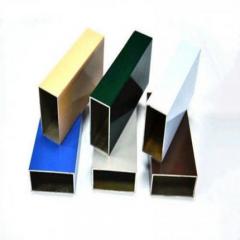
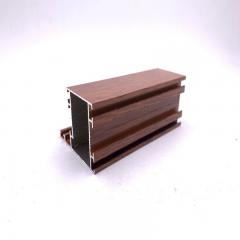
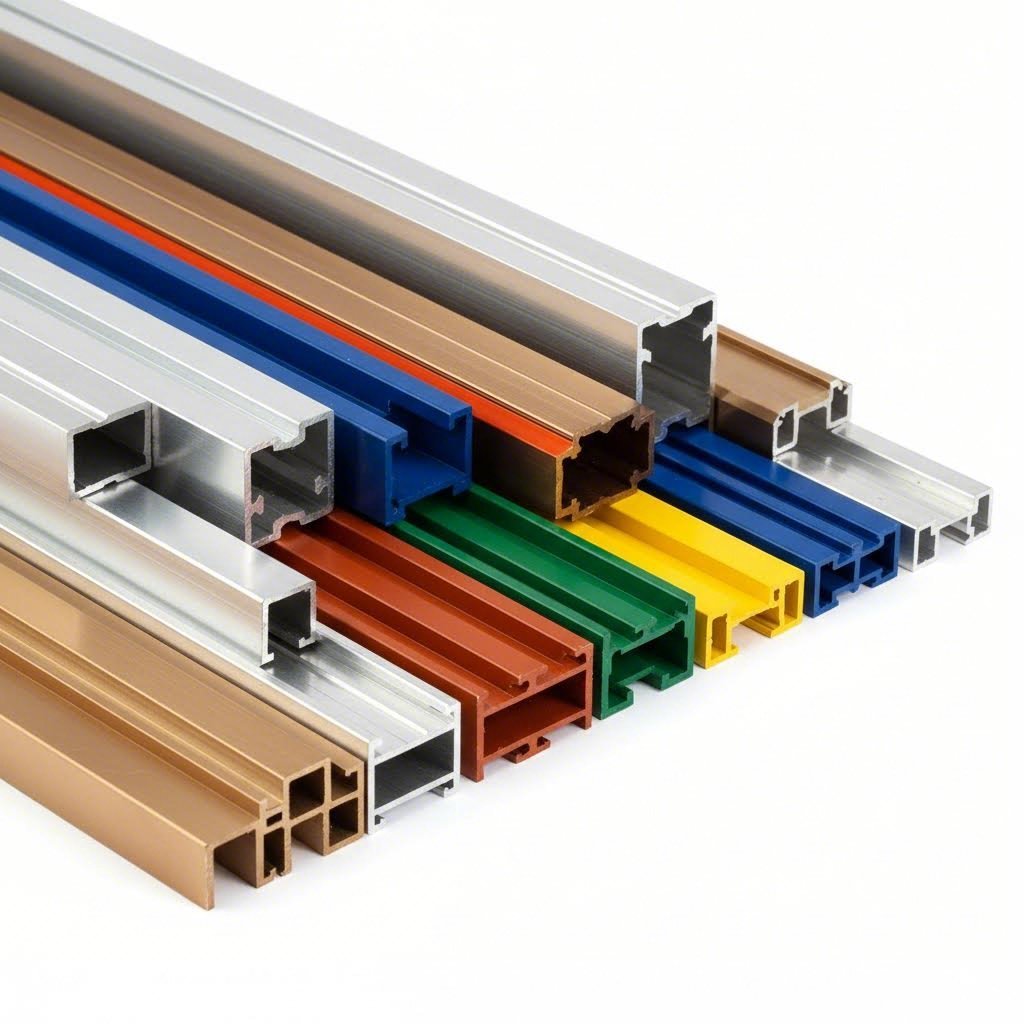
But anodizing isn't limited to that familiar silver appearance. The porous structure of anodized aluminum readily accepts dyes, enabling a range of colors from bronze and black to gold, red, and blue. Architectural projects frequently specify colored anodizing when designers want that distinctive metallic translucence no paint can replicate.
Coating thickness matters enormously. Industry standards define Class I anodizing at 0.7 mils thickness and Class II at 0.4 mils. As finishing specialists emphasize, "the life of an anodic coating is proportional to its coating thickness." For exterior applications, always specify Class I—thinner coatings suitable for interior use will deteriorate rapidly when exposed to weather and pollutants.
One often-overlooked advantage: anodizing can be renewed. When surfaces accumulate dirt or appear chalky after years of service, cleaning with mild abrasive actually removes a thin layer of the coating—revealing fresh, renewed anodizing beneath. You can't do that with paint.
When your aluminum extruded profiles need vibrant colors, precise color matching, or protection in chemically aggressive settings, organic coatings offer compelling alternatives to anodizing.
Powder coating delivers bright, long-lasting colors with excellent UV resistance. Dry paint powder is electrostatically applied to cleaned aluminum surfaces, then baked to melt and cure into an even finish. The process produces no volatile organic compounds (VOCs), making it environmentally preferable to liquid paints. Quality manufacturers maintain extensive color libraries and can match virtually any specification for architectural and design applications.
For extruded aluminum panels on building exteriors—curtain walls, metal roofing, environmental enclosures—powder coating provides exceptional aesthetic flexibility. However, the coating's durability depends heavily on proper pretreatment and application technique, which is why factory-applied finishes outperform field applications every time.
PVDF coatings (polyvinylidene fluoride) represent the gold standard for exterior architectural applications. These resin-based finishes—known commercially as Kynar 500® or Hylar 5000®—offer extraordinary resistance to UV degradation, chemicals, and weathering. PVDF has dominated the curtain wall and metal roofing markets precisely because colors remain stable for decades.
The AAMA 2605 specification represents the most stringent performance standard for architectural aluminum coatings, requiring actual ten-year exposure testing in South Florida's harsh conditions. PVDF formulations consistently pass this demanding benchmark across the widest variety of colors.
Micro-arc oxidation (MAO), sometimes called plasma electrolytic oxidation, produces ceramic-like coatings significantly harder than conventional anodizing. This advanced treatment creates surfaces with exceptional wear resistance, thermal stability, and electrical insulation properties. While more specialized than standard finishes, MAO suits demanding applications where extreme durability justifies additional processing.
Selecting the right surface treatment requires balancing durability, appearance, environmental exposure, and budget. The following comparison helps match finish characteristics to typical applications:
| Finish Type | Durability Characteristics | Aesthetic Options | Ideal Applications |
|---|---|---|---|
| Clear Anodizing (Class I) | Excellent abrasion resistance; integral coating won't peel; renewable through cleaning | Natural metallic silver appearance with translucent depth | Storefronts, door frames, handrails, high-traffic areas |
| Colored Anodizing | Same durability as clear; color stability varies by shade and thickness | Bronze, black, gold, champagne; distinctive metallic quality | Architectural facades, decorative trim, premium fixtures |
| Powder Coating | Good corrosion resistance; softer than anodizing; can chip if damaged | Virtually unlimited colors; matte to high gloss; textures available | Interior furniture, equipment housings, color-critical exteriors |
| PVDF Coating | Outstanding UV and chemical resistance; meets AAMA 2605 for 20+ year performance | Wide color range including metallics; consistent color matching | Curtain walls, metal roofing, environmental enclosures, exterior panels |
| Micro-Arc Oxidation | Ceramic-hard surface; extreme wear and thermal resistance | Limited colors; typically white, gray, or black | High-wear industrial components, thermal management, specialty applications |
Why does having surface treatment capabilities under the same roof as extrusion and machining matter so much? Consider what happens without integration.
Your machined profiles get packaged, loaded onto trucks, and shipped to a coating facility—perhaps hundreds of miles away. During transit, surfaces collect dust and oils from handling. Temperature changes cause condensation. Parts arrive at the coating shop, sit in queue, then undergo cleaning to remove contamination accumulated since leaving your extrusion supplier.
With turnkey manufacturers, profiles move directly from CNC machining to surface treatment—often the same day. No shipping damage. No contamination from extended storage. No miscommunication between separate companies about finish specifications or masking requirements.
This integration proves especially valuable for custom aluminum extrusion projects requiring precise color matching or specialty finishes. When finishing technicians work alongside extrusion engineers, they understand material properties, alloy variations, and how upstream processes affect coating adhesion. Problems get solved in conversations, not complaint emails.
The lead time benefits are substantial too. Eliminating inter-facility shipping and separate company scheduling typically reduces overall project duration by one to three weeks—time savings that compound across multi-component assemblies requiring consistent finishing across all parts.
Surface treatment transforms raw aluminum extruded profiles into finished products ready for their intended environment—but the applications for these finished components span an remarkably diverse range of industries.

Where do all those precisely extruded, beautifully finished aluminum profiles actually end up? The answer might surprise you with its breadth. From the window frames in modern skyscrapers to the robotic arms assembling your next smartphone, aluminum extrusion frame components touch nearly every manufacturing sector. Understanding these applications helps you recognize where turnkey partnerships deliver the greatest value.
What makes certain industries particularly well-suited for turnkey aluminum extrusion partnerships? It comes down to complexity, consistency requirements, and iteration speed. When projects demand multiple integrated components with tight tolerances and coordinated finishes, managing separate vendors becomes a logistical nightmare. A single-source manufacturer eliminates that friction entirely.
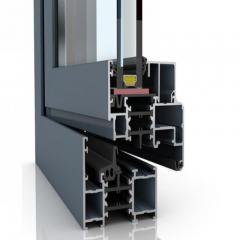
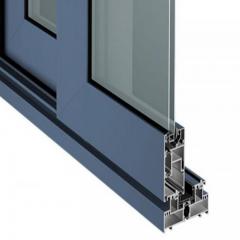
Walk into any modern commercial building and you're surrounded by aluminum extrusions—often without realizing it. The construction industry consumes more extruded aluminum than any other sector, and for good reason. Aluminum frame extrusion provides the strength-to-weight ratio, corrosion resistance, and design flexibility that contemporary architecture demands.
Typical architectural applications include:
Why do architects and contractors prefer turnkey partners for these applications? Consider a curtain wall project. The aluminum profiles must integrate with glass panels, gaskets, anchoring systems, and sealants—all while meeting stringent performance specifications for air infiltration, water penetration, and structural loading. When one manufacturer handles profile extrusion, precision machining, and surface finishing, dimensional consistency across hundreds of components becomes achievable rather than aspirational.
Color matching presents another compelling case. A building facade might require thousands of linear feet of matching profiles across window frames, spandrel panels, and trim elements. Turnkey manufacturers with in-house anodizing or PVDF coating maintain batch-to-batch consistency that's nearly impossible when shipping between separate extrusion and finishing facilities.
Step onto a modern factory floor and you'll find aluminum extrusions everywhere—forming the structural backbone of automation systems that keep production moving. As automation specialists note, T-slot aluminum profiles "provide both the structure and rigidity for your large machine bases, mechanical arms, fixtures and guarding equipment as well as the precision needed for jigs, sensors, safety components, or computer system mounts."
The industrial automation sector relies on aluminum extrusions for:
End of arm tools represent a particularly interesting application. These specialized fixtures attach to robotic arms and must balance minimal weight (to maximize payload capacity) with sufficient rigidity (to maintain positioning accuracy). Turnkey manufacturers can optimize profile designs specifically for these demanding requirements, then machine mounting features and apply protective finishes—all coordinated to meet aggressive production schedules.
Material handling applications showcase another strength of integrated manufacturing. Flow racks—gravity-fed storage systems that present components at ergonomic heights—require precisely machined aluminum profiles with consistent track dimensions. When a flow rack system spans an entire assembly line, dimensional variations between components cause jams, misfeeds, and production delays.
Typical material handling solutions include:
Research indicates that automation systems designed with lean principles can save up to 30% of floor space—and modular aluminum framing makes that optimization possible through easy reconfiguration as processes evolve.
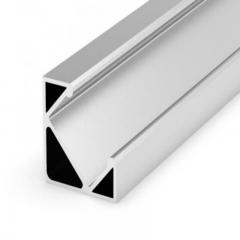
The signage industry presents unique demands that turnkey manufacturing addresses exceptionally well. Channel letter frames, pylon sign structures, and illuminated display housings all require aluminum profiles with precise dimensions, clean finishes, and often custom colors matching corporate brand standards.
Sign manufacturers benefit from turnkey partnerships because projects typically involve:
When a national retailer rolls out new signage across hundreds of locations, consistency becomes paramount. Turnkey manufacturers maintain that consistency because every profile—regardless of shape or size—receives identical treatment through coordinated production processes.
Across architectural, industrial, and signage applications, several common factors drive the preference for integrated manufacturing partnerships:
Reduced vendor management: Instead of coordinating between extrusion suppliers, machine shops, and finishing facilities, project managers work with a single point of contact. Communication simplifies. Accountability clarifies. Problems get resolved faster.
Consistent quality: When one organization controls every production stage, quality standards apply uniformly. There's no "that's how we received it from our supplier" excuse. Dimensional tolerances, surface finishes, and material properties remain consistent across entire orders.
Faster iterations: Design changes happen. In fragmented supply chains, modifications ripple through multiple vendors with compounding delays. Turnkey partners implement changes quickly because all capabilities exist under one roof.
Integrated problem-solving: When finishing requirements influence profile design, or machining constraints affect material selection, integrated teams collaborate naturally. Solutions emerge from conversation rather than formal change orders between separate companies.
The diversity of applications—from flowracks on factory floors to curtain walls on city skylines—demonstrates aluminum extrusion's remarkable versatility. But versatility alone doesn't guarantee project success. Understanding the true costs involved helps you evaluate whether turnkey manufacturing delivers genuine value for your specific requirements.
Here's a question that keeps procurement managers up at night: is that lower per-piece quote from a fragmented supplier network actually saving money? The initial numbers might look attractive, but supply chain experts warn that "fragmented supply chains tend to create hidden expenses that quietly deplete efficiency and profitability." Understanding the true cost picture requires looking far beyond unit pricing.
When evaluating custom extruded aluminum sourcing options, the most expensive choice often appears cheapest on paper. Those savings from shopping around? They frequently vanish once you account for coordination overhead, quality inconsistencies, and extended timelines that fragmented approaches inevitably create.
Imagine your aluminum extruded products journey through a fragmented supply chain. One company extrudes the profile. Another performs CNC machining. A third handles anodizing. A fourth assembles components. Each handoff introduces costs that never appear on any single invoice.
Shipping between facilities adds up faster than most buyers anticipate. Every transfer requires packaging, freight charges, and handling fees. For custom aluminum extruders producing complex assemblies, profiles might ship three or four times before reaching final form—each shipment adding cost and delay.
Quality inconsistencies create perhaps the most insidious hidden expense. As procurement specialists observe, "Various suppliers may use different quality levels. This inconsistency generates discrepancies between what buyers anticipate and what shows up at their warehouse." The result? Rejections, returns, and expensive reworks that obliterate any initial savings.
Communication overhead consumes staff hours that rarely get tracked. Each vendor relationship requires:
Extended timelines carry substantial opportunity costs. When extruded aluminum parts must queue at multiple facilities, total lead time stretches dramatically. One late shipment from any vendor in the chain cascades through subsequent operations, potentially delaying your product launch or customer delivery.
Inventory management complexity multiplies when sourcing from multiple suppliers. You need buffer stock at various stages, safety inventory to protect against each vendor's delivery variability, and warehouse space to stage partially completed components awaiting their next processing step.
Industry analysts emphasize that aluminum total cost of ownership "encompasses all costs associated with acquiring aluminum, not just the purchase price." A proper evaluation must weigh both direct and indirect expenditures across the entire procurement lifecycle.
When comparing turnkey manufacturing against multi-vendor approaches, evaluate these specific cost factors:
Factory-direct relationships with turnkey manufacturers create pricing advantages that compound over time. Consolidated operations eliminate redundant overhead—there's no markup from intermediaries, no duplicated quality inspections, and no wasted motion shipping partially completed components between facilities.
Consider flowracks as an example. These gravity-fed storage systems require precisely machined aluminum profiles with consistent track dimensions. Sourcing extrusion, machining, and finishing separately means each vendor adds margin while coordination complexity adds hidden costs. A turnkey partner delivers complete flowracks systems with single-source accountability and streamlined pricing.
The strategic value of supply chain simplification extends beyond direct cost savings. When one organization handles your custom extruded aluminum from concept through delivery, accountability becomes crystal clear. Problems get resolved faster because there's no finger-pointing between separate companies. Design changes implement quickly because all capabilities exist under coordinated management.
Perhaps most importantly, simplified supply chains reduce risk. Fewer handoffs mean fewer opportunities for damage, contamination, or miscommunication. Fewer vendor relationships mean fewer potential points of failure. In an era where supply chain disruptions regularly make headlines, consolidation with capable turnkey partners provides resilience that fragmented networks simply cannot match.
Understanding these cost dynamics helps you ask better questions when evaluating potential manufacturing partners—but cost represents just one dimension of the decision. Quality standards and certifications provide equally important indicators of manufacturer reliability.
How do you know whether a turnkey manufacturer can actually deliver the quality they promise? Certifications and documented quality systems provide the answer. When evaluating potential partners for your aluminum extrusion profiles catalog requirements, understanding what these credentials mean—and what they don't—helps you separate genuinely capable manufacturers from those simply collecting wall decorations.
Quality in aluminum precision machining isn't accidental. It results from systematic processes, documented procedures, and continuous improvement practices. The right certifications indicate a manufacturer has implemented these systems and subjects them to independent verification.
ISO 9001:2015 certification represents the internationally recognized standard for quality management systems. But what does it actually mean for your project? At its core, this certification confirms that a manufacturer has established documented processes covering everything from order entry through final delivery—and that an independent auditor has verified compliance.
The 2015 revision emphasizes risk-based thinking and process approach. Certified manufacturers must identify potential quality risks at each production stage and implement controls to mitigate them. For aluminum extrusion, this translates to documented procedures for die inspection, billet traceability, press parameter monitoring, and dimensional verification.
Perhaps more importantly, ISO 9001:2015 requires continuous improvement. Manufacturers must track quality metrics, analyze trends, and implement corrective actions when problems emerge. This systematic approach means issues get addressed at their root cause rather than repeatedly patched at the symptom level.
When reviewing an aluminum extrusion profile catalog from a certified manufacturer, you're looking at products backed by verified quality systems—not just marketing claims. The certification provides assurance that consistent processes produced those profiles and will produce yours with the same discipline.
Certifications establish the framework, but actual quality depends on execution at specific checkpoints throughout manufacturing. Understanding these verification points helps you evaluate whether a manufacturer truly controls their processes or simply inspects defects at the end.
A comprehensive quality control plan typically includes incoming inspection of materials at the buyer's facility, in-process checks during extrusion, and final inspection before shipment—all with documented results. Industry quality specialists recommend maintaining inspection reports with measurement data, mechanical property certificates, coating thickness records, and photographs of inspected parts.
Key quality indicators buyers should verify before committing to a manufacturing partner:
Material traceability deserves special attention. When problems surface months after delivery, manufacturers with robust traceability can identify exactly which material lot, production run, and process parameters produced the affected components. Without this capability, root cause analysis becomes guesswork—and prevention becomes impossible.
Working with certified aluminum suppliers ensures starting material meets specifications before extrusion begins. Methods like optical emission spectrometry provide fast, accurate alloy verification—confirming that a shipment marked as 6061-T6 wasn't substituted with 6063-T5, which has significantly lower mechanical strength.
CNC machining centers enable the precise tolerances that distinguish professional-grade aluminum components from merely adequate ones. A cnc machine for aluminum extrusions can maintain cutting, drilling, and bending tolerances far tighter than manual operations—typically ±0.05mm to ±0.10mm for standard features.
According to machining specialists, achieving these tolerances requires more than capable equipment. Proper fixturing proves critical because aluminum extrusions are long and flexible. Poor clamping causes bending during cutting, and when released, the part springs back—changing the measured dimensions.
For aluminum profile cnc operations, manufacturers with robust quality systems monitor several factors:
Fine machining can achieve tolerances as tight as ±0.02mm on selected features—but only when design, process, and inspection align properly. Skipping any step reduces accuracy. Reputable manufacturers confirm their capability before accepting orders requiring extreme precision rather than discovering limitations during production.
The documentation trail matters as much as the measurements themselves. Inspection reports build trust in business relationships by demonstrating control, not just results. For long-term partnerships, stable inspection data across multiple orders proves more valuable than one perfect batch.
Quality systems and certifications provide confidence in manufacturer capability—but understanding realistic timelines helps you plan projects effectively and avoid frustration from misaligned expectations.
"How long will this take?" It's the question every buyer asks—and the one many manufacturers struggle to answer clearly. Custom aluminum extrusion profiles don't materialize overnight, yet understanding realistic timelines remains one of the most significant knowledge gaps in the industry. Whether you're planning a product launch or scheduling an installation, accurate timeline expectations prevent frustration and enable smarter project management.
The honest answer? Custom aluminium extrusion projects typically require several weeks to several months from initial concept to final delivery. As industry specialists note, "The typical lead time for custom aluminum extrusions ranges from a few weeks to several months"—a broad range that depends heavily on project-specific variables. Let's break down exactly what influences your timeline and how to plan accordingly.
Understanding the timeline means understanding each production phase. When working with a profile custom extrusion company, your project moves through distinct stages—each contributing to total lead time.
Die development typically requires two to four weeks. This phase involves designing your custom die, precision-machining it from tool steel, heat treating for durability, and running trial extrusions to verify dimensional accuracy. Simple solid profiles fall toward the shorter end; complex hollow shapes with multiple voids push toward longer tooling timelines.
Production scheduling adds variable time. Once your die is approved, the actual extrusion run gets scheduled based on the manufacturer's current workload. During peak demand periods, queue times extend. Custom extrusion experts indicate that in-house lead times often run about three weeks for production—though this varies significantly by order complexity and manufacturer capacity.
Secondary operations and finishing extend timelines further. Each fabrication step—cutting, drilling, milling, bending—requires scheduling and execution. Surface treatments add additional time; industry guidelines suggest adding one to two weeks for each distinct finishing process. An order requiring CNC machining, anodizing, and assembly accumulates time across all three stages.
For general planning purposes:
These ranges assume no unexpected complications. Building buffer time into project schedules protects against delays that inevitably occur in complex manufacturing environments.
Not all timeline variables are created equal. Some factors rest firmly in your control as the buyer; others depend entirely on manufacturer capabilities and circumstances. Knowing the difference helps you make decisions that optimize delivery schedules.
Timeline factors buyers can control:
Manufacturer-dependent variables:
The most common delay trigger? According to extrusion specialists, "Complex relief patterns and hairlines with fine detail and close tolerances may take longer to fabricate than lighter designs." When projects push boundaries on intricacy, timeline estimates become less reliable.
Here's where single-source manufacturing delivers perhaps its most tangible benefit: faster overall project completion. As manufacturing integration experts observe, "Every time a project changes hands, the risk of lost information and delays increases. Multiple vendors mean more approval layers, conflicting priorities, and slower decisions."
When you coordinate separate vendors for extrusion, machining, finishing, and aluminum parts assembly service, each transition introduces delays:
Turnkey manufacturers eliminate these handoff delays entirely. Extruded profiles move directly to machining—often the same day. Machined parts proceed immediately to finishing. Assembly follows without shipping or re-queuing. The cumulative time savings typically range from one to three weeks compared to fragmented supply chains.
Beyond raw schedule compression, integrated manufacturing reduces timeline uncertainty. Turnkey specialists note that "challenges are addressed quickly and directly" when one organization controls the entire process. A problem discovered during finishing triggers immediate upstream correction rather than weeks of vendor negotiations.
Successful bespoke aluminium extrusion projects depend on ongoing collaboration throughout execution—not just initial specification and final delivery. Quality manufacturers establish clear communication rhythms that keep projects on track while building trust.
Early project phases typically involve intensive design consultation. Engineers review your requirements, suggest optimizations, and confirm manufacturability before die development begins. This upfront investment prevents costly mid-production changes.
Once production starts, expect regular updates on milestone completion. Sample approvals represent critical decision points—delays in your approval directly extend final delivery. Extrusion professionals recommend "collaborating with your extrusion supplier to help simplify the design and production process" and "providing clear requirements" to keep schedules on track.
For custom aluminum extrusion profiles with demanding specifications, manufacturers may propose interim inspections or progress photographs. These touchpoints identify potential issues early—when correction costs little—rather than at final inspection when delays become unavoidable.
The strongest partnerships develop when both parties treat timeline management as shared responsibility. You provide timely approvals and complete specifications; your manufacturing partner provides accurate forecasts and proactive communication when circumstances change. This collaborative approach delivers custom aluminium extrusion projects on schedule far more reliably than adversarial vendor relationships ever could.
With realistic timeline expectations established, the final piece of the puzzle involves selecting the right manufacturing partner—one whose capabilities, experience, and communication style match your project requirements.
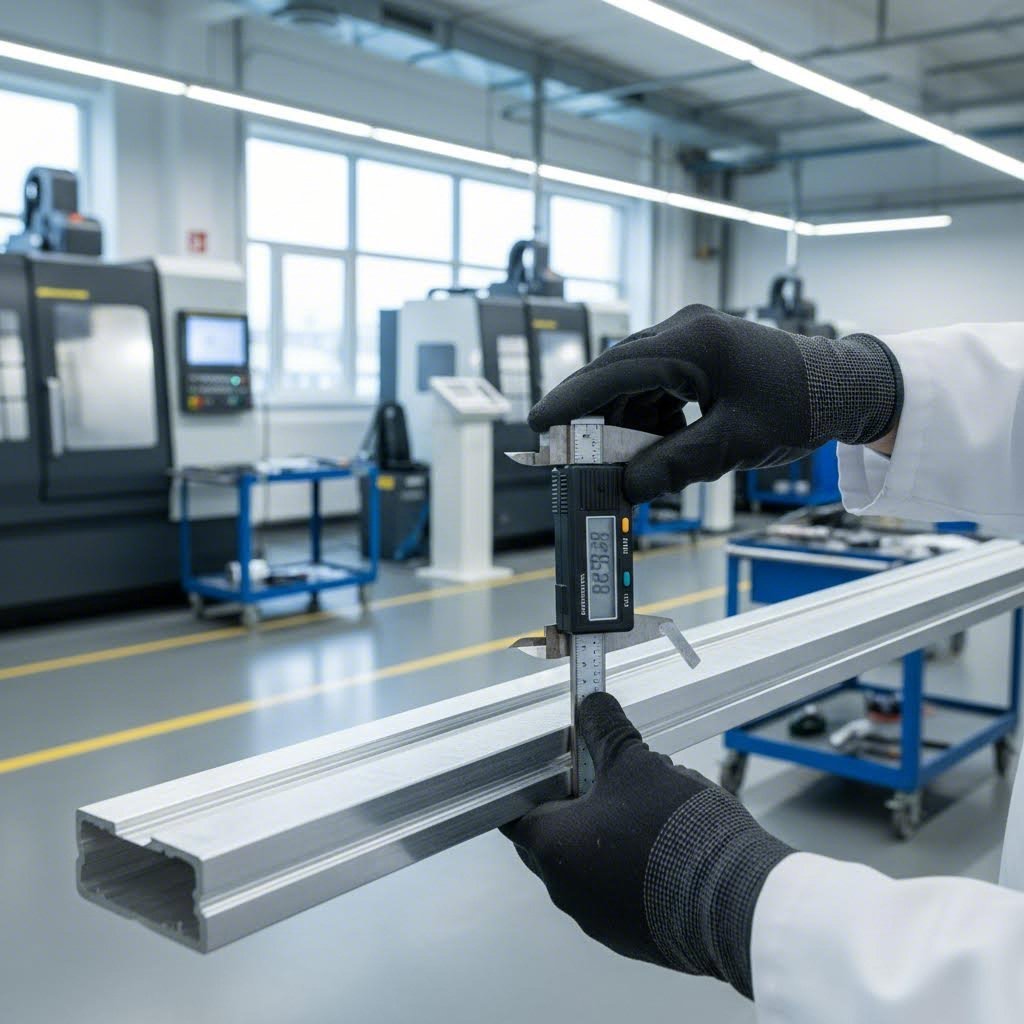
You've learned what turnkey manufacturing involves, understood the cost dynamics, and set realistic timeline expectations. Now comes the critical decision: which manufacturer deserves your partnership? Choosing the right profile aluminum extrusion partner isn't about finding the lowest quote—it's about identifying a manufacturer whose capabilities, experience, and communication approach align with your specific project requirements.
Think of this selection process as building a long-term relationship rather than completing a transaction. Industry experts emphasize that "the manufacturer's capability, expertise, and practice are crucial in delivering high-quality extruded profiles, regardless of the complexity of a particular industry or custom-designed components." The manufacturer you choose today will likely influence project success for years to come.
Before requesting quotes, prepare a focused list of questions that reveal genuine capability rather than marketing polish. The right questions expose whether a manufacturer can actually deliver aluminum extrusion custom solutions matching your specifications—or whether they're overpromising to win your business.
Start with experience verification. How many years has the company operated in aluminum extrusion? Do they have documented experience serving your specific industry? As sourcing specialists recommend, "Search for companies that have been in this industry for several years and have a proven track record of delivering high-quality extruded products." A manufacturer familiar with your application requirements will anticipate challenges that newcomers might miss.
Probe their service scope. Do they perform secondary operations like CNC machining in-house, or outsource to third parties? What surface treatment options do they offer directly? Extrusion professionals suggest asking: "Do you perform secondary work like cutting to length or CNC machining?" and "Do you offer coatings like anodized or powder coat paint?" The answers reveal whether you're getting true turnkey capability or coordinated subcontracting.
Clarify order flexibility. What minimum order quantities apply? Can they accommodate prototype runs alongside production volumes? Some manufacturers require 5,000-pound minimums, while others accept smaller orders for machined aluminum extrusion projects. Understanding these thresholds prevents wasted time pursuing mismatched partnerships.
Investigate quality systems. Supplier evaluation guidelines recommend inquiring about "quality control processes and standards" and checking for "ISO certified or other relevant industry certifications." Request specific information about inspection methods, testing capabilities, and traceability systems.
Questions provide initial insight, but capability verification requires deeper investigation. A manufacturer might claim comprehensive capabilities while actually outsourcing critical operations. Here's how to distinguish genuine turnkey partners from assembled supply chains.
Press range determines profile possibilities. The variety of extrusion presses a manufacturer operates directly impacts what aluminum profile systems they can produce. Smaller presses (600-1500 tons) handle simple shapes and alu extrusion profile designs efficiently, while larger presses (3000+ tons) tackle wide profiles, complex multi-void hollows, and harder alloys requiring tremendous force.
For example, Shengxin Aluminium operates 35 extrusion presses ranging from 600T to 5500T—demonstrating the kind of equipment diversity that enables handling virtually any project requirement. This range means they can match your specific profile to optimal equipment rather than forcing compromises based on limited press options.
Machining capabilities matter equally. State-of-the-art CNC machining centers enable precise cutting, drilling, and bending operations that transform basic extrusion profiles into finished components. Evaluation specialists note that buyers should "ensure they have adequate equipment and resources to meet your production volume and delivery schedule." Ask about specific machine types, tolerance capabilities, and capacity constraints.
Surface treatment depth reveals integration level. Comprehensive manufacturers offer multiple finishing options under their direct control. Look for partners providing anodizing (including custom colors like champagne and rose gold), powder coating, PVDF for architectural applications, and advanced treatments like micro-arc oxidation for demanding environments. With over 30 years of industry experience, manufacturers like Shengxin Aluminium exemplify this breadth—offering the full spectrum of surface treatments alongside cnc aluminium extrusion capabilities.
Use this ordered checklist when assessing potential turnkey manufacturing partners. Work through each criterion systematically—skipping steps often leads to partnership regret later:
Beyond the checklist, watch for signals that indicate partner quality—both positive and concerning.
Green lights indicating strong partners:
Red flags suggesting caution:
Supply chain specialists conclude that "by thoroughly evaluating potential aluminium extrusion suppliers based on these criteria, you can select a reliable partner who can meet your technical requirements, ensure product quality, and support your business growth." The investment in proper evaluation pays dividends throughout your partnership.
For buyers seeking comprehensive turnkey capability—from die development through finished extrusion profiles with complete surface treatment options—manufacturers demonstrating decades of experience, diverse equipment ranges, and genuine in-house integration deserve priority consideration. Whether your project involves architectural systems, industrial automation components, or specialty applications, the right partner transforms complex requirements into delivered solutions.
Ready to explore what true end-to-end aluminum processing looks like? Discover Shengxin Aluminium's complete processing capabilities as a reference point for evaluating turnkey manufacturing partnerships—and see how integrated die development, precision machining, and comprehensive finishing services come together under one roof.
Turnkey aluminum extrusion manufacturing means one provider handles your entire project from initial design consultation through final delivery. This includes die engineering, extrusion production, CNC machining, surface finishing, assembly, and quality control—all under one roof. Unlike traditional fragmented manufacturing where you coordinate multiple vendors, a turnkey partner manages every step, eliminating handoff delays, reducing communication gaps, and ensuring consistent quality throughout production.
Custom aluminum extrusion timelines typically range from 2-6 months depending on project complexity. Die development requires 2-4 weeks, production scheduling adds variable time based on manufacturer workload, and secondary operations plus finishing extend timelines further. Simple designs with small quantities may ship in 2-4 weeks after die approval, while complex profiles requiring multiple operations can take several months. Turnkey manufacturers often compress these timelines by 1-3 weeks compared to multi-vendor approaches.
Comprehensive turnkey manufacturers offer multiple surface treatment options including anodizing (clear and custom colors like bronze, black, gold), powder coating for vibrant colors and UV resistance, PVDF coatings meeting AAMA 2605 standards for 20+ year exterior performance, and micro-arc oxidation for ceramic-hard surfaces. Each finish serves different applications—anodizing for high-traffic architectural uses, powder coating for color-critical projects, and PVDF for curtain walls and exterior panels requiring exceptional durability.
Die design accounts for approximately 85% of overall die quality and determines project success. The die shapes heated aluminum into your exact cross-sectional profile, so every dimension originates from this precision-machined steel tool. Experienced manufacturers use Finite Element Analysis to optimize material flow, calculate bearing lengths for uniform exit speeds, and prevent defects like warping. Poor die engineering leads to quality issues, dimensional inconsistencies, and costly corrections throughout production.
Turnkey manufacturing eliminates hidden costs that erode savings from fragmented supply chains. These include shipping between facilities (2-5 days per transfer), quality inconsistencies requiring rework, communication overhead managing multiple vendors, extended timelines with compounding delays, and complex inventory management. Factory-direct relationships eliminate intermediary markups, duplicated inspections, and coordination overhead—often delivering 15-25% total cost savings when accounting for true total cost of ownership.



 Servicio en línea
 0086 136 3563 2360
 sales@sxalu.com
 +86 136 3563 2360
 español
 English
 français
 Deutsch
 русский
 português
 العربية
 ไทย
ไทย Việt
Việt Українська