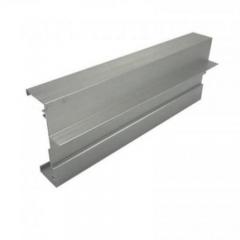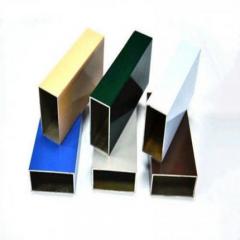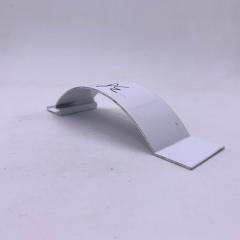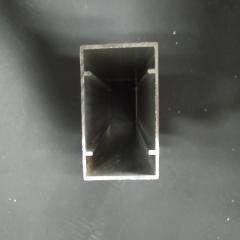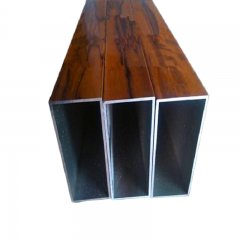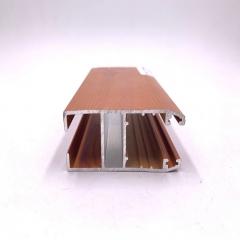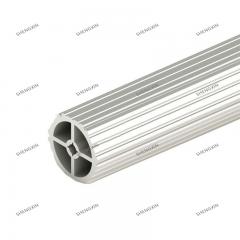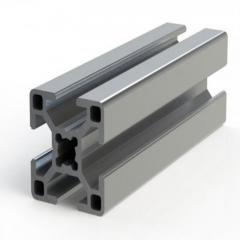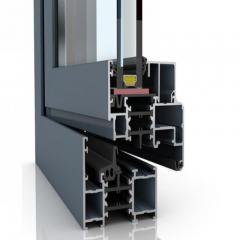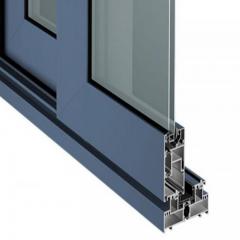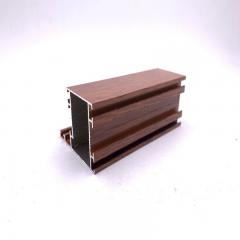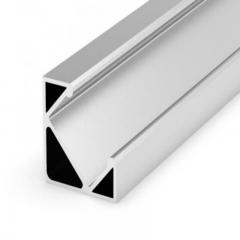
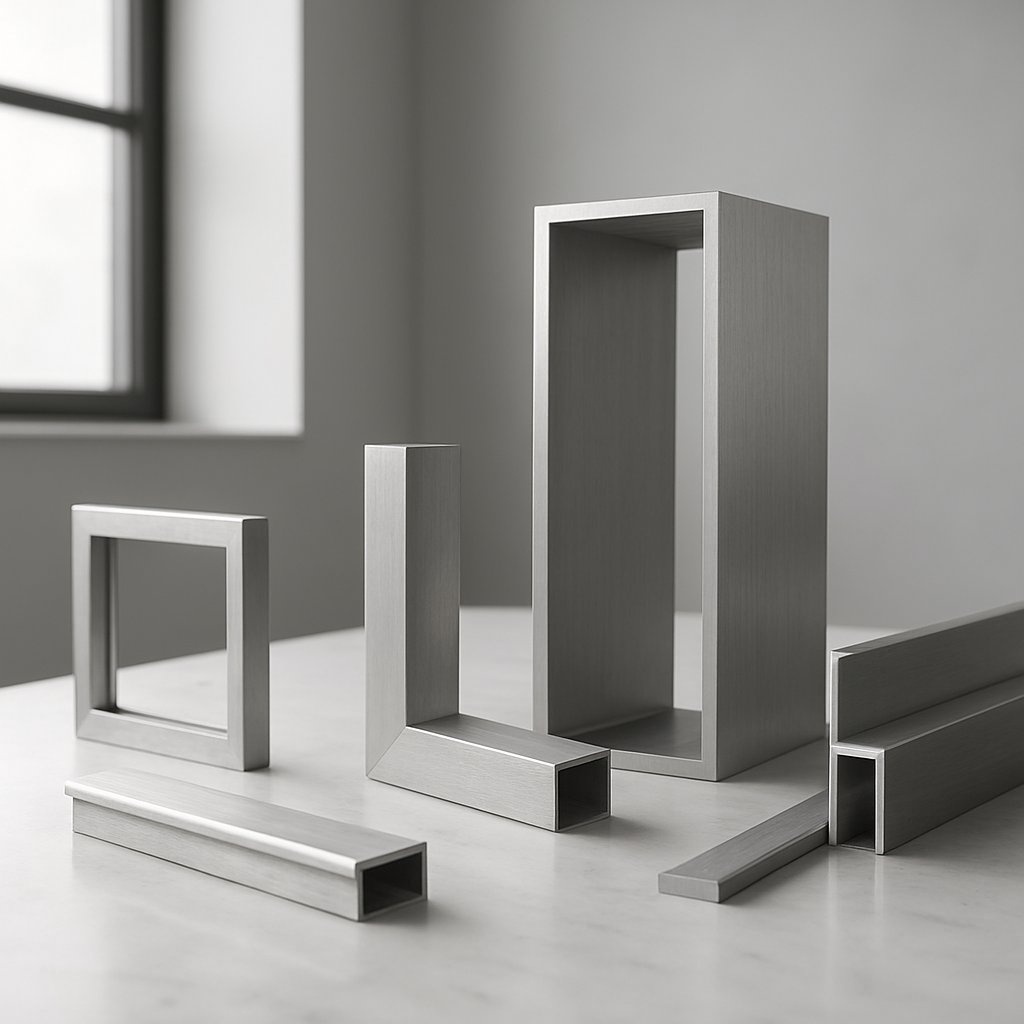
An aluminium frame profile is a shaped aluminum section made to form the outer edge or supporting boundary of a frame. In plain English, it is the piece that creates the perimeter, holds infill such as glass or panels, and often provides places for hardware, seals, or connectors. That is narrower than a general aluminium profile, which can also mean channels, tubes, angles, trim pieces, or other non-framing shapes found across many supplier catalogs.
An aluminium frame profile is a framing part first, while a general aluminum profile is any shaped aluminum section.
If you have searched what is aluminum profile, the answers can feel too broad. A frame profile is easier to picture. It is the member used to build a window surround, a partition edge, a cabinet door frame, or a picture frame. In window systems, window profiles are described as extruded sections that create the outer and inner framework, support glazing, and allow hardware integration. The same logic applies in many other assemblies, even when the shape changes.
A general aluminum profile can be almost any shaped extrusion. In real catalogs, that may include angle, square tube, trim, rail, LED housing, or heat sink products. A frame profile is only one branch within that bigger family of aluminum profiles. So when a listing says aluminum profile or even profile aluminum, you still need to ask one basic question: is this shape meant to form a frame, or just serve another function?
Some systems rely on modular grooves and fastening points so parts can be joined without welding. The item building kit system explains this through grooves, bore diameters, and compatible fasteners, while aluminum framing guidance highlights the same idea of quick assembly and reconfiguration. In practice, profiles become frames when members, connectors, panels, and fittings are designed to work together. That sounds simple, but catalog language often blurs the lines, which is why sorting the profile families matters next.
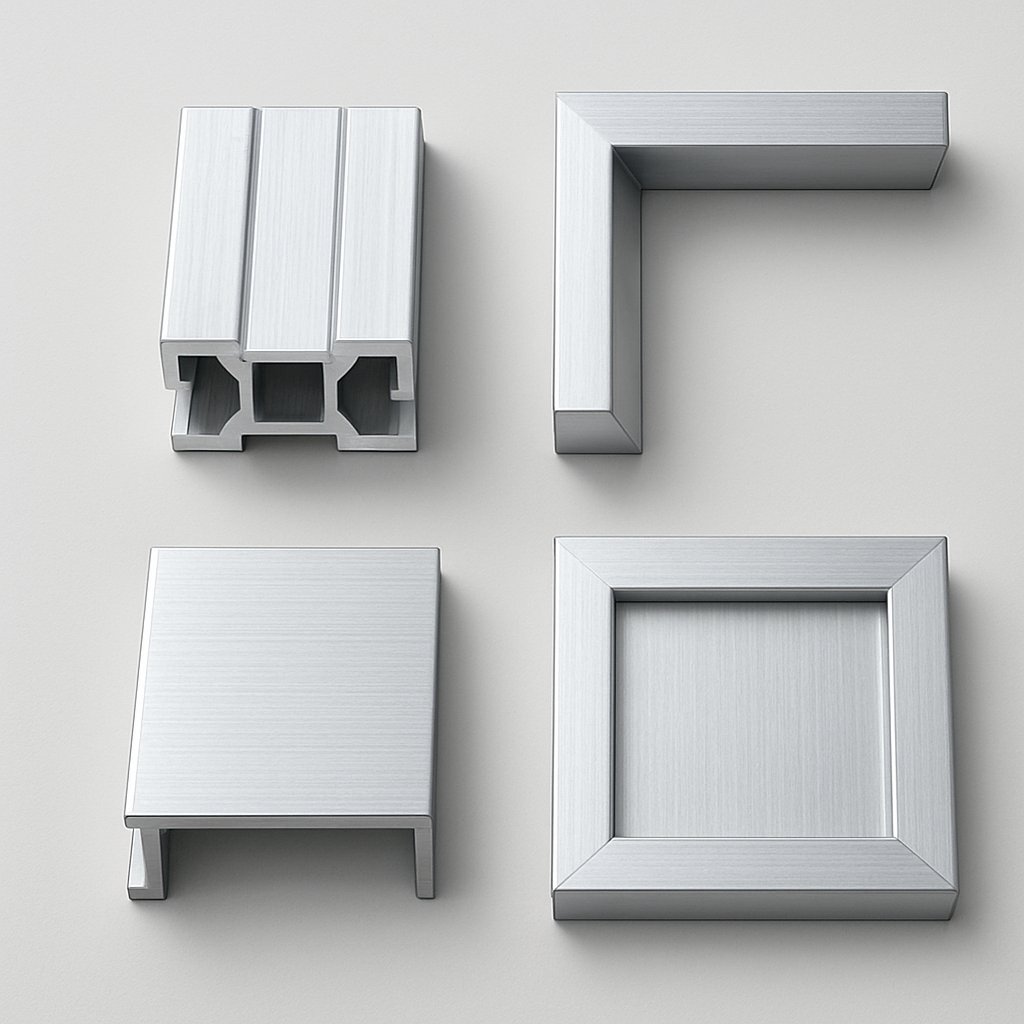
That broad definition gets messy the moment you open a supplier catalog. Similar shapes may sit under very different labels, and the label usually reflects intended use more than appearance alone. For specifiers, this is where a simple aluminium frame profile turns into a taxonomy problem. Understanding the main families makes it much easier to decode any aluminum profile type listing and compare aluminum profile systems without guessing.
A practical way to sort the market is by system logic rather than by shape alone. In broad terms, most catalog families fall into five groups:
| Profile family | Main purpose | Common joining method | Customization level | Typical application |
|---|---|---|---|---|
| Modular slot profiles | Build adjustable frames and structures | Groove-based fasteners, brackets, end-face fixing | Medium to high within a standard system | Workstations, guards, partitions, machine frames |
| Custom fitted frame profiles | Match a specific assembly or hardware set | System-specific joints and fabrication | High | Integrated cabinets, glazed frames, architectural details |
| Interior trim and fitting profiles | Finish edges, receive panels, tidy transitions | Clip-in, slide-in, adhesive, or light mechanical fixing | Medium | Cabinet fronts, panel surrounds, interior fit-outs |
| Window and door frame profiles | Form fixed frames and moving sash-related parts | Mitered corners, hardware-linked assembly, glazing elements | High | Windows, doors, sliding and folding systems |
| Picture frame profiles | Create a visible perimeter around artwork or display infill | Mitered corners and small corner connectors | Low to medium | Picture frames, poster frames, display edges |
Modular families are the easiest to recognize because the system is built around grooves, bore sizes, and compatible accessories. The item overview shows how these standard aluminum profiles are organized into lines with defined modular dimensions, groove dimensions, and bore diameters. That structure makes them flexible, repeatable, and easy to expand.
Custom fitted profiles work differently. Their value is not universal adjustability but clean integration with a defined product. In window and door assemblies, for example, the fixed frame and the movable part are distinct but complementary elements, as outlined in the window profile guide. That is why many aluminum extrusion types look similar in section view yet belong to completely different systems.
The biggest source of confusion is overlap in shape. A channel might appear in a glazing system, an interior fitting, or a display frame. A slim visible edge might suit a picture frame, while a deeper section may need to carry hardware, seals, or opening functions in a window. Supplier language often mixes form words with system words, so a profile should be read by role first: structural frame, fitting receiver, or visual border.
That small shift changes how you compare catalogs. Names tell you what family you are looking at. Manufacturing details, however, decide how consistent that family will be once it is extruded, finished, machined, and assembled.
Catalog labels only tell part of the story. What really shapes an aluminium frame profile is the way the section is extruded, cooled, straightened, and finished. That is why two similar-looking extrusion profiles can behave very differently in fabrication, especially when appearance, machining, and fit all matter.
In simple terms, aluminum profile extrusion pushes a heated billet through a die so the metal takes on one continuous cross-section. A detailed 6063 guide notes that 6063 billet is commonly heated to about 400-500°C before being forced through the die, then cut, cooled, straightened, and heat treated. That helps explain why aluminum extrusion profiles are so consistent in shape, yet still sensitive to design choices.
For frame work, 6063 is often treated as the default architectural alloy because it offers excellent extrudability, good corrosion resistance, and a surface quality that suits visible parts. In real production, wall thickness matters a lot. Very uneven walls can affect metal flow, while smoother transitions and radiused corners tend to support better surface quality and more predictable extruded aluminum profiles. The same manufacturing logic applies whether buyers search for aluminum profiles extrusion, extruded aluminium profiles, or simply ask a supplier to aluminum extrude a custom section.
A practical finish comparison highlights an important distinction. Anodizing changes the surface of the metal itself, while powder coating adds a separate protective layer. For visible frames, that difference affects appearance, wear behavior, and maintenance expectations.
| Finish | Appearance | Maintenance implication | Typical use environment |
|---|---|---|---|
| Mill finish | Industrial, unfinished look | Surface marks show more easily | Hidden parts or secondary fabrication |
| Anodized | Metallic, clean, more transparent to substrate quality | Good wear resistance, substrate prep matters | Architectural and decorative visible surfaces |
| Powder coated | Opaque color layer, broad palette | Can mask minor die lines, prep still matters | Interior and exterior framed systems |
When reviewing drawings for aluminum profiles extrusion, look past the outline alone. DFM guidance for extrusion profiles recommends checking wall uniformity, internal radii, critical surfaces, and tolerance notes against standards such as ASTM B221 and EN 755. It also helps to dimension to real metal faces, not just theoretical centerlines, because that is how the part will be measured and machined later.
Manufacturing quality sets the baseline, but selection does not stop there. A clean finish and accurate section can still be the wrong choice if span, load path, or deflection are working against the frame.
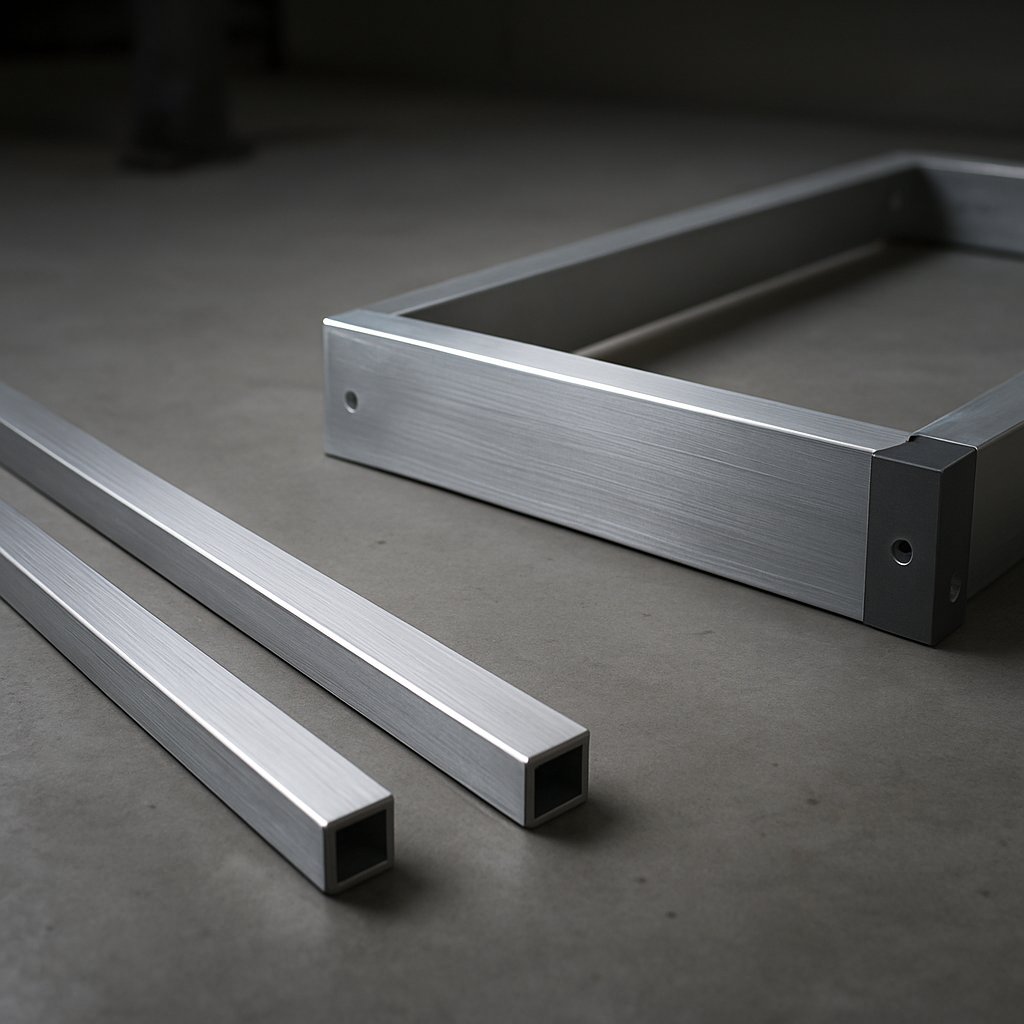
A clean finish still will not rescue a weak frame. In real projects, the bigger mistake is judging a section by its face size alone. In a profile extrusion aluminium catalog, two members can look nearly identical at first glance but behave very differently once span, support spacing, and fixing conditions are set. What counts is how the load travels through the frame, where it lands, and how much movement the assembly can tolerate.
Lighter profiles suit compact frames, slim sightlines, and jobs where easier handling matters. Heavier or deeper sections make more sense when the frame must carry glass, panels, shelves, or hardware over a longer distance. The sizing guide lays out the basic rule clearly: longer spans and higher loads usually call for larger cross-sections, reinforced geometries, or added bracing to control deflection. It also groups common extruded aluminum sizes into practical families, from 20x20 for light fixtures to 40x40 and 40x80 for more demanding builds.
Wall thickness matters, but buyers often give it too much credit for overall stiffness. For global bending, section depth usually does more work than simply adding material. Thickness becomes especially important around screws, brackets, hinges, and anchor points, where local crushing or joint looseness can start.
Span is the clear distance between supports. Deflection is the amount a member bends under load. A profile may be strong enough not to fail, yet still move enough to cause panel rattle, poor door alignment, glass stress, or a frame that feels soft in use. That is why deflection sensitivity matters so much. The same Motedis reference uses L/200 as a general rule of thumb for everyday frames and L/300 to L/500 for more precise assemblies.
Orientation is another common blind spot. The MAP guide notes that a 40x80 profile oriented vertically can be about 3.7 times stiffer than the same section laid flat. That helps explain why some aluminum extruded profiles outperform others without changing alloy or finish. It also shows why load path matters. A frame carrying heavy infill at the middle behaves differently from one supported near every corner, and off-center hardware can shift force into a few members instead of the whole structure.
| Selection factor | What usually helps | Accessory compatibility focus | Likely fabrication complexity |
|---|---|---|---|
| Stiffness priority | Deeper or rectangular section, oriented with the tall side resisting bend | Check bracket and connector capacity | Medium |
| Visual slimness | Smaller face dimension or light variant | Confirm infill, seals, and hardware still fit | Medium to high |
| Heavy infill or hinge loads | Larger family or thicker walls near fixing points | Hinges, anchors, and corner joints become critical | High |
| Modular flexibility | Standard slot-based profile family | Keep slot series consistent across the build | Low to medium |
When similar aluminium sections appear in the same catalog, compare them in four passes: depth, wall proportion, orientation in service, and support pattern. Square sections offer balanced behavior in both axes. Rectangular ones can be much more efficient if the deeper face is aligned with the bending direction. A lighter member may still work if you shorten the span with posts or bracing. A larger family is often safer when infill weight, attachment points, or limited fixing conditions are already locked in. That is the real value of reading profile extrusion aluminium data as a system, not just a sketch. Very quickly, the question stops being only which section looks strong enough and becomes which one can also accept the right connectors, fasteners, and corner details.
A profile can look perfect in a catalog and still become a poor frame if the jointing method is wrong. In real fabrication, the section and the hardware have to be planned together. With an extruded aluminum t slot or other t slot extrusion, the slot is not just a groove. It is the attachment interface that receives fasteners, brackets, and accessories. Custom fitted sections work differently. They usually give up some adjustment freedom in favor of cleaner sightlines, tighter glazing details, or closer integration with doors and architectural hardware.
Modular systems are built around the idea that parts can be fixed anywhere along the slot. A T-slot profile uses T-shaped channels that accept specialized nuts, bolts, and accessories, which is why later adjustment is often much easier than with fixed welded framing. Corner brackets and joining plates help with alignment and stiffness. Internal connectors create a cleaner look, but they may need access holes or end machining. That is why a t slot channel, a t slot aluminum channel, or even a search term like t channel aluminum should never be judged by shape alone. The real question is how each joint will be assembled, tightened, and serviced. In many t slotted aluminum builds, that connection logic is the whole advantage.
Custom fitted profiles ask different questions. Instead of open-ended adjustability, they often depend on corner connectors, glazing beads, sealing gaskets, hinges, handles, and lock-related hardware that match one profile geometry closely. If glass, doors, or sliding parts are involved, hardware fit can matter just as much as the profile itself.
A simple workflow can prevent expensive rework:
Many errors start when buyers focus on the main profile and ignore the accessory ecosystem. A quick accessory checklist helps catch the usual blind spots:
Those checks do more than protect the cut list. They also reveal where each profile family actually belongs. A machine guard, a sliding partition, and a cabinet frame may all use aluminum, but the right answer changes with the hardware ecosystem around the frame.
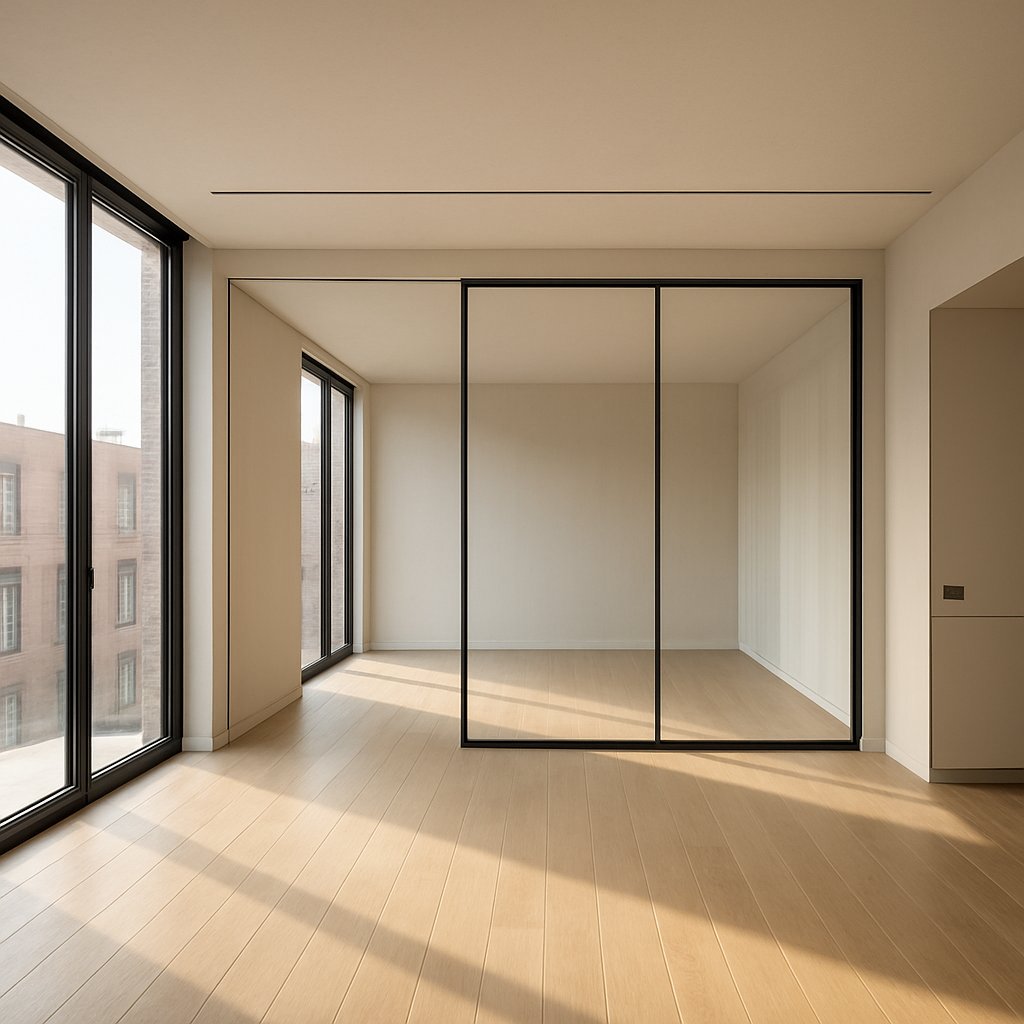
The jointing method usually reveals where a profile really belongs. In practice, the right aluminium frame system is chosen by application first: window opening, interior divider, sliding panel, cabinet door, wardrobe frame, or display edge. That is why aluminium window frame extrusions, trim sections, and slot-based members should not be treated as interchangeable, even when two catalog drawings look similar at a glance.
Across architecture and interiors, these sections tend to fall into a few clear use patterns. Window and door assemblies use coordinated profiles that work with glazing, seals, and dedicated hardware. Partitions and utility frames often favor easier adjustment. Cabinets, wardrobes, and glass-framed doors sit between those two extremes, because appearance matters, but so do channels, rollers, and handle compatibility. Picture-style frames are usually the simplest, with more focus on the visible edge than on a large hardware ecosystem.
| System family | System direction | Design freedom | Finish flexibility | Accessory integration | Best fit |
|---|---|---|---|---|---|
| Custom architectural window profiles, example: Shengxin Aluminum | Purpose-built for doors, windows, and glazed architectural openings | High, because geometry is tailored to the assembly | High, with cataloged processing such as anodizing, powder coating, wood grain, and CNC | High, with related window and door hardware listed alongside profiles | Exterior windows, sliding or folding systems, high-end glazed interiors |
| Modular slot profiles | Flexible, reusable framing logic | High within a standard profile family | Usually broad, but driven by standard system availability | Strong for brackets, connectors, and adjustable add-ons | Partitions, support frames, utility enclosures, adaptable interior structures |
| Interior trim and cabinet profiles | Visual finishing and panel holding | Medium | Important for visible surfaces | Moderate, often centered on panels, edge details, and simple fittings | Cabinets, wardrobes, furniture fronts, clean interior transitions |
| Sliding and track-led profiles | Movement-led framing | Medium to high | Important where rails or tracks stay visible | High for rollers, guides, and track-matched hardware | Wardrobes, sliders, light partitions, guided panels |
| Picture and display frame profiles | Perimeter framing with light-duty joining | Low to medium | Often a major selection factor | Lower, usually limited to corners and backing retention | Picture frames, posters, display edging |
A modular aluminium frame is often the practical choice when the layout may change, when site adjustment matters, or when add-on accessories are expected later. Shengxin's product structure includes industrial profiles and T-slot profiles, which points to a slot-based system logic rather than a fixed architectural one. In these settings, slotted aluminum is a good fit for partitions, support frames, and adaptable interior structures. It can also suit assemblies that rely on extruded aluminium rails or an extruded aluminium track for guided sliding elements.
Custom aluminium profiles become the better route when sightlines, finish quality, glazing details, and hardware all need to work as one coordinated package. That is the typical situation for exterior windows, sliding openings, folding assemblies, and refined glass-heavy interiors. The same thinking applies to wardrobes and cabinet fronts when dedicated sliding members or extruded aluminum trim profiles are needed for a cleaner, more integrated look than a generic slot system can deliver.
As a supplier example, Shengxin presents its architectural window range as a one-stop offer and says it brings 30 years of manufacturing experience plus 60,000 tons of annual production capacity to custom work. More importantly for specifiers, its catalog places window frame profiles near processing options and door-and-window hardware, which is a useful signal that custom architectural framing usually needs manufacturer support from the beginning, not just a cut length from stock.
That difference starts shaping the buying process very quickly. A modular partition, a wardrobe slider, and a custom window frame may all be aluminum, but the drawings, finish notes, hardware checks, and supplier questions should never be the same.
A window section, cabinet rail, or modular member can all look convincing in a brochure. Trouble starts when the image is treated as the specification. If an aluminium frame profile is being shortlisted from an aluminum profile catalog, ask for the technical drawing first, then verify alloy, temper, finish, and tolerance notes before price becomes the main filter.
Good procurement questions are not complicated, but they do need to be precise:
Unclear drawings usually turn into expensive fit problems later, especially when machining, finishing, and hardware all depend on the same profile.
An aluminum extrusion profile catalog is useful for screening options, not approving them. Treat photos as visual aids. Treat datasheets as decision tools. In any serious aluminum extrusion catalog, look for the cross-section, dimensions, tolerances, alloy and temper, surface finish, and notes about compatible accessories or referenced standards. If a page bundles many aluminum extrusion profiles products into one image grid without drawings, you still do not have enough information to compare options properly. The same caution applies when reviewing offers from aluminium profile suppliers.
The biggest blind spots usually hide in the fine print: tolerance class, cosmetic face definition, finish impact on size, fabrication limits, and hardware fit. For architectural or visible interior work, also ask whether the datasheet references compliance standards or quality records such as ASTM or AAMA-related documentation. That extra discipline turns an aluminum profile catalog into a real specification source, and it makes sample review far more useful when supplier choices start narrowing.
By the time samples are on the table, the job has changed. You are no longer asking which section looks promising. You are deciding which aluminium frame profile can survive real use, fit the hardware, hold the finish, and arrive with the right support behind it. The safest way to get there is to turn scattered research into a repeatable specification path.
The PTSMAKE guide puts application needs first, then points buyers toward load requirements, environment, connection method, and finish. Shengxin's extrusion guide reinforces the same logic by separating standard sections, custom aluminum profiles, T-slot options, and building uses.
Clean sightlines are only one part of the brief. The Sinoextrud reference shows why thermally broken, sliding, casement, and tilt-and-turn profiles are chosen for different performance goals. The same source also highlights finish and compliance checks such as ISO 9001, ASTM B221, CE, and AAMA 2604 or 2605. In other words, a slim-looking aluminium profile system still has to meet the real demands of weather, coating durability, and fabrication.
If your brief has clearly landed on custom architectural window framing, supplier depth starts to matter as much as the section sketch. One relevant resource is Shengxin Aluminum, especially for readers who need a window-focused supplier view rather than generic stock shapes.
That sequence keeps design intent grounded in manufacturing reality, and it gives competing profile systems a fair, practical test before final sourcing.
An aluminium frame profile is a profile designed specifically to build a frame edge or perimeter. It is meant to hold infill, receive hardware, or connect with other frame parts. A general aluminum profile is a broader term that can include angles, tubes, channels, rails, trims, and many shapes that are not used as frame members. The easiest way to tell the difference is to ask what job the shape is built to do in the final assembly.
Choose a modular T-slot profile when adjustability, add-ons, and future changes matter most. It is usually the better fit for partitions, support frames, utility enclosures, and projects that may need on-site revision. Choose a custom fitted frame profile when appearance, glazing details, seals, and hardware integration matter more than flexibility. That route is more common for window systems, sliding assemblies, refined cabinet fronts, and other architectural applications where the profile needs to work as part of a coordinated system.
For visible framing, 6063 is widely associated with architectural extrusion because it is known for good surface appearance and dependable extrusion behavior. Finish selection then shapes the final look and maintenance profile. Mill finish is typically used where appearance is secondary or more processing will follow. Anodizing keeps a metallic appearance and highlights the base surface more clearly. Powder coating adds a color layer and is often chosen when design flexibility or a more uniform visual finish is important.
Ask for the profile drawing first, then confirm alloy, temper, finish, and tolerance notes. After that, check whether the supplier can handle cutting, drilling, tapping, mitering, or other fabrication steps in-house. You should also verify accessory fit, especially if the frame needs hinges, locks, glazing parts, brackets, tracks, or seals. Finally, ask about sampling, minimum order terms, packaging, and lead times. A catalog image may help you shortlist options, but it is not enough to approve a profile for real specification work.
It makes sense when your project needs more than a stock section, especially for high-end windows, sliding openings, or coordinated glazed systems. In those cases, finish control, hardware matching, fabrication support, and drawing clarity become just as important as the shape itself. A supplier example mentioned in the article is Shengxin Aluminum, which positions itself as a one-stop resource for custom architectural window frame profiles. That kind of manufacturer is most useful when you need dedicated window system support rather than a simple cut length from standard inventory.



 Servicio en línea
 0086 136 3563 2360
 sales@sxalu.com
 +86 136 3563 2360
 español
 English
 français
 Deutsch
 русский
 português
 العربية
 ไทย
ไทย Việt
Việt Українська