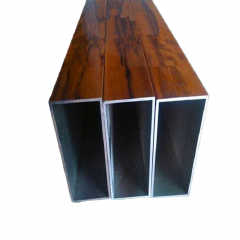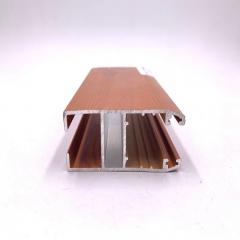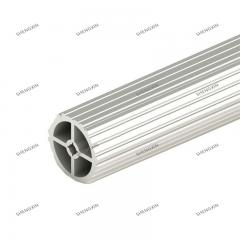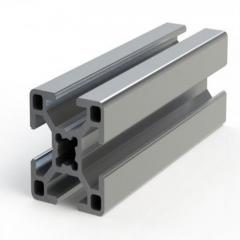
When you weigh custom aluminum extrusion vs standard profiles, it can look like a simple either-or choice. You buy a shape off the shelf, or you pay for your own die. Most aluminum extrusion projects start with a catalog shape, and many never need anything else. Problems tend to appear later, when the part reaches assembly and a section that looked right on the drawing stops behaving the way you expected.
A design guide from RapidDirect describes three failures that anyone who has built with aluminum extrusion profiles will probably recognize:
RapidDirect traces all three to the same cause: a cross-section chosen from a catalog instead of engineered for the job. That sounds like an argument for going custom every time. In practice, some of these failures can be fixed without new tooling, and a few of them come from picking the wrong standard shape in the first place.
Imagine the decision as three base routes:
The middle route gets the least attention, even though many buyers end up there. When a stock shape needs only light machining, a new die becomes much harder to justify.
This article ranks six sourcing routes built from those three. Some of them are the base routes on their own. The others combine them: using a die an extruder already holds, building with modular T-slot framing, or starting on stock and moving to a custom die later.
Most of the pages that rank for this topic are written by suppliers, sourcing agents, or a trade association. Many of those authors sell extrusion services or sourcing, and their pages tend to favor what they offer. This guide will say plainly when standard profiles are the better choice. A fair ranking needs every route measured against the same criteria, and the die price by itself tells you very little about which route costs less.
Each route in this list is judged on the same six criteria. A quote that looks cheap on one line can get expensive on another. You'll also notice that the die price is only one entry on the list.
Most cost arguments about custom tooling reduce to one test: does the die save enough on each part to pay for itself?
Break-even quantity = Die cost / (Per-part cost of standard stock plus machining or joining - Per-part cost of the custom extrusion)
For the die cost, here is one published reference point. Profile Precision Extrusions, which specializes in miniature extrusions, lists its dies at roughly $1,200 to $2,500. That figure comes from one supplier and applies to small profiles. The same source says dies for large structural shapes can cost much more at other mills, so get a die quote for your own cross-section.
The bottom half of the formula has to come from your own quotes. Price the stock profile with every cut, hole, and joint it needs. Then price the custom extrusion with whatever machining or finishing it still requires. If the difference is zero or negative, a custom die never pays back on unit cost alone. The die might still be worth it for consolidation, weight, or tolerance, but you have to make that case on those grounds.
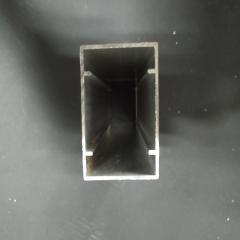
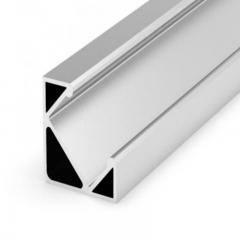
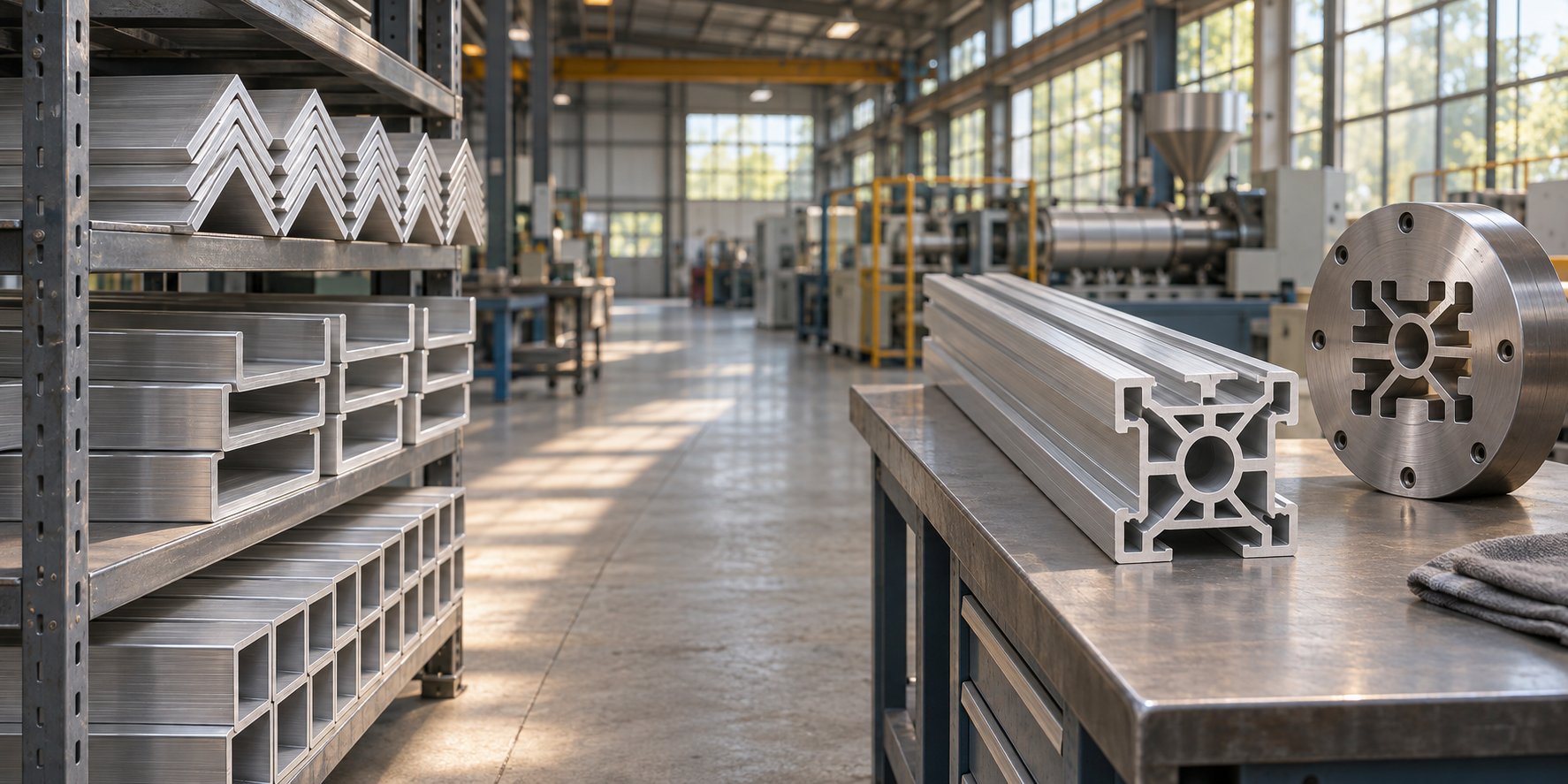
This article sorts extruded profiles into three classes defined in the Aluminum Extruders Council glossary. A solid profile has no enclosed void. A hollow profile fully encloses one or more voids. A semi-hollow profile partly encloses a void. For catalog aluminum shapes, the Aluminum Association publishes standard shape designations, such as its standard channels and I-beams. Because standard aluminum extrusion sizes are documented, you can check a shape against your drawing before you buy it.
Tolerances are documented the same way. The Aluminum Association tables cover both industry-standard and precision grades. The AEC adds that many extruders can hold tighter tolerances than the tables show when a design calls for it. The tables set the baseline for standard aluminum extrusion sizes, and anything tighter has to be negotiated with the extruder. Shape class also sets how hard a die is to build, and that difficulty shows up first in the full-service custom route.
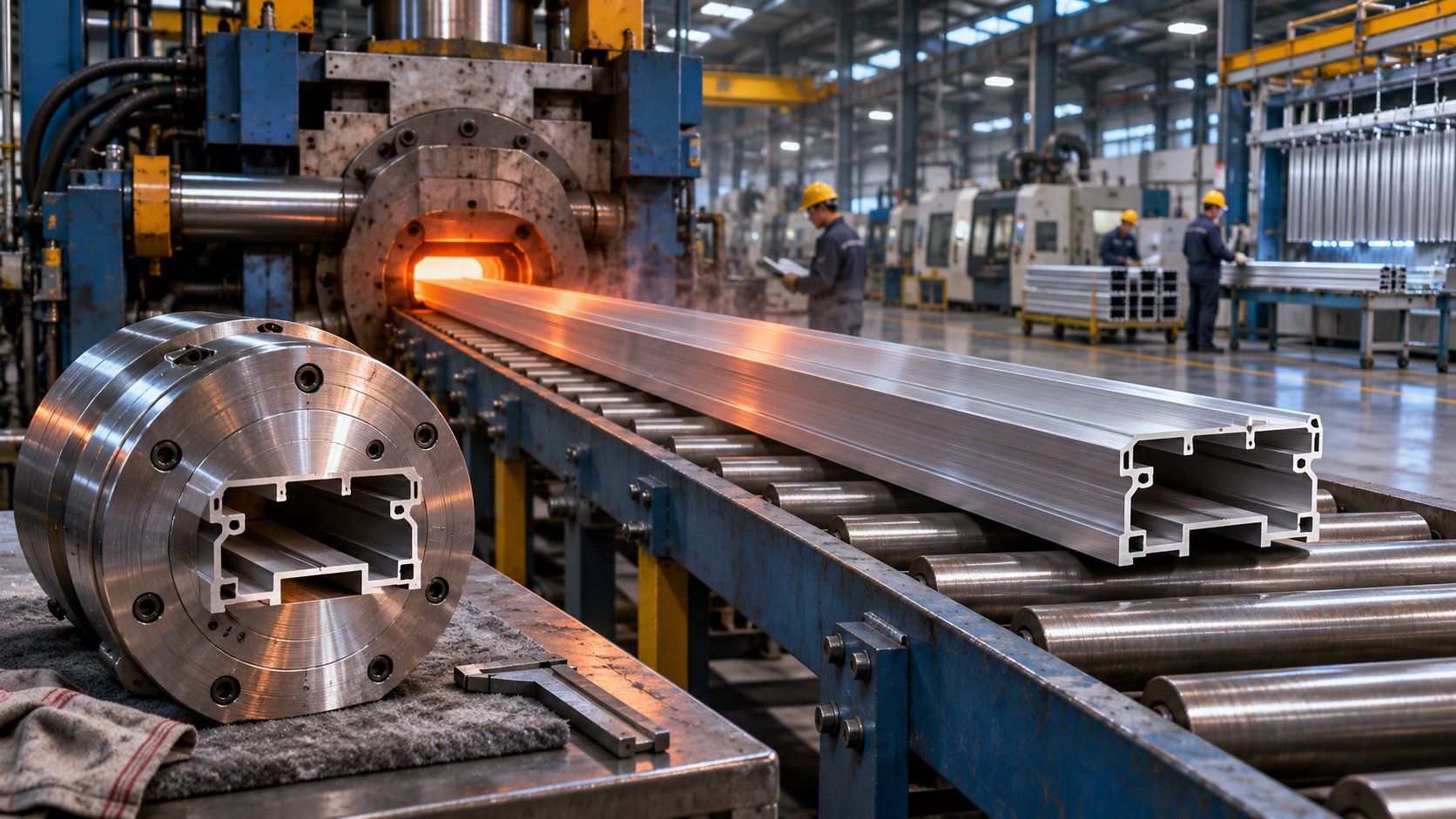
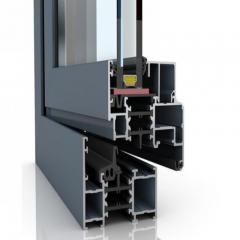
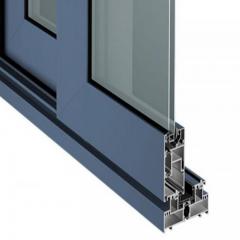
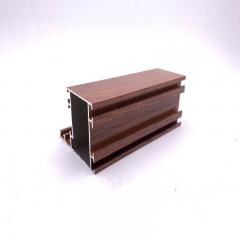
Route #1 is the one most supplier pages recommend first. It earns the top spot when your volume and design support it. A full-service custom profile extrusion gives you a cross-section built around your part, and the same supplier handles the work that comes after the press. It also asks you to commit more than any other route on this list.
In a full-service model, one supplier takes the part from drawing to finished component. The steps usually run in this order:
For timing, Profile Precision Extrusions gives one published reference point. It quotes about four weeks to build a die, then about two more weeks until samples ship. Those figures come from one supplier of miniature profiles. The same supplier notes that production lead time starts only after you approve samples, so the speed of your own sign-off affects the schedule.
Using the AEC classes from the previous section, the die gets harder to build as the void becomes more enclosed. A solid profile needs the simplest die. In a semi-hollow profile, the die has to support a nearly closed opening, and a narrow opening makes that part of the die fragile. A hollow profile needs a die that forms the internal void while metal flows around it, which brings bridge design and die strength limits into play. A design guide from Conglin says hollow and semi-hollow shapes need more complex die design and extrusion control than solid ones, and that this raises both tooling and production costs.
For that reason, one general die price tells you little about your own part. Ask for a quote on each shape class on your drawing. If a single feature turns a solid section into a hollow one, ask the extruder whether a small change to the geometry would keep it solid.
Some OEMs consider bringing aluminum extrusion manufacturing in-house. Buying a press, along with the furnaces, saws, and handling equipment it needs, is a capital decision. It only pays off when your volume keeps that line busy. When you outsource to an aluminum profile manufacturer, you get the full workflow without that investment, and the die is part of your project instead of equipment you have to run and maintain.
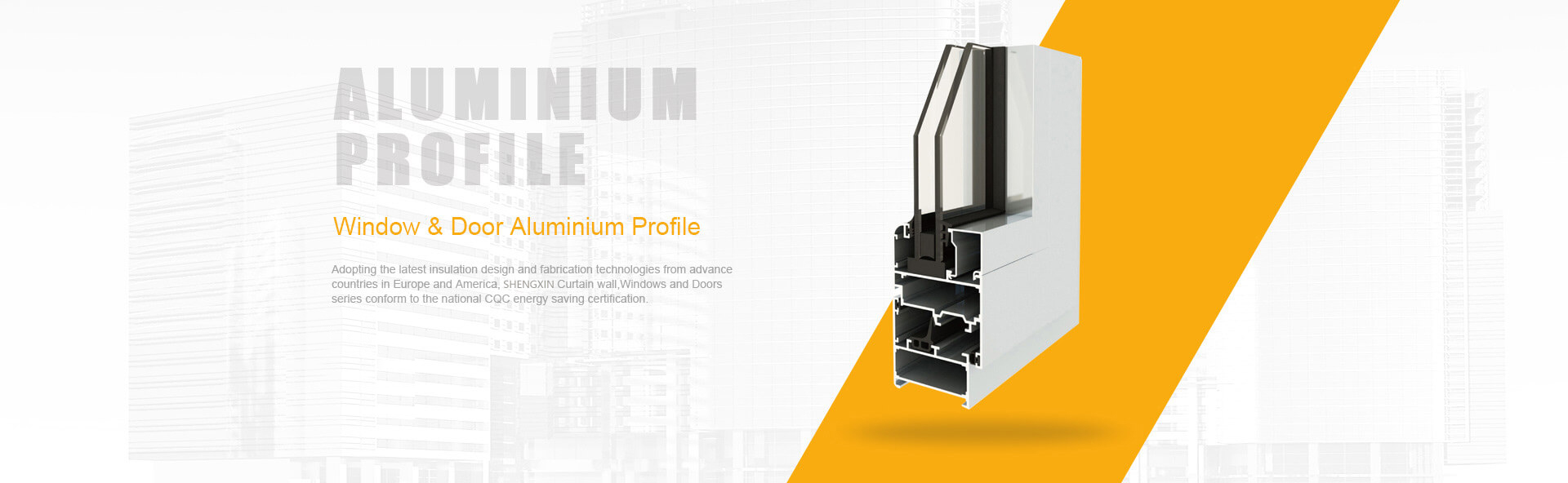
Shengxin Aluminium's custom aluminum extrusion services are one example of this full-service model. The company manufactures profiles for OEMs, product engineers, architectural fabricators, and procurement teams. Drawing review, alloy selection, die development, extrusion, machining, and finishing all happen in one workflow. Its common alloys are 6061, 6063, and 6005A. Finishes include anodizing and powder coating, among others, and material certificates and inspection reports are available on request. Read the limits as carefully as you would for any supplier. The stated tolerance of plus or minus 0.05 mm applies only to selected profiles and depends on geometry, alloy, and wall thickness. Minimum order quantity and the availability of specialty hard alloys are decided in project review. For enclosure work, the profile design, machining, and assembly scope have to be confirmed first.
Custom aluminum extrusions usually fit these applications:
Each con on that list commits money, time, or design freedom. If your volume is low or the drawing is still changing, a shape someone else has already paid to tool may be the better buy.
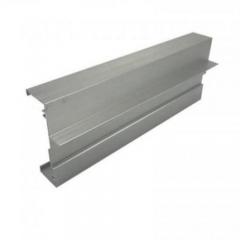
Route #2 asks whether a shape that already exists can do the job. Many supplier pages treat standard aluminum extrusions as a fallback you accept before going custom. That view sells them short. Someone else has already paid for the die on a stock profile, its dimensions are published, and you can check it against your drawing before you spend anything.
Standard shapes come from two sources. The first is the Aluminum Association, which publishes standard shape designations for common forms such as channels and I-beams. Its Aluminum Standards & Data also covers alloy and temper designations, mechanical properties, and tolerances. That means a standard shape comes with documented numbers you can design against. The second source is the stock catalogs that distributors and extruders publish. These list the shapes a supplier makes or sells on a regular basis.
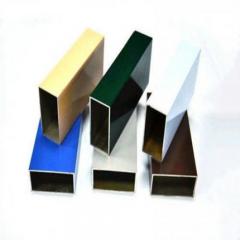
Stock aluminum extrusions come in a wider range than many engineers expect:
The Eagle Aluminum catalog shows how broad this range can be. It lists angles, channels, tubing, T-slot extrusions, Z clips, and several lines of extruded aluminum trim for drywall, millwork, wallcovering, and casework. I-beams usually come from the Aluminum Association's standard structural shapes.
Most stocked shapes come in one of two alloy and temper pairs. 6061-T6 is the usual choice for structural parts. 6063, usually stocked in T5 or T52, goes into architectural and finish-critical parts. A 6061 vs 6063 comparison explains the split. 6061 is stronger, and 6063 has a smoother surface and takes anodized finishes better.
When you're deciding where to buy extruded aluminum for a production part, look at these suppliers of manufactured profiles:
All three sell by the stick or the bundle, and you pay no die cost. Availability depends on what each supplier has on hand. Confirm inventory before you design around a shape.
Standard profiles are the better choice when volume is low, when the design is still changing, or when an existing shape already meets the load and the fit. In each of these cases, a custom die adds cost and lead time without fixing anything.
Many projects fall somewhere in between. A stock channel may carry the load but lack the holes, slots, or end features your assembly needs. Eagle, for example, offers its stock Z clips cut to special lengths and with custom drill holes, so plenty of stock shapes get modified before they ship. The cost of that added work, repeated on every part, decides whether stock stays cheaper than a die.
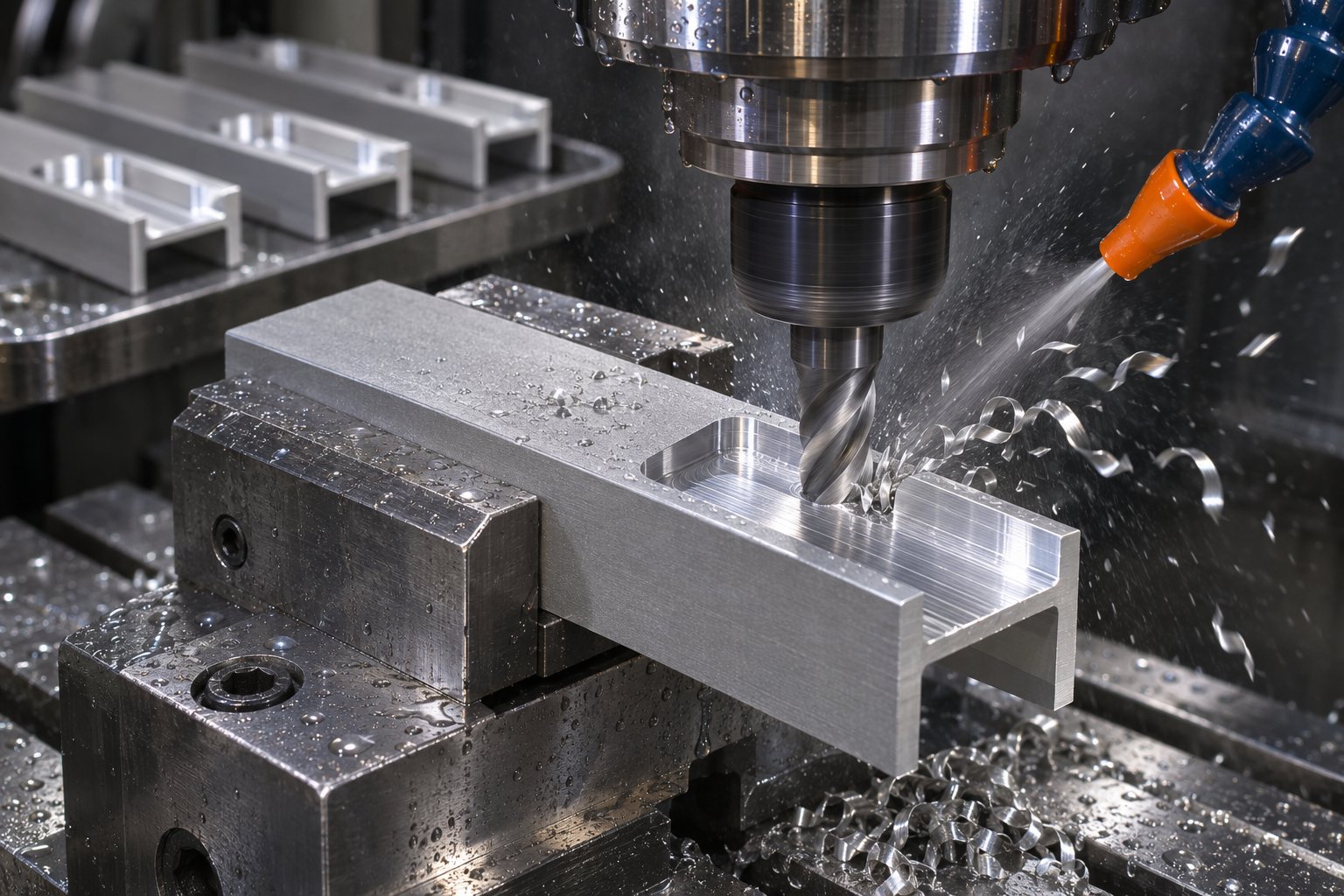
Route #3 starts with the stock channel from the last section, the one that carries the load but is missing a few holes and a finished end. Once a stock shape needs work, buying it as-is stops being an option. For many buyers, the real choice becomes a stock aluminum extrusion profile with machining or a custom die. Most ranking pages give this route a sentence or two. It deserves more space, because this is where a lot of buyers actually make the decision.
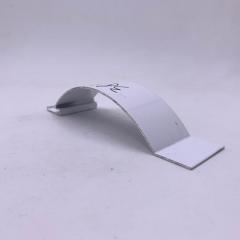
Aluminum extrusion machining adds features that sit at specific points on the part instead of running its full length. A guide from Zheng Ji Aluminum splits the work this way: the profile forms the repeated geometry, and CNC work adds the local details. Typical secondary operations include:
The same guide lists a simple profile with only basic holes as a case for a standard profile plus light machining. A custom die may add little when an existing section already meets the functional need. The guide also notes that small details often decide the number of setups more than the profile itself does.
Go back to the break-even formula. The per-part cost of machining or joining is part of the denominator. Each operation you add to the stock route raises that cost, which widens the gap between the two per-part costs and cuts the number of parts needed to pay off a die. AMFAS International makes the same point. Holes, slots, and cut-outs added after extrusion are paid for on every part. These three factors make a custom die pay back sooner:
The reverse also holds. Light machining on a stock shape that already fits closely keeps the denominator small, and the die may never pay back. AMFAS notes that a stock angle, channel, or tube plus a little machining can beat a custom die at low volumes. Before you collect quotes, ask whether a repeated hole pattern could be punched instead of machined. Talan Products says punching can shorten production time and improve repeatability on evenly spaced holes. This kind of aluminum extrusion fabrication is quoted per part, so get real numbers instead of estimating.
This route fits prototypes, short runs, and parts where a close-fitting stock section needs only a few local features. It struggles when the gap between the catalog shape and your drawing is too wide to machine away cheaply but too small to justify a new die. For that gap, an extruder may already hold a die that comes closer than anything in its published catalog.
Route #4 starts with a question you can ask any extruder: do you already have a die that comes close to this shape? Imagine a profile that is a few features away from anything in a stock catalog. Before you pay for new tooling, find out whether someone has already cut a die that gets you most of the way there. Many buyers of profile extrusions never ask.
Extruders that take on custom work often hold many more dies than their published stock lists show. Some of those dies were built for past projects. Others run aluminum extrusion shapes that the extruder never added to its catalog. The die maker Gemini Group names the use of standardized die profiles, where possible, as one way manufacturers keep die costs down.
A close match can also save time. Profile Precision Extrusions says its solid dies take about four weeks to build and its hollow dies take about five weeks on average. If an existing die fits, that build never happens.
This route suits parts that fall between the stock catalog and a fully custom section, as long as the mismatch is in features you can change or machine. Ask early, while you can still adjust non-critical dimensions on your drawing. If the gap is in a critical dimension, an existing die will not close it, and a die of your own is the better path.
An existing die still produces only one fixed cross-section. Machine frames, guards, and assembly lines often need a structure you can take apart and rebuild when the layout changes. Modular aluminum profile extrusions with standard slots and connectors are designed for that kind of structure.
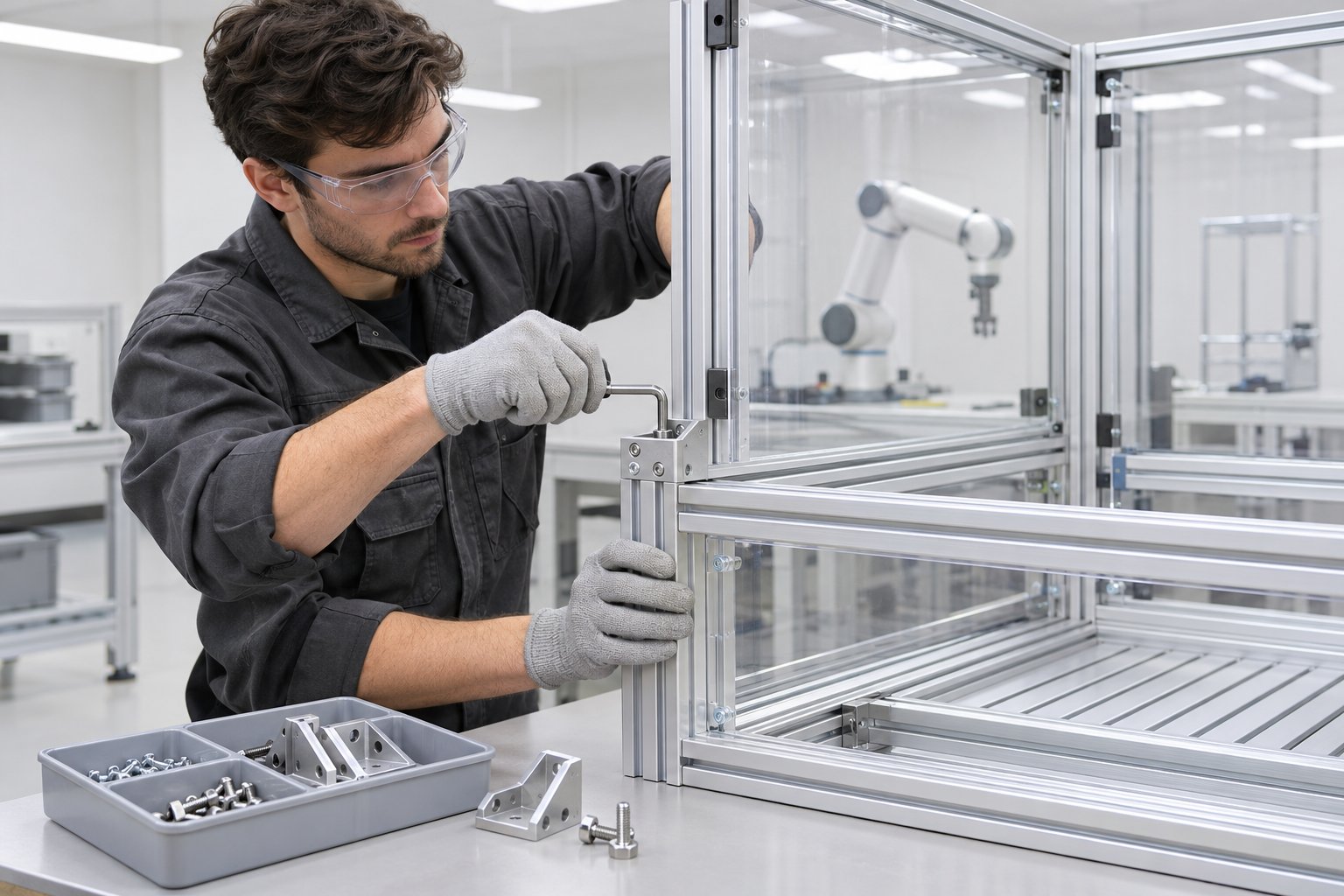
Route #5 is a standard route built for structures that change. The Phidgets T-Slot Guide describes T-slot as a framing system made of extruded aluminum profiles. The slot that gives it its name serves as the mounting point for nuts, brackets, and panels. You cut the profiles to length, bolt them together with connectors, and unbolt them when the layout moves.
This kind of aluminum frame extrusion is common in machine frames, guards, workstations, and aluminum extrusion for assembly line fixtures. Builders also use it as aluminum extrusion for 3D printer frames, because they can square and adjust the frame without welding. Systems are sold in series. Phidgets, for example, carries 20 mm, 30 mm, and 40 mm series, each in single and double widths. The guide notes that the smaller series are less strong and less rigid than the larger ones.
The RapidDirect failures from the start of this article work as checks for this route. A T-nut that will not seat often means the hardware was made for a different slot series than the profile. Confirm that every nut, bolt, and connector is specified for your exact series. Check bolt length as well. Phidgets advises that a bolt should not pass through the nut and press into the aluminum, because that leaves wiggle in the mounting point.
To check deflection, use the manufacturer's published section properties if they are available. Phidgets points to the moment of inertia listed for each profile and a modulus of elasticity of about 70,000 N/mm². With those two values, you can estimate how far a beam will bend under your load. An engineering note on T-slot analysis adds two limits to that estimate. T-slot joints create stress concentrations that beam theory does not capture, and fastener holes reduce the net section. For critical applications, the same note suggests physical testing.
Before you order, check these four points:
T-slot framing fits test rigs, guards, workstations, and machines whose layout is likely to change. Many machine designs start out as a T-slot frame. Once the layout settles and the same frame is built again and again, the hardware at every joint becomes a recurring cost that a single custom profile could remove.
Route #6 uses the earlier routes in sequence, so you don't have to pick just one. You prototype or launch on standard profiles plus machining. Then you move to a custom die once your volume and your design have both settled. The T-slot frame from the last section, with its hardware cost repeating at every joint, often ends up on this path. Expect the answer to change over time. A route that wins at ten parts may lose at ten thousand.
Early builds rarely justify tooling. A ZigiTech cost guide notes that when a design may change after validation, a lower-commitment prototype route can cost less than committing to a die too early. Prototype aluminum extrusions built from stock shapes let you test fit, load, and assembly while moving a hole is still just a program edit. The same guide recommends freezing the functional section only after a manufacturability review. A low unit price is worth little if the die has to be revised again and again.
Re-run the break-even formula at each stage, using real per-part quotes. A quote for a ten-piece prototype tells you little about a production run. ZigiTech also suggests quoting both the expected batch size and the annual demand, so the bottom half of the formula reflects the volume you will actually buy.
Die policies differ from supplier to supplier. Treat the items below as questions to get answered in writing before you pay a tooling deposit for custom extrusions. Don't assume any of them is standard practice.
Each of the six routes puts its cost in a different place. Some load it up front into a die. Others spread it across every part as machining or joint hardware. Comparing all six on the same criteria shows where each one's cost actually falls.
Line up quotes from all six routes and each one puts its cost in a different place. The lowest line item rarely belongs to the cheapest route. The matrix below compares the six routes on the criteria used throughout this article. Most cells are qualitative, because your prices depend on your own cross-section, alloy, and volume.
| Route | Upfront tooling | Per-part cost drivers | Lead time | Dimensional control | MOQ or buying unit | Part consolidation | Best fit |
|---|---|---|---|---|---|---|---|
| Full-service custom die extrusion | New die, priced by shape class | Aluminum weight, alloy, tolerances, remaining machining, finish | About 4 weeks for tooling, about 2 weeks to samples (one supplier's figures) | Section built to your drawing. Standard or precision tolerances, tighter by agreement | Production run. Minimums vary by mill and project | High | Frozen designs with volume past break-even |
| Standard stock profiles | None | Material and cutting | Depends on distributor inventory | Published tolerances for the catalog shape | Stick or bundle | Low | Low volume, changing designs, a shape that already fits |
| Standard profiles plus secondary machining | No die | Stock material plus every cut, hole, setup, and joint | Stock availability plus the machining queue | Machined features controlled locally. Base section stays at stock tolerance | Stick or bundle, machined per part | Low. Joints may be added | Prototypes, short runs, light machining |
| Existing catalog die | No new die. Usage rights vary | Run pricing, alloy, machining to close the gap | No die build. The extruder sets the schedule | Whatever the existing die holds | Run minimums set by the extruder | Medium, depending on how close the match is | Parts a few features away from an existing shape |
| T-slot modular framing | None | Profile length plus connectors and hardware at each joint | Depends on distributor inventory | Published profile dimensions. Frame accuracy depends on assembly | Stick or cut length, plus hardware | Low. More parts per joint | Reconfigurable frames, guards, fixtures |
| Staged path | None at first. Die cost deferred | Machining early, custom unit cost later | Stock speed first, die timing at the switch | Stock tolerances first, custom section later | Stick or bundle first, production run later | Low at first, high after the die | Uncertain demand |
If one column matters more than the others for your part, such as dimensional control on a sealing face, read that column first. Rule out any route that can't meet it before you compare prices.
Most comparisons of custom extruded profiles against stock shapes put the die price next to the unit price and stop there. The AASA sourcing guide lists more cost elements than that:
Any of these can change the answer. The extrusion finish is one example. Protolabs puts typical powder coat thickness at 50 to 150 microns, compared with 5 to 25 microns for anodizing. Threads and tight fits on powder-coated parts often need masking. A stock-based part with more holes and mating faces needs that masking on every piece. Logistics works the same way: a low overseas unit price can lose its advantage once freight and inspection are added. Enter every element on both sides of the break-even formula, not only the die cost and the unit price.
Lead time divides the routes into two groups. Routes that need a new die include a tooling wait. Profile Precision Extrusions publishes about 4 weeks to build a die and about 2 more weeks to samples. Production starts only after you approve the samples. These figures come from one miniature-extrusion supplier, so ask your extruder for its own. Routes built on stock extruded aluminum profiles skip the tooling wait, but their timing depends on distributor inventory. Confirm availability with the supplier before you commit to a schedule.
The matrix shows where each route's cost and time fall. Which row matches your project still depends on your volume, how settled your drawing is, and what the part has to do.
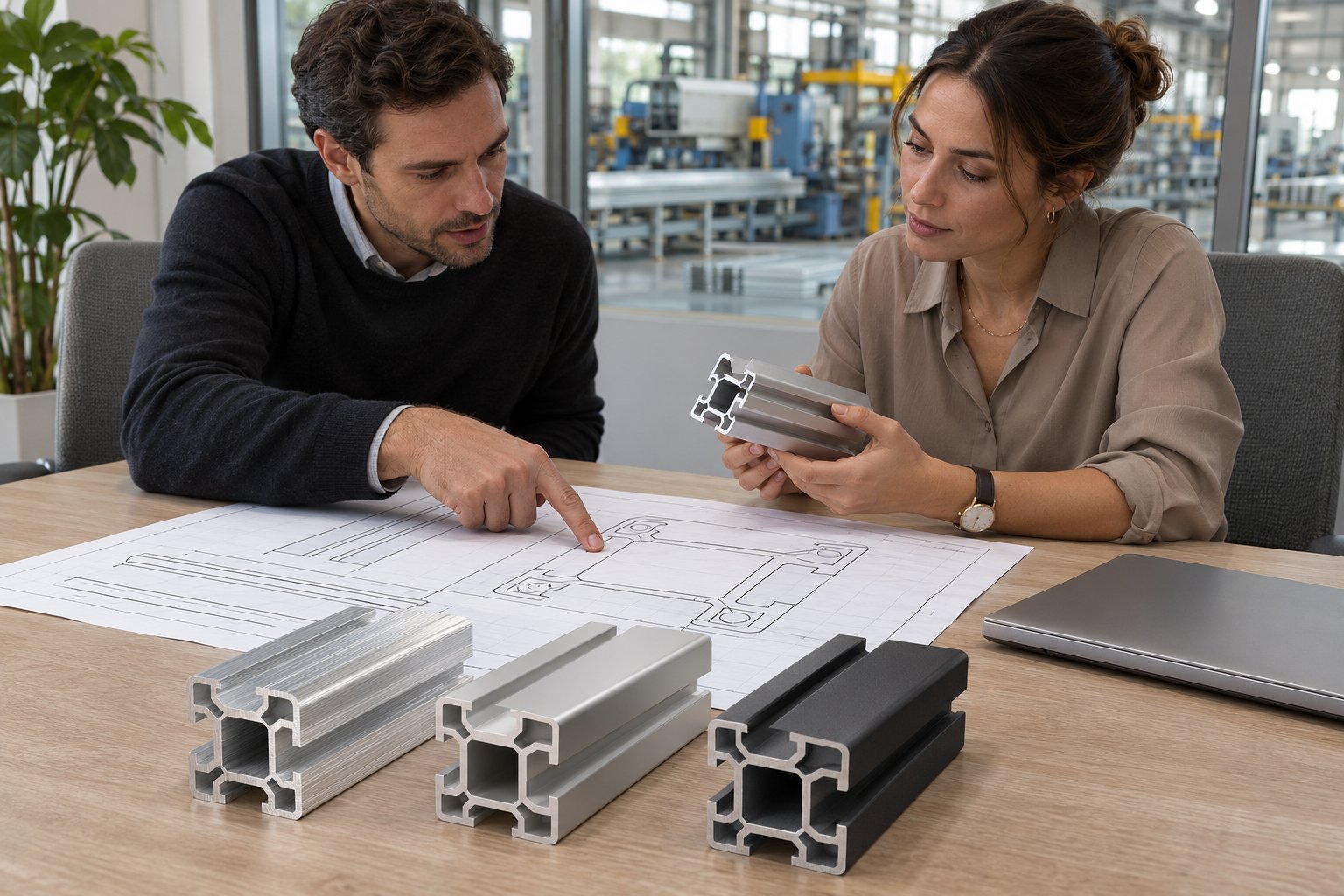
No single route wins for every part. The right one depends on three things: how many parts you need, how settled the drawing is, and how far the closest existing shape is from your cross-section. The rules below sort the six routes by those three questions.
Sometimes two rules point different ways. A part may need only a few pieces but carry a tolerance no stock shape can hold. In that case, settle the dimensional requirement first. Then compare cost among the routes that can meet it.
Answer these questions before you ask for quotes, whichever route you lean toward. The list combines Gabrian's design tips on alloy, finish, cost, and joining with the manufacturability guidance in the Profile Precision design guide.
Before you compare suppliers, narrow the field. A supplier selection guide from Profile Precision suggests filtering by circle size, which is the largest circle that fits around your profile, and by alloy, because most plants specialize in three or four alloys. Then compare the remaining custom aluminum extruders on these points:
The way to test custom aluminum extrusions suppliers against this list is to send a real drawing. Shengxin Aluminium's custom aluminum extrusion services are one option. You can submit drawings, quantities, finish specifications, and application details for a project-specific quote, and you can ask for material certificates or inspection reports. Its common alloys are 6061, 6063, and 6005A, and its finishes include anodizing and powder coating. Check its answers against the criteria above. Its stated tolerance of plus or minus 0.05 mm applies only to selected profiles and depends on geometry, alloy, and wall thickness. Minimum order quantity and the availability of hard alloys are decided in project review, and the company does not claim 2000- or 7000-series capability. For enclosure work, the design, machining, and assembly scope have to be confirmed first.
Send the same drawing to two or three suppliers. Their quotes for your custom aluminum profiles become the real numbers to enter in the break-even formula.
A custom die makes sense when three conditions line up. The design has stopped changing, the forecast volume is above the break-even quantity you worked out from real quotes, and one engineered profile can replace several parts, fasteners, or welds. Another strong signal is an assembly built from joined stock shapes that keeps failing its tolerance stack-up. Standard profiles are still the better buy for low volumes and for drawings that are still being revised. They also win when a catalog angle, channel, tube, or T-slot section already carries the load and fits the assembly. Sometimes the requirements pull in different directions, such as a small quantity that needs a tolerance no stock shape can hold. In that case, settle the dimensional need first. Then compare cost only among the routes that can meet it.
Divide the die cost by the saving on each part. To get the saving, take the per-part cost of the stock route, including every cut, hole, setup, and joint. Then subtract the per-part cost of the custom extrusion, including any machining or finishing it still needs. The result is the number of parts it takes to recover the tooling cost. Use your own quotes for both sides. For one published reference point, Profile Precision Extrusions lists dies for its miniature profiles at roughly $1,200 to $2,500. Dies for large structural shapes at other mills can cost much more. If the saving per part is zero or negative, the die never pays back on unit cost, and it has to be justified by part consolidation, weight, or tolerance. Run the calculation again at each project stage, because prototype quotes rarely match production pricing.
It often is when the stock shape is already close and needs only light work, such as cutting to length, a few drilled or tapped holes, or a finished end. Since there is no tooling, a design change costs only a program edit, which suits prototypes and short runs. The balance shifts as the machining grows. Heavy material removal, features on several faces that need multiple setups, and sections built by fastening or welding two or three stock shapes all add cost to every part. That shortens the payback period for a die. Scrapped material and the extra weight of a section designed for someone else also count against this route. Before you decide, ask whether evenly spaced holes could be punched instead of machined, and get per-part fabrication quotes instead of estimates.
Generally, yes. The Aluminum Extruders Council defines a solid profile as having no enclosed void, a semi-hollow profile as partly enclosing one, and a hollow profile as fully enclosing one or more. The more enclosed the void, the harder the die is to build. A semi-hollow die has to support a fragile, nearly closed opening. A hollow die has to form an internal cavity while metal flows around it. This added complexity usually raises both tooling cost and build time. For example, Profile Precision Extrusions quotes about four weeks for its solid dies and about five weeks on average for hollow ones. Ask for a separate quote for each shape class on your drawing, and ask the extruder whether a small change to the geometry could keep a section solid.
First, filter suppliers by circle size and by the alloys they run regularly. Then compare the shortlist on these points: drawing review and DFM feedback, tolerances stated for specific profiles instead of blanket claims, which machining and finishing steps are done in-house, documentation such as material certificates and inspection reports, minimum order quantity, and die terms. Get die ownership, upfront or amortized payment, any volume credit, and transfer rights in writing before you pay a tooling deposit. The most reliable test is to send the same real drawing to two or three suppliers. Shengxin Aluminium is one supplier you can test this way. It accepts drawings, quantities, finish specifications, and application details for a project-specific quote. Its common alloys are 6061, 6063, and 6005A, with anodizing and powder coating among its finishes. Its plus or minus 0.05 mm tolerance applies only to selected profiles and depends on geometry, alloy, and wall thickness. Minimum order quantity and hard-alloy availability are decided in project review.



 Servicio en línea
 0086 136 3563 2360
 sales@sxalu.com
 +86 136 3563 2360
 español
 English
 français
 Deutsch
 русский
 português
 العربية
 ไทย
 Việt
 Українська